Eddie Bennett

AKA:
Baseballs Most Famous Mascot
Birth Name:
Edward Bennett
Birth Date:
1904
Birth Place:
Flatbush, Brooklyn, New York
Death Date:
01/16/1935
Place of Death:
115 W. 84th Street, Manhattan, New York
Age:
31
Cause of Death:
Alcoholism
Cemetery Name:
St. John Cemetery
Claim to Fame:
Sports
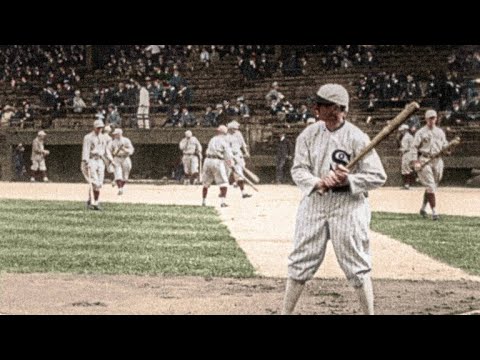
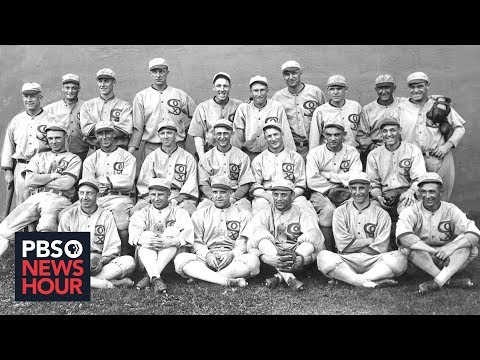
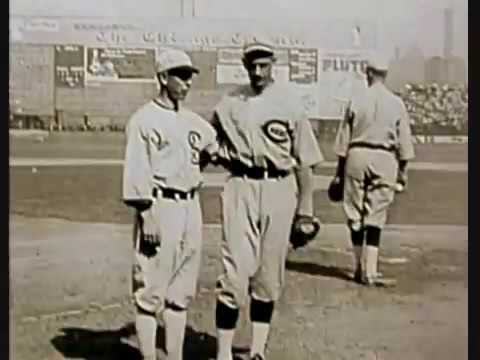
Eddie Bennett was an American batboy and mascot for several teams, most notably the New York Yankees during the 1920s and 1930s. At the time of his death, Bennett was considered to be the "most famous mascot in the world". Bennet had a spinal injury when he was very young which resulted in a hunchback. He was considered to be a "good luck charm" by the members of the club, and became a well-known celebrity in New York. On May 19, 1932, Bennett was hit by a taxi on a New York City street. He suffered a broken leg and other injuries from which he never recovered. To find relief from the pain he suffered from the injuries, Bennett started to abuse alcohol. He was forced to retire as the Yankees mascot in the middle of 1933 season, although Ruppert insisted he remain on the payroll all year. The New York Times reported that the "notoriously superstitious" ballplayers and fans blamed Bennett's absence on the Yankees' failure to win the pennant in 1933 and 1934. In January 1935, Bennett died penniless due to alcoholism.

Fun Fact

When Eddie Bennett died penniless in a rooming house in Manhattan, New York not a single member of the Yankee organization attended his funeral.

Cemetery Information:

Final Resting Place:

St. John Cemetery

80-01 Metropolitan Avenue

Middle Village, New York, 11379

USA

North America

Map:
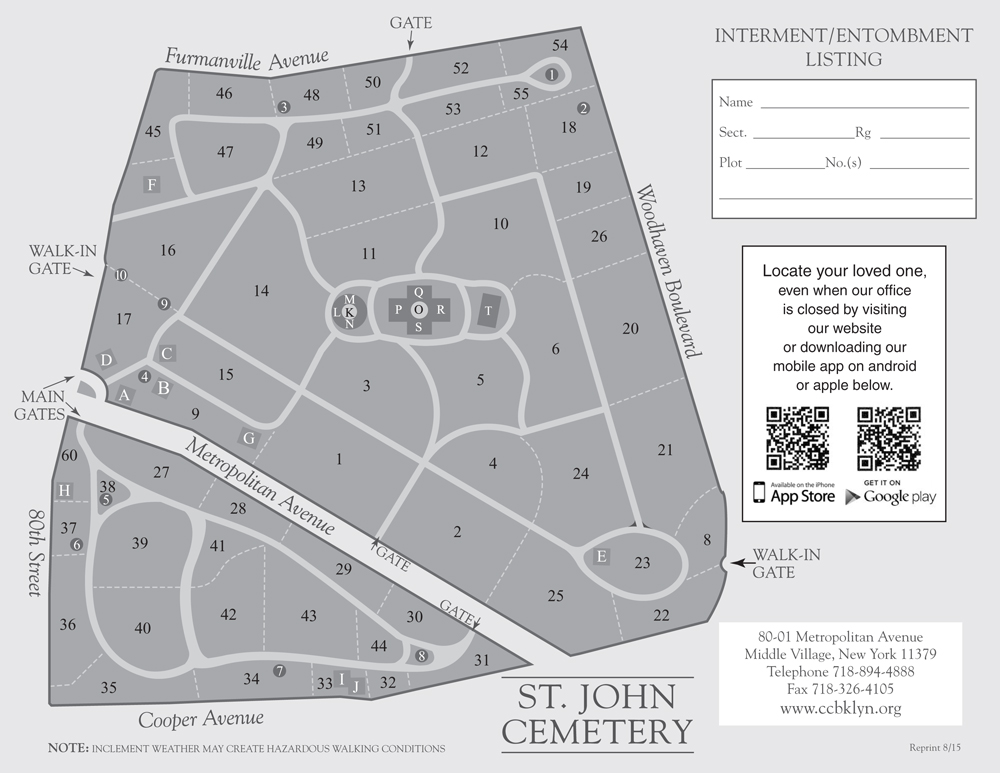
Grave Location:

Section 34, Row DD, Grave 64

Grave Location Description

After entering the cemetery’s east entrance, take the first gate on your left to head southwest. Head along this road for about 0.3 miles. Edward’s Bennett nameplate will be located in the grassy section on your left. His grave is near the road, and about 50 feet southeast of the intersection between Sections 34, 40, and 42.

Grave Location GPS

40.710599, -73.867760

Photos:

[+]
[+]
[+]
[+]
[+]
[+]
[+]
[+]
[+]
[+]
[+]
[+]
[+]
[+]

FAQ's

Eddie Bennett was born on 1904.

Eddie Bennett was born in Flatbush, Brooklyn, New York.

Eddie Bennett died on 01/16/1935.

Eddie Bennett died in 115 W. 84th Street, Manhattan, New York.

Eddie Bennett was 31.

The cause of death was Alcoholism.

Eddie Bennett's grave is in St. John Cemetery

Read More About Eddie Bennett:

Videos Featuring Eddie Bennett:
See More:

Lou Gehrig

popular name: Lou Gehrig

date_of_death: June 2, 1941

age: 37

cause_of_death: Amyotrophic lateral sclerosis (ALS or Lou Gehrig's disease)

claim_to_fame: Sports

best_know_for: Voted the greatest first baseman of all time, Lou Gehrig was a member of the NY Yankees baseball team and nicked named the Iron Horse for 2,170 consecutive games played over a 17 year career. Fans and teammates were stunned when when he voluntarily took himself out of the lineup after his performance on the field became hampered by amyotrophic lateral sclerosis, an incurable neuromuscular illness. He died less than 2 years later at the young age of 37.

Catfish Hunter

popular name: Catfish Hunter

date_of_death: September 9, 1999

age: 53

cause_of_death: Amyotrophic lateral sclerosis (ALS or Lou Gehrig's disease)

claim_to_fame: Sports

best_know_for: Jim "Catfish" Hunter, whose pitching prowess earned him five World Series rings, 224 victories, a spot in the Baseball Hall of Fame and made him the game's first big-money free agent. Recruited right out of high school at age 18, Hunter won his first major-league game, and a year after that, at 20, he made the American League All-Star team in a season in which he finished 9-11. He reached 20 wins for the first time in 1971 with a 21-11 record and won at least 20 games the next four seasons. In 1974, he was 25-12 and won the Cy Young Award. In 1968, he pitched a perfect game against the Minnesota Twins, the seventh perfect game in modern baseball history at the time. And the Athletics, by then in Oakland, dominated baseball in the early '70s with the likes of Hunter, Reggie Jackson, Sal Bando, Gene Tenace, Rollie Fingers and a group that played hard, on and off the field. "We were the long-haired, mustached gang from Oakland," Hunter said. "We were lucky just to be there, was what they said." After the Oakland A's, Hunter signed with the New York Yankees not because they offered the most money, but rather it was close to his home in North Carolina. Hunter's first season with the Yankees was his last of five consecutive 20-win years. He was 23-14 for the 1975 Yankees and pitched for them until 1979, when he retired at 33, with a 224-166 record and a 3.26 ERA. He was on World Series-winning teams with Oakland in 1972-74 and New York in 1977-78. At age 52 he was diagnosed with ALS (Lou Gehrig's Disease) and passed away the following year.

Walt Hazzard

popular name: Walt Hazzard

date_of_death: November 18, 2011

age: 69

cause_of_death: Complications following heart surgery

claim_to_fame: Sports

best_know_for: Walter Hazzard was an American professional basketball player and college basketball coach. Hazzard attended Overbrook High School in Philadelphia, where his teams went 89–3 and he was named the city's player of the year when he was a senior. He played in college for the UCLA Bruins and was a member of their first national championship team in 1964 - the same year Hazzard also won a gold medal that year with the US national team at the 1964 Summer Olympics. UCLA's first undefeated season in 1963–64 was in no small part due to Hazzard, his backcourt partner Gail Goodrich, and coach John Wooden. The team won its first NCAA Championship, and Hazzard was selected by the Associated Press as the tournament's Most Valuable Player. Hazzard began his pro career in the National Basketball Association (NBA) with the Los Angeles Lakers, who selected him a territorial pick in the 1964 NBA draft. While playing for the SuperSonics in their inaugural 1967–68 season, Hazzard scored a career high 24.0 points per game, averaged 6.2 assists per game, and was selected to play in the 1968 NBA All-Star Game. After his playing career ended, he was the head coach at UCLA during the 1980s.

Back to Top