Bill Graham

AKA:
Uncle Bobo
Birth Name:
Wulf Wolodia Grajonca
Birth Date:
January 8, 1931
Birth Place:
Berlin, Germany
Death Date:
October 25, 1991
Place of Death:
6 miles West of Vallejo, Solano County, California
Age:
60
Cause of Death:
Helicopter crash
Cemetery Name:
Eternal Home Jewish Cemetery
Claim to Fame:
Business and Finance
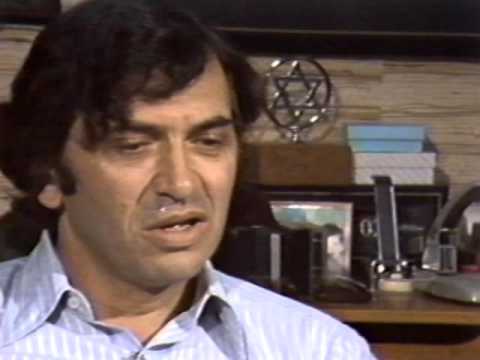
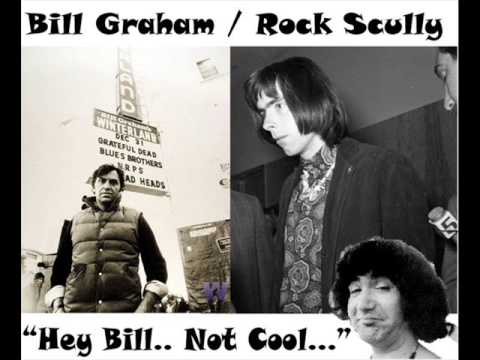
Even though Bill Graham didn't play an instrument or sing in a band, he's one of the most famous names in rock history. Bill Graham was a legendary impresario and rock concert promoter from the 1960s until his death in 1991 in a helicopter crash. Bill was the first and most successful of turning concerts and like events into a profitable endeavour for both the business and the artists. Graham had a profound influence around the world, sponsoring the musical renaissance of the '60s from the epicenter, San Francisco. Chet Helms and then Bill Graham made famous the Fillmore and Winterland Ballroom; these turned out to be a proving grounds for rock bands and acts of the San Francisco Bay area including the Grateful Dead, Jefferson Airplane, and Big Brother and the Holding Company with Janis Joplin, who were first managed, and in some cases developed, by Chet Helms.

Fun Fact:

After Graham made his way backstage to greet the band and make small talk with the staff, Graham was stopped by the bass player from Huey Lewis and the News, Mario Cippolina, who, in a moment of foresight, noted the poor weather, and suggested that Graham to take his limousine. He declined the offer and walked away wearing, ironically, a Lynyrd Skynyrd tour jacket. In case you don’t remember, In 1977 the band Lynyrd Skynyrd endured a plane crash that killed several of its members and staff.

Bill Graham’s last home was located at 800 Corte Madera Avenue in Corte Madera, California. I say “was located” because his house was torn down in 2002 and replaced.

The approximate coordinates for the helicopter crash are 38°09′11″N 122°24′45″W. The new tower is at the same location but that is not the original tower which had to be rebuilt.

The Bell 206B JetRanger had an airframe total time of 6,279 hours and its last inspection was on September 9, 1991, seven logged hours before the accident. The pilot was 42-year-old Steve Kahn, who held valid airline transport, flight instructor, and commercial certificates, with 4,541 total flight hours logged. At the time of the crash, an inquiry found the pilot had considerable geographic knowledge of the area and decided to fly visual flight rules (VFR) when conditions would indicate use of instrument flight rules (IFR).

Cemetery Information:

Final Resting Place:

Eternal Home Jewish Cemetery

1051 El Camino Real

Colma, California, 94014

USA

North America

Grave Location:

Block 700, Row G

Grave Location Description

As you enter the cemetery from El Camino Real, the office will be on your right and after 50 feet you will turn left at the first opportunity. Drive through the first roundabout and park at the furthest point after the next roundabout. Walk straight ahead (same direction as the road) and walk to the second section. Turn left and walk towards the brick wall and 5 rows from the wall and 15 spaces to your right you will find the final resting place of Bill Graham.

Grave Location GPS

37.68038329695, -122.46156578443

Photos:

[+]
[+]
[+]
[+]
[+]
[+]
[+]
[+]
[+]
[+]

FAQ's

Bill Graham was born on January 8, 1931.

Bill Graham was born in Berlin, Germany.

Bill Graham died on October 25, 1991.

Bill Graham died in 6 miles West of Vallejo, Solano County, California.

Bill Graham was 60.

The cause of death was Helicopter crash.

Bill Graham's grave is in Eternal Home Jewish Cemetery

Read More About Bill Graham:

Videos Featuring Bill Graham:

See More:

Howard Johnson

popular name: Howard Johnson

date_of_death: June 20, 1972

age: 75

cause_of_death: Heart failure

claim_to_fame: Business and Finance

best_know_for: Howard Johnson was an American entrepreneur, businessman, and the founder of an American chain of restaurants and motels under one company of the same name, Howard Johnson's. For three years he sold cigars,. and then in 1924, when he was 27, he assumed the debts, liquidated the business and bought a run‐down drugstore near the Wollaston railroad station. It had a soda fountain, candy and tobacco counter and newspaper stand, and Mr. Johnson soon had the place bringing in $30,000 a year with a staff of 75 boys delivering papers. Still, it was not until he bought the ice‐cream recipe of an elderly German pushcart vendor that the business took off. The peddler's secret was in doubling the butterfat content of the commercial ice cream and in using natural, instead of synthetic, flavoring. By 1928 the gross from ice cream sold at the Store and at several beach stands nearby reached $240,000, and seven years later Mr. Johnson had 25 restaurants beside Massachusetts highways. Between 1961 and 1979 revenues for the company grew every year. The Howard Johnson Company continued to expand, growing to over 1,000 restaurants and over 500 motor lodges in 42 states and Canada.

James Gamble

popular name: James Gamble

date_of_death: April 29, 1891

age: 88

cause_of_death: Natural causes

claim_to_fame: Business and Finance

best_know_for: In 1819, the George Gamble family set sail for American to seek their fortune in an area of Illinois that was being promoted. Because of illness of a son, they stopped and settled in Cincinnati, Ohio. A son, James Gamble, at 18 apprenticed in the soap business and eventually formed his own company. After marrying Ann Norris, he merged his company with that of William Proctor who married Ann’s sister. And in 1837 that was the start of the Proctor and Gamble Company. In 1858–1859, sales reached $1 million. By that point, about 80 employees worked for Procter & Gamble. During the American Civil War, the company won contracts to supply the Union Army with soap and candles. In addition to the increased profits experienced during the war, the military contracts introduced soldiers from all over the country to Procter & Gamble's products. In the 1880s, Procter & Gamble began to market a new product, an inexpensive soap that floated in water. The company called the soap Ivory. Beginning in the 1880s, P&G advertised its wares in full-page advertisements in many general-interest magazines; by 1921, it had become a major international corporation with a diversified line of soaps, toiletries, and food products; in that year, its annual advertising budget reached $1 million. In the 1920s, P&G advertised its products on the new medium of radio, and from 1932 forward was one of the biggest sponsors of daytime serials, which soon acquired the nickname of soap operas. In the television era, P&G sponsored and produced some twenty soap operas across six decades before the last of its shows ended in 2010. Today Procter and Gamble employees over 101,000 employees with total sales exceeding $76 billion. Upon his death in 1891, he was laid to rest at Spring Grove Cemetery in Cincinnati, OH.

David Sarnoff

popular name: David Sarnoff

date_of_death: December 12, 1971

age: 80

cause_of_death: Mastoid infection

claim_to_fame: Business and Finance

best_know_for: David Sarnoff was an American businessman and pioneer of American radio and television. Throughout most of his career he led the Radio Corporation of America in various capacities from shortly after its founding in 1919 until his retirement in 1970. It all began in 1920 when Sarnoff reiterated his “radio music box” memo and was given a small amount of money to develop a radio prototype. As RCA’s new general manager, he demonstrated radio’s market potential by broadcasting the boxing match between Jack Dempsey and Georges Carpentier (July 2, 1921); the broadcast created a sensation. Within three years RCA sold more than $80 million worth of receiving sets. In 1926 RCA formed the National Broadcasting Company (NBC). As early as 1923, Sarnoff had perceived the potential of television, which the contributions of several inventors were making technically feasible. His meeting in 1929 with Westinghouse engineer Vladimir Zworykin convinced him that home television was possible, and Sarnoff persuaded Westinghouse to back Zworykin’s work. In 1930 Westinghouse’s television research and Zworykin were transferred to RCA. By 1939 Sarnoff was able to give a successful demonstration of the new medium at the New York World’s Fair. And as they say ... the rest is history. Upon his death, he was laid to rest at Kensico Cemetery in Valhalla, New York.

Back to Top