Gene Tunney

AKA:
The Fighting Marine
Birth Name:
James Joseph Tunney
Birth Date:
May 25, 1897
Birth Place:
New York City, New York
Death Date:
November 7, 1978
Place of Death:
Greenwich Hospital, Greenwich, Connecticut
Age:
81
Cause of Death:
Circulation Ailment
Cemetery Name:
Long Ridge Union Cemetery
Claim to Fame:
Sports
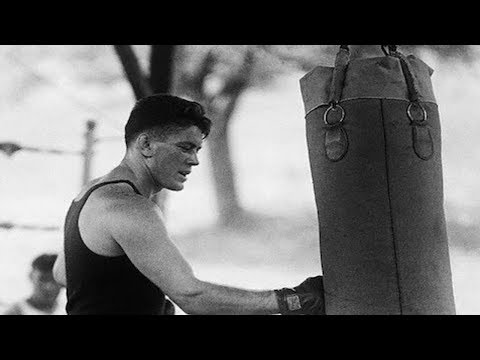
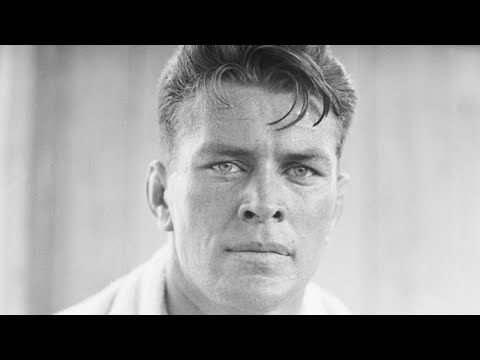
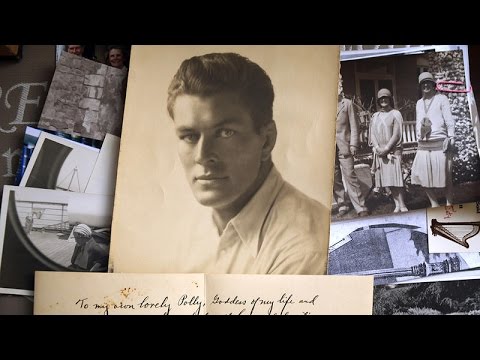
Gene Tunney, born James Joseph Tunney on May 25, 1897, in New York City, was an American professional boxer and world heavyweight champion from 1926 to 1928. Raised in a working-class Irish-American family, Tunney developed a passion for boxing at a young age and turned professional in 1915. Known for his intelligence, disciplined training, and tactical style, he earned the nickname “The Fighting Marine” after serving in the U.S. Marine Corps during World War I. Tunney rose to prominence in the light heavyweight division before moving up to heavyweight, where he achieved his greatest fame by defeating Jack Dempsey in 1926 to win the world title. Their rematch in 1927, known for the controversial "Long Count" when Dempsey failed to immediately go to a neutral corner, remains one of boxing’s most storied bouts. Tunney retired undefeated as heavyweight champion in 1928, having lost only once in his entire career. After boxing, he led a successful business life and maintained a private family life with his wife, socialite Polly Lauder. Tunney died on November 7, 1978 and was buried at Long Ridge Union Cemetery in Stamford, Connecticut.

Fun Facts

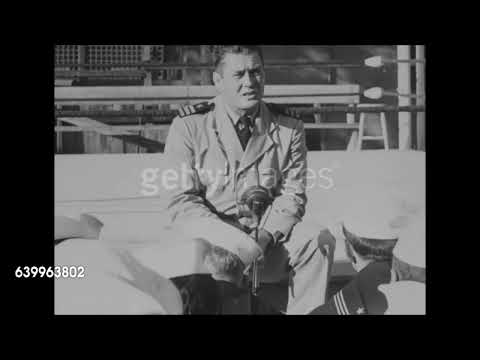
Gene Tunney was a highly educated, “scientific” boxer who twice defeated Jack Dempsey for the heavyweight title, had a career-defining moment in the “long count” rematch, and retired undefeated as champion. He served in the Marines during WWI, where he won a championship, and later became a successful businessman and WWII veteran who directed the U.S. Navy’s physical fitness program. He was also a lifelong intellectual who lectured on Shakespeare at Yale University and was friends with authors like George Bernard Shaw.

After retiring from boxing, Tunney had a successful career in business and the arts. He was the author of two books: A Man Must Fight (1932) and Arms for Living (1942). Tunney also had a brief acting career, starring in the 1926 movie The Fighting Marine. Unfortunately, no prints of the film are known to exist today.


Cemetery Information:

Final Resting Place:

Long Ridge Union Cemetery

154 Erskine Road

Stamford, Connecticut, 06903

USA

North America

Grave Location:

Section G, Tunney Family Plot

Grave Location Description

As you are driving down Erskine Road with the cemetery on your left, drive past Lake Windermere Road on your right (their is a cemetery entrance on your left but keep driving) and take the next entrance to the cemetery on your left. Drive straight ahead to the end of the road and the final resting place of boxing legend Gene Tunney and family is on your right.

Grave Location GPS

41.148247096102835, -73.59700535535603

Visiting The Grave:

Photos:

[+]
[+]
[+]
[+]
[+]
[+]
[+]
[+]
[+]
[+]
[+]
[+]
[+]
[+]

FAQ's

Gene Tunney was born on May 25, 1897.

Gene Tunney was born in New York City, New York.

Gene Tunney died on November 7, 1978.

Gene Tunney died in Greenwich Hospital, Greenwich, Connecticut.

Gene Tunney was 81.

The cause of death was Circulation Ailment.

Gene Tunney's grave is in Long Ridge Union Cemetery

Read More About Gene Tunney:

Videos Featuring Gene Tunney:

See More:

Rick Tolley

popular name: Rick Tolley

date_of_death: November 14, 1970

age: 30

cause_of_death: Plane crash

claim_to_fame: Sports

best_know_for: Rick Tolley was an American football coach who served as the head football coach at Marshall University during the 1969 and 1970 seasons. He died in the 1970 plane crash that killed all 75 crew and passengers aboard, including most of the Marshall football team and coaching staff and several team boosters. Southern Airways Flight 932 was a chartered Southern Airways Douglas DC-9 domestic United States commercial jet flight from Stallings Field (ISO) in Kinston, North Carolina, to Huntington Tri-State Airport/Milton J. Ferguson Field (HTS) near Kenova, West Virginia. At 7:36 pm on November 14, 1970, the aircraft crashed into a hill just short of the Tri-State Airport, killing all 75 people on board. The accident is the deadliest tragedy to have affected any sports team in U.S. history. Rick was laid to rest at Spring Hill Cemetery in Huntington West Virginia.

Althea Gibson

popular name: Althea Gibson

date_of_death: September 28, 2003

age: 76

cause_of_death: Complications following respiratory and bladder infections

claim_to_fame: Sports

best_know_for: Althea Gibson was an American tennis player and professional golfer, and one of the first Black athletes to cross the color line of international tennis. In 1956, she became the first African American to win a Grand Slam title (the French Championships). The following year she won both Wimbledon and the US Nationals (precursor of the US Open), then won both again in 1958 and was voted Female Athlete of the Year by the Associated Press in both years. In all, she won 11 Grand Slam tournaments: five singles titles, five doubles titles, and one mixed doubles title. Gibson was inducted into the International Tennis Hall of Fame and the International Women's Sports Hall of Fame.

Charlie Sifford

popular name: Charlie Sifford

date_of_death: June 2, 1922 – February 3, 2015

age: 92

cause_of_death: Stroke

claim_to_fame: Sports

best_know_for: Charlie Sifford was a professional golfer who was the first African American to play on the PGA Tour. He won the Greater Hartford Open in 1967 and the Los Angeles Open in 1969. He also won the United Golf Association's National Negro Open six times, and the PGA Seniors' Championship in 1975. For his contributions to golf, Sifford was inducted into the World Golf Hall of Fame in 2004. He was awarded the Old Tom Morris Award in 2007, the Presidential Medal of Freedom in 2014, and an honorary doctorate from the University of St Andrews. Lee Trevino referred to Sifford as the "Jackie Robinson" of golf, and Tiger Woods acknowledged that Sifford paved the way for his career. Upon his death, he was buried Charlotte NC.

Back to Top