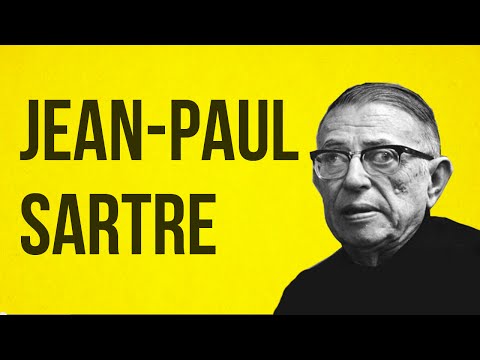
Jean-Paul Sartre

AKA:
le Castor
Birth Name:
Jean-Paul Charles Aymard Sartre
Birth Date:
June 21, 1905
Birth Place:
Paris, France
Death Date:
April 15, 1980
Place of Death:
42 Rue Bonaparte, Paris, France
Age:
74
Cause of Death:
Pulmonary edema
Cemetery Name:
Cimetière du Montparnasse
Claim to Fame:
Writers and Poets
Associates:
Jean-Paul Sartre was a French philosopher, playwright, novelist, screenwriter, political activist, biographer, sexual predator and literary critic, considered a leading figure in 20th-century French philosophy and Marxism. Sartre was one of the key figures in the philosophy of existentialism (and phenomenology). His work has influenced sociology, critical theory, post-colonial theory, and literary studies. He was awarded the 1964 Nobel Prize in Literature despite attempting to refuse it. Major philosophical works include Being and Nothingness (1943) where he explored human consciousness, freedom, and "bad faith" and Existentialism is a Humanism (1946), a public lecture defending existentialism. Sartre's best known literary works include Nausea (1938), a novel expressing existential dread and No Exit (1944), famous for the line "Hell is other people." Upon his passing the grave of Jean-Paul Sartre at Cimetière du Montparnasse is a top tourist attraction. His legacy ... not so much.

Not-So-Fun Fact

In 1993, French author Bianca Lamblin wrote in her book Mémoires d’une jeune fille dérangée (Memoirs of a deranged young girl, published in English under the title A Disgraceful Affair) of her sexual exploitation by Sartre and Beauvoir. Lamblin claims that while a student at Lycée Molière, she was sexually exploited by her teacher Beauvoir, who introduced her to Sartre a year later. Sartre and Beauvoir frequently followed this pattern, in which Beauvoir would seduce female students and then pass them on to Sartre.

As more women came forward, the appalling truth about Beauvoir is she was a sexual predator of the worst kind, grooming some of her female high school students in Rennes for threesomes with her and Sartre, as documented in her own letters to Sartre and in the book Tête à Tête by Hazel Rowley.

There have been 3 headstones for the graves of Simone de Beauvoir and Jean-Paul Sartre. In 2010 the marble plaque that had been placed on his grave when he was buried in 1980 and that had been stolen shortly thereafter. It turned up in, of all places, Columbia. The plaque was stolen by the Colombian poet Arnulfo Valencia. Columbian author William Ospina apparently was told at some point by Valencia that he had stolen it and was still in possession of the plaque, but at the time Ospina didn’t believe him. When Valencia died recently, he told his daughter on his deathbed that he still had the plaque, which he said had been broken into four pieces.

Cemetery Information:

Final Resting Place:

Cimetière du Montparnasse

3 Bd Edgar Quinet

Paris, , 75014

France

Europe

Map:
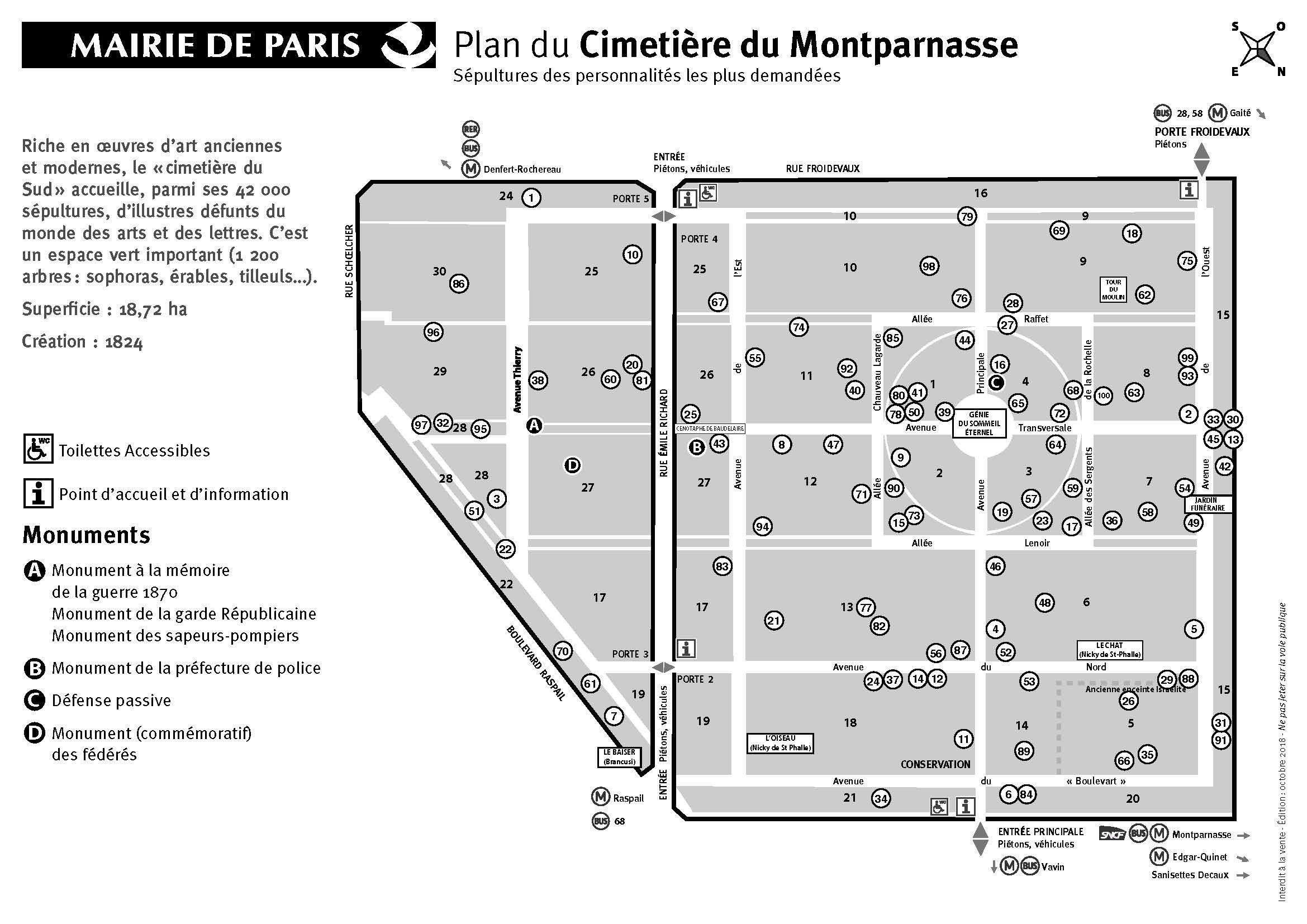
Map of Cimetière Montparnasse in Paris, France
Cimetière Montparnasse in Paris, France

Grave Location:

Division 20

Grave Location Description

As you enter through the main entrance, at the intersection of Avenue Principale and Avenue du Boulevart, turn right on Avenue du Boulevart and count 8 spaces on your right and you will find the final resting place of Jean-Paul Sartre and his companion Simone de Beauvoir.

Grave Location GPS

48.840263, 2.327223

Visiting The Grave:

Photos:

[+]
[+]
[+]
[+]
[+]
[+]
[+]
[+]
[+]
[+]
[+]
[+]

FAQ's

Jean-Paul Sartre was born on June 21, 1905.

Jean-Paul Sartre was born in Paris, France.

Jean-Paul Sartre died on April 15, 1980.

Jean-Paul Sartre died in 42 Rue Bonaparte, Paris, France.

Jean-Paul Sartre was 74.

The cause of death was Pulmonary edema.

Jean-Paul Sartre's grave is in Cimetière du Montparnasse

Read More About Jean-Paul Sartre:

Videos Featuring Jean-Paul Sartre:
See More:

Dominick Dunne

popular name: Dominick Dunne

date_of_death: August 26, 2009

age: 83

cause_of_death: Bladder cancer

claim_to_fame: Writers and Poets

best_know_for: Dominick Dunne was an American writer, investigative journalist, and producer. He started as a producer in film and television, and is noted for involvement with the pioneering gay film The Boys in the Band (1970) and the award-winning drug film The Panic in Needle Park (1971). He turned to writing in the early 1970s. After the 1982 murder of his daughter Dominique, he came to focus on the ways in which wealth and high society interacts with the judicial system. Famous trials he covered included those of O.J. Simpson, Claus von Bulow, Michael Skakel, William Kennedy Smith, and the Menendez brothers. Dunne was a frequent contributor to Vanity Fair, from the 1980s, and also appeared regularly on television discussing crime.

James Baldwin

popular name: James Baldwin

date_of_death: December 1, 1987

age: 63

cause_of_death: Stomach cancer

claim_to_fame: Writers and Poets

best_know_for: James Baldwin was an American author, playwright, poet and activist. His work explored the intricacies of racial, sexual, and class distinctions in the Western society of the United States during the mid twentieth-century. He used themes of masculinity, sexuality, race, and class to create narratives that ran parallel with some of the major political movements toward social change of the twentieth-century. His best known work includes Notes of a Native Son (1955), Giovanni's Room (1956), The Fire Next Time (1963), and No Name in the Street (1972). Two of his works, 'Remember This House' and 'If Beale Street Could Talk', were adapted into Academy Award-winning films.

Thomas Wolfe

popular name: Thomas Wolfe

date_of_death: September 15, 1938

age: 37

cause_of_death: Miliary tuberculosis

claim_to_fame: Writers and Poets

best_know_for: Thomas Wolfe is considered one of the most autobiographical novelists in American literature and is probably the greatest writer to come out of North Carolina. During his short life he wrote four novels; Look Homeward, Angel, Of Time and the River, The Web and the Rock, and You Can’t Go Home Again, as well as numerous short stories, novellas, and plays. He is known for mixing highly original, poetic, rhapsodic, and impressionistic prose with autobiographical writing. His books, written and published from the 1920s to the 1940s, vividly reflect on American culture and the mores of that period, filtered through Wolfe's sensitive, sophisticated, and hyper-analytical perspective. After Wolfe's death, contemporary author William Faulkner said that Wolfe might have been the greatest talent of their generation for aiming higher than any other writer. Wolfe's influence extends to the writings of Beat Generation writer Jack Kerouac, and of authors Ray Bradbury and Philip Roth, among others.

Back to Top