Johann Strauss ll

AKA:
The Waltz King
Birth Name:
Johann Baptist Strauss II
Birth Date:
October 25, 1825
Birth Place:
Vienna, Austria
Death Date:
June 3, 1899
Place of Death:
Johann Strauss Gasse 4, Wieden, Vienna, Austria
Age:
73
Cause of Death:
Pleuropneumonia
Cemetery Name:
Der Wiener Zentralfriedhof
Claim to Fame:
Music
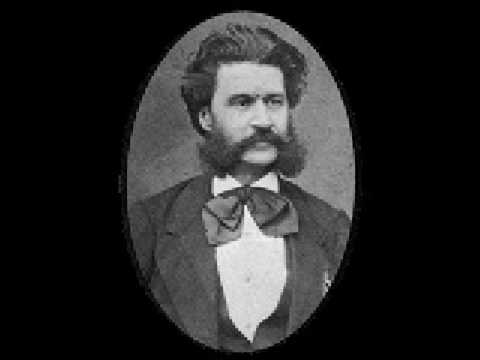
Johann Strauss II (also referred to as Johann Strauss Jr., the Younger) was an Austrian composer of light music, particularly dance music and operettas as well as a renown violinist. He composed over 500 waltzes, polkas, quadrilles, and other types of dance music, as well as several operettas and a ballet. In his lifetime, Strauss ll was known as "The Waltz King", and was largely responsible for the popularity of the waltz in Vienna during the 19th century. Some of Johann Strauss's most famous works include "The Blue Danube", "Kaiser-Walzer" (Emperor Waltz), "Tales from the Vienna Woods", "Frühlingsstimmen", and the "Tritsch-Tratsch-Polka". Among his operettas, Die Fledermaus and Der Zigeunerbaron are the best known. Strauss was the son of Johann Strauss I and his first wife Maria Anna Streim. Two younger brothers, Josef and Eduard Strauss, also became composers of light music, although they were never as well known as their brother.

Fun Facts

Most of the Strauss ll works that are performed today may once have existed in a slightly different form, as Eduard Strauss destroyed much of the original Strauss orchestral archives in a furnace factory in Vienna’s Mariahilf district in 1907. Eduard, then the only surviving brother of the three, took this drastic precaution after agreeing to a pact between himself and brother Josef that whoever outlived the other was to destroy their works. The measure was intended to prevent the Strauss family’s works from being claimed by another composer. This may also have been fueled by Strauss’s rivalry with another of Vienna’s popular waltz and march composers, Karl Michael Ziehrer.

Also lost to the ages, Eduard Strauss surprisingly wound up the Strauss Orchestra in February 1901 after concerts in 840 cities around the globe, and pawned the instruments. The orchestra’s last violins were destroyed in the firestorm of the Second World War.

Two museums in Vienna are dedicated to Johann Strauss II. His residence in the Praterstrasse, where he lived in the 1860s, is now part of the Vienna Museum. The Strauss Museum is about the whole family, with a focus on Johann Strauss II.

Cemetery Information:

Final Resting Place:

Der Wiener Zentralfriedhof

1110 Wien

Simmeringer Hauptstraße 234, Vienna,

Austria

Europe

Map:
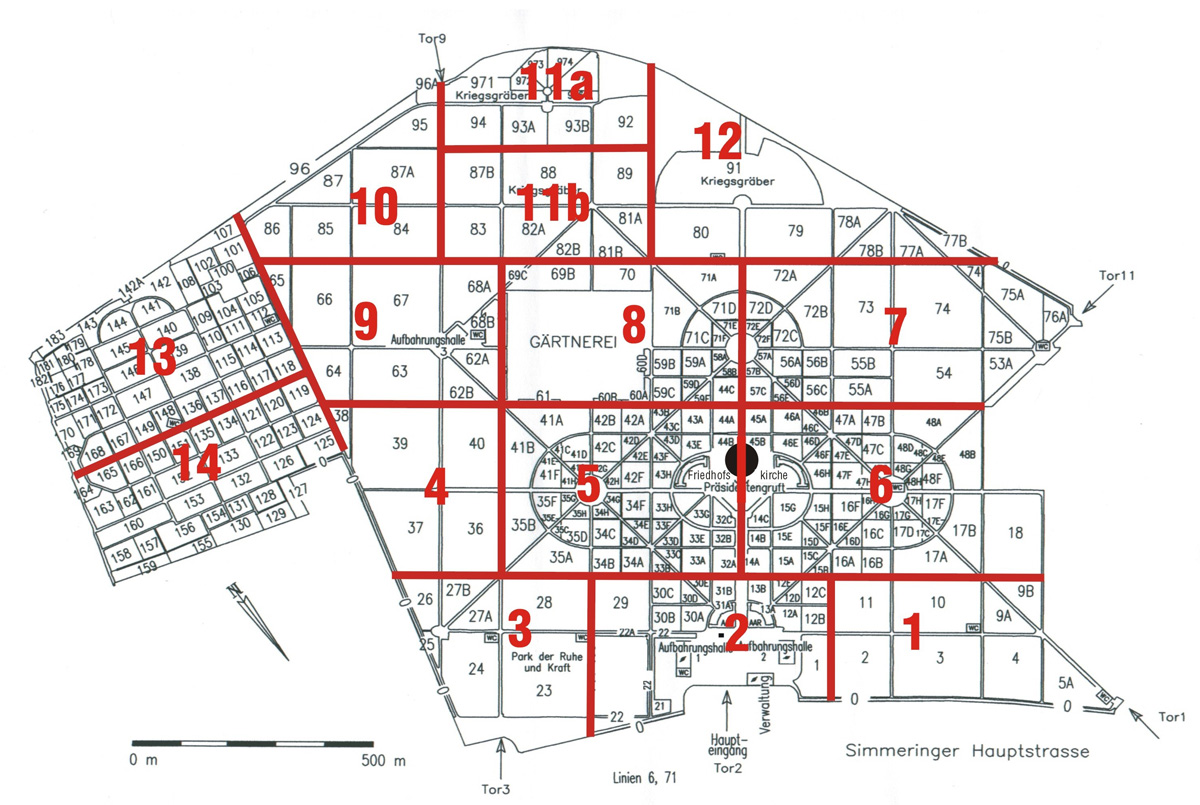
Map of der Wiener Zentralfriedhof in Vienna, Austria
Der Wiener Zentralfriedhof in Vienna, Austria

Grave Location:

Gruppe 32 A, Grab Nr. 27

Grave Location Description

You can find the grave very easily if you enter the cemetery through that main entrance, which is called Tor (Gate) 2. Once inside, go straight on, through the middle of the stone arcade ahead of you, towards the large Jugendstil church in the distance. Just keep your eyes on the left hand side to eventually spot the grave of the legendary composer about 100 feet off the road. Nearby neighbors include Beethoven, Schubert, and Brahms. Across the paved path is a memorial to some guy named Mozart.

Grave Location GPS

48.1519419, 16.4398676

Visiting The Grave:

Photos:

[+]
[+]
[+]
[+]
[+]
[+]
[+]
[+]
[+]
[+]
[+]
[+]

FAQ's

Johann Strauss ll was born on October 25, 1825.

Johann Strauss ll was born in Vienna, Austria.

Johann Strauss ll died on June 3, 1899.

Johann Strauss ll died in Johann Strauss Gasse 4, Wieden, Vienna, Austria.

Johann Strauss ll was 73.

The cause of death was Pleuropneumonia.

Johann Strauss ll's grave is in Der Wiener Zentralfriedhof

Read More About Johann Strauss ll:

Videos Featuring Johann Strauss ll:

See More:

Jackie Wilson

popular name: Jackie Wilson

date_of_death: January 21, 1984

age: 49

cause_of_death: Complications of pneumonia after massive heart attack

claim_to_fame: Music

best_know_for: Jackie Wilson was an American singer who was a prominent figure in the transition of rhythm and blues into soul. Nicknamed "Mr. Excitement", he was considered a master showman and one of the most dynamic singers and performers in the 20th century. Among his hits are "Lonely Teardrops," "Baby Workout," "Reet Petite", "I Get the Sweetest Feeling" and "(Your Love Keeps Lifting Me) Higher and Higher". His performance style is often cited as a significant influence on contemporary and later artists such as Elvis Presley, James Brown, and Michael Jackson.

Toy Caldwell

popular name: Toy Caldwell

date_of_death: February 25, 1993

age: 45

cause_of_death: Cardiac arrest brought on by cocaine use

claim_to_fame: Music

best_know_for: Toy Caldwell was a musician, songwriter and occasional vocalist of the 1970s Southern Rock group The Marshall Tucker Band. A founding member of the band, Caldwell remained with the group until 1983. During their glory years, The Marshall Tucker Band had seven gold and two platinum albums, peaking in the mid-1970s with songs such as "Heard It in a Love Song," "Can't You See" and "This Ol' Cowboy." After 15 years with the band, he left in 1985 to begin a solo career and released his debut album, "Toy Caldwell," a mix of rock 'n' roll, country, blues and pop with a lyrical thread of romantic entanglements.

Jelly Roll Morton

popular name: Jelly Roll Morton

date_of_death: July 10, 1941

age: 50

cause_of_death: Respiratory distress due to previous stab wounds

claim_to_fame: Music

best_know_for: Along with Sidney Bechet, Johnny Dodds, Kid Ory, and Louis Armstrong, Jelly Roll Morton was one of the most important musical figure to emerge from the early days of New Orleans. While most will dismiss his claim that he, Jelly Roll Morton, alone created jazz music, there can be no doubt to his technical brilliance as a pianist, composer and arranger. For it was Jelly Roll Morton who transformed the rigid confines of ragtime and ushered in the free form structures of jazz. His composition "Jelly Roll Blues", published in 1915, was one of the first published jazz compositions. Morton also wrote "King Porter Stomp", "Wolverine Blues", "Black Bottom Stomp", and "I Thought I Heard Buddy Bolden Say" which were covered by every major jazz and dance orchestra including Benny Goodman and Fletcher Henderson. Sadly he never received a penny in royalties for his original compositions and he was only recognized for his contributions decades after his passing when Morton was inducted in the Rock and Roll Hall of Fame, elected as a charter member of the Gennett Records Walk of Fame and was inducted into the Louisiana Music Hall of Fame.

Back to Top