Rudyard Kipling

AKA:
Gigger
Birth Name:
Joseph Rudyard Kipling
Birth Date:
December 30, 1865
Birth Place:
Bombay, British India
Death Date:
January 18, 1936
Place of Death:
Middlesex Hospital, London, England
Age:
70
Cause of Death:
Perforated duodenal ulcer
Cemetery Name:
Westminster Abbey
Claim to Fame:
Writers and Poets
Rudyard Kipling (1865 – 1936) was an Indian English journalist, novelist, poet and short-story writer. He was born in British India, which inspired much of his work. Kipling's works of fiction include the Jungle Book duology (The Jungle Book, 1894; The Second Jungle Book, 1895), Kim (1901), the Just So Stories (1902) and many short stories, including "The Man Who Would Be King" (1888). His poems include "Mandalay" (1890), "Gunga Din" (1890), "The Gods of the Copybook Headings" (1919), "The White Man's Burden" (1899) and "If—" (1910). He is seen as an innovator in the art of the short story and His children's books are classics; one critic noted "a versatile and luminous narrative gift". Following his death in 1936, his ashes were interred at Poets' Corner in Westminster Abbey next to Charles Dickens.

Fun Facts

Kipling in the late 19th and early 20th centuries was among the United Kingdom’s most popular writers. Henry James said “Kipling strikes me personally as the most complete man of genius, as distinct from fine intelligence, that I have ever known.” In 1907 he was awarded the Nobel Prize in Literature, as the first English-language recipient and, at age 41 (its youngest recipient to date). He was also sounded out for the British Poet Laureateship and several times for a knighthood, but declined both.

Cemetery Information:

Final Resting Place:

Westminster Abbey

Deans Yard

London SW1P 3PA, England,

UK

Europe

Map:
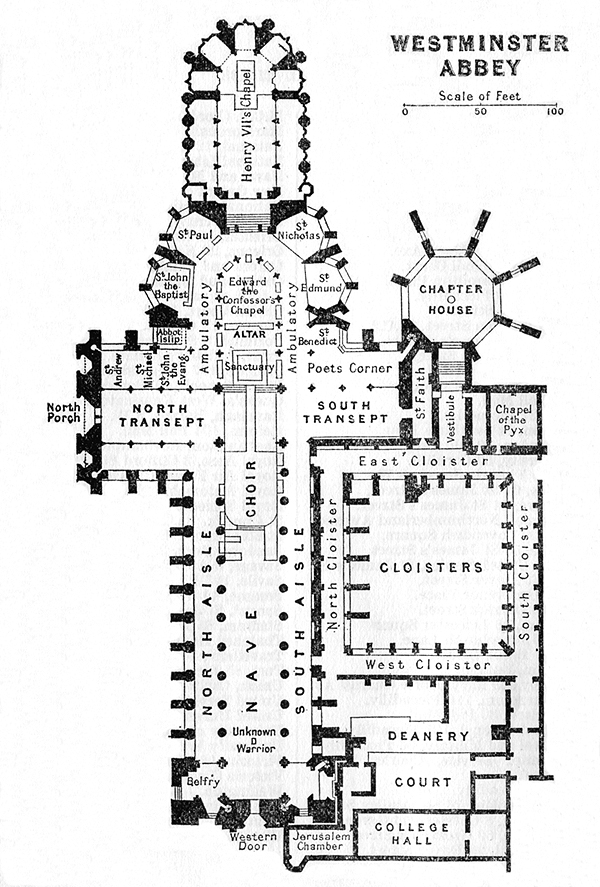
Map of Westminster Abbey in London, England
Westminster Abbey in London, England

Grave Location:

South Transept; Poets' Corner

Grave Location Description

Rudyard Kipling is interred in Poets’ Corner at Westminster Abbey in central London, UK. When visiting the Abbey, head to the south transept. This literary master’s grave is located near the center of the floor, situated directly below the wall monuments of Geoffrey Chaucer and George Frideric Handel. Entry requires a ticket, and visitors typically enter through the North Door.

Grave Location GPS

51.49938893751, -0.12739732062650

Photos:

[+]
[+]
[+]
[+]
[+]
[+]
[+]
[+]

FAQ's

Rudyard Kipling was born on December 30, 1865.

Rudyard Kipling was born in Bombay, British India.

Rudyard Kipling died on January 18, 1936.

Rudyard Kipling died in Middlesex Hospital, London, England.

Rudyard Kipling was 70.

The cause of death was Perforated duodenal ulcer.

Rudyard Kipling's grave is in Westminster Abbey

Read More About Rudyard Kipling:

Videos Featuring Rudyard Kipling:
See More:

O. Henry

popular name: O. Henry

date_of_death: June 5, 1910

age: 47

cause_of_death: Cirrhosis of the liver with complications of diabetes and an enlarged heart

claim_to_fame: Writers and Poets

best_know_for: William Sydney Porter, better known by his pen name O. Henry, was an American short story writer. Porter was born in Greensboro, North Carolina. He moved to Texas in 1882, where he met his wife, Athol Estes, with whom he had two children. In 1902, after the death of his wife, Porter moved to New York, where he soon remarried. Will Porter's most prolific writing period started in New York City where he wrote 381 short stories including "The Gift of the Magi", "The Duplicity of Hargraves", and "The Ransom of Red Chief". His stories are known for their surprise endings and witty narration. He wrote a story a week for over a year for the New York World Sunday Magazine. His wit, characterization, and plot twists were adored by his readers but often panned by critics. Porter was a heavy drinker, and by 1908, his markedly deteriorating health affected his writing. In 1909, Sarah left him, and he died on June 5, 1910, of cirrhosis of the liver, complications of diabetes, and an enlarged heart. Porter's legacy includes the O. Henry Award, an annual prize awarded to outstanding short stories. He was laid to rest at Riverside Cemetery in Asheville, NC.

Honoré de Balzac

popular name: Honoré de Balzac

date_of_death: August 18, 1850

age: 51

cause_of_death: Gangrene associated with congestive heart failure

claim_to_fame: Writers and Poets

best_know_for: Honoré de Balzac (1799–1850) was one of the most influential writers of 19th-century French literature and a central figure in the development of literary realism. After initially studying law and briefly working in publishing and printing—ventures that left him deeply in debt—Balzac turned seriously to writing in the 1820s. He gained recognition for his ambitious project, La Comédie humaine, a vast collection of interconnected novels and stories that portrayed French society in the decades following the French Revolution and during the Bourbon Restoration. Over his career, Balzac produced more than 90 works, including major novels such as Père Goriot and Eugénie Grandet, which explored themes of ambition, class mobility, wealth, and moral struggle. Known for his intense writing habits—often fueled by large amounts of coffee—Balzac developed richly detailed characters who reappeared across different stories, creating a unified literary universe. Despite constant financial pressures and health problems, he continued writing prolifically until his death in 1850, leaving a body of work that profoundly influenced later novelists and helped shape the modern realist novel.

Victor Noir

popular name: Victor Noir

date_of_death: January 11, 1870

age: 21

cause_of_death: Homicide - gunshot wounds

claim_to_fame: Writers and Poets

best_know_for: Victor Noir was the nom de plume of a budding journalist killed at 21 years old by Prince Pierre Bonaparte. The prince was a relative of the reigning monarch, Emperor Napoleon III, the same Napoleon who censured the press and forced writers like Victor Hugo into exile. The little noble shot Victor six times when Noir and another witness went to pick up the prince and drive him to a duel. The prince was quickly tried and acquitted, paying only a pittance in damages for taking another man's life. More than a hundred thousand outraged people crowded for the funeral on a cold January day in 1870. It was a catalyst for anti-royal fervor. Later that same year, after a crushing defeat at a battle in the Franco-Prussian war they imprisoned the last Napoleon.

Back to Top