Seymour H. Knox I

Birth Name:
Seymour Horace Knox
Birth Date:
April 11, 1861
Birth Place:
Russell, New York
Death Date:
May 17, 1915
Place of Death:
1045 Delaware Avenue, Buffalo, New York
Age:
54
Cause of Death:
Uremic coma
Cemetery Name:
Forest Lawn Cemetery
Claim to Fame:
Business and Finance
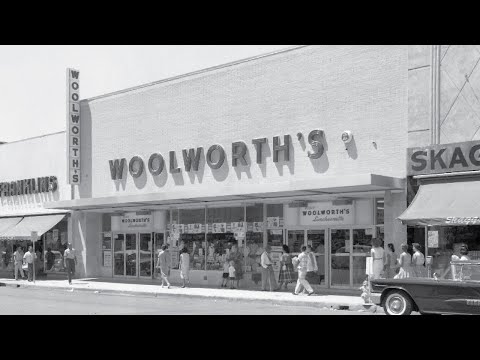
Seymour Knox was a Buffalo, New York businessman who made his fortune in five-and-dime stores. He merged his more than 100 stores with those of his first cousins, Frank Winfield Woolworth and Charles Woolworth, to form the F. W. Woolworth Company. In fact, by the time of the 1911 incorporation of F. W. Woolworth Company, Knox was the second largest of six store operators with 98 U.S. and 13 Canadian locations. In 1912, he received $12 million of the $65 million merger proceeds and was appointed Director and Senior Vice-Principal of the Corporation. Knox is remembered as the pioneering city center store operator. His Detroit, Michigan store was the first outside of the agricultural and small-market towns. Many of the Woolworth friendly rivals emulated his plan. Upon his death, he was laid to rest at Forest Lawn Cemetery in Buffalo, NY.

Fun Facts

After Seymour Knox death, his wife built a new mansion on Delaware Avenue for her and their children, designed by New York City architect C. P. H. Gilbert, known today as the Mrs. Seymour H. Knox House.

Seymour Knox was the father of Seymour H. Knox II and grandfather of Seymour H. Knox III and Northrup Knox, the co-founders of the Buffalo Sabres in the National Hockey League.

Seymour Knox loved a good mansion and lived in 4 during his life time. The addresses of those mansions in the order they lived in Buffalo, New York are 414 Porter Avenue, 467 Linwood, 1049 Delaware Avenue (now 1035) and 806 Delaware Avenue.

Cemetery Information:

Final Resting Place:

Forest Lawn Cemetery

1990 Main Road

Buffalo, New York, 14208

USA

North America

Map:
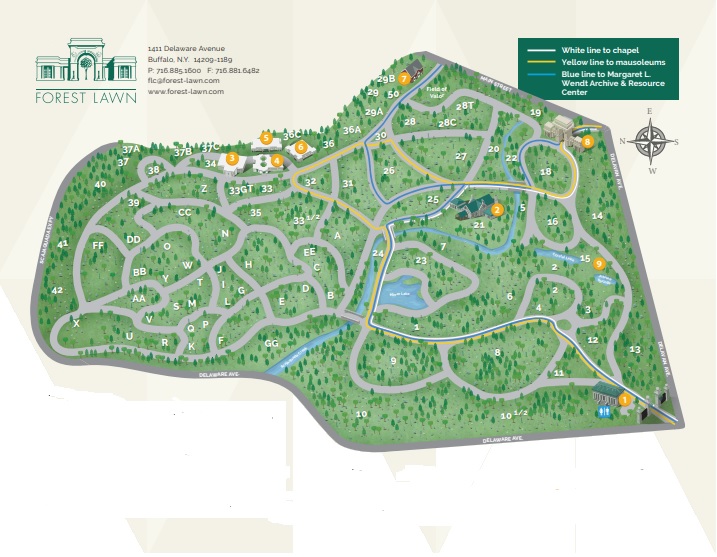
Cemetery Map of Forest Lawn Cemetery in Buffalo, New York
Map of Forest Lawn Cemetery in Buffalo, New York

Grave Location:

Knox Mausoleum, Section 23, Lot 2, Niche 4

Grave Location Description

As you enter the cemetery follow the white line in the road until you get to Mirror Lake which borders Section 23. Drive around Section 23 until you see the 4-pillored Knox mausoleum on Mausoleum Row.

Grave Location GPS

42.9258402, -78.8624366

Photos:

[+]
[+]
[+]
[+]
[+]
[+]
[+]
[+]
[+]
[+]
[+]
[+]
[+]
[+]
[+]
[+]
[+]

FAQ's

Seymour H. Knox I was born on April 11, 1861.

Seymour H. Knox I was born in Russell, New York.

Seymour H. Knox I died on May 17, 1915.

Seymour H. Knox I died in 1045 Delaware Avenue, Buffalo, New York.

Seymour H. Knox I was 54.

The cause of death was Uremic coma.

Seymour H. Knox I's grave is in Forest Lawn Cemetery

Read More About Seymour H. Knox I:

Videos Featuring Seymour H. Knox I:
See More:

Rowland H. Macy

popular name: Rowland H. Macy

date_of_death: March 29, 1877

age: 54

cause_of_death: Bright's disease (kidney failure)

claim_to_fame: Business and Finance

best_know_for: Rowland H. Macy (1822–1877) was an American businessman best known as the founder of Macy’s department store. Born in Nantucket, Massachusetts, he began his career at sea as a whaler before turning to retail. Macy opened a series of small shops, most of which failed, before achieving success with his New York City store, R.H. Macy & Co., founded in 1858 on Sixth Avenue. His innovative business practices—such as fixed prices, cash sales (no credit), and extensive advertising—helped revolutionize retail and set the foundation for the modern department store. Macy’s business thrived, and his store became a landmark of American consumer culture. Rowland H. Macy died in 1877 in Paris, France, reportedly of Bright’s disease (a kidney ailment). After his death, his store continued to grow under Isidor and Nathan Straus, eventually becoming one of the largest and most iconic retail chains in the world. Today visitors can view the grave of Rowland Macy at the historic Woodlawn Cemetery in the Bronx, New York

Harold Stirling Vanderbilt

popular name: Harold Stirling Vanderbilt

date_of_death: July 4, 1970

age: 85

cause_of_death:

claim_to_fame: Business and Finance

best_know_for: Harold Stirling Vanderbilt was an American railroad executive, a champion yachtsman, an innovator and champion player of contract bridge, and a member of the Vanderbilt family. Vanderbilt was a director of the New York Central Railroad from 1913 and was a driving force behind the rail network until he was defeated for the control of the company in 1954. He was also known as a card game enthusiast. In 1925, while on board SS Finland, he originated changes to the scoring system through which the game of contract bridge supplanted auction bridge in popularity. He also served as commodore of the New York Yacht Club from 1922 to 1924, and won six "King's Cups" and five Astor Cups at regattas between 1922 and 1938. Mr. Vanderbilt, who stood 6 feet tall, was a commanding figure whether at the helm of a Cup defender or on the tennis court, where he was also an excellent performer. Unlike many of the local wealthy families, he showed little interest in the social events of Newport.

William Andrews Clark

popular name: William Andrews Clark

date_of_death: March 2, 1925

age: 86

cause_of_death: Pneumonia

claim_to_fame: Business and Finance

best_know_for: William Andrews Clark (1839–1925) was an American industrialist, banker, politician and one of the most powerful figures of the Gilded Age. Born in Pennsylvania, he moved west during the mid-19th century and first worked as a miner, trader, and banker in Montana Territory. Clark’s real fortune came from his investments in copper mining—he became one of the famed “Copper Kings” of Butte, Montana, amassing immense wealth as the demand for copper soared with the rise of electricity. His business empire expanded to include railroads, newspapers, and real estate, making him one of the richest men in America. Clark’s political career was marked by controversy; he served briefly as a U.S. Senator from Montana (1901–1907) after earlier attempts were tainted by accusations of bribery in the state legislature. Despite the scandals, he remained a prominent figure in business and society, known for his opulent lifestyle and philanthropy. He was instrumental in the development of Las Vegas, Nevada, through his railroad ventures, which helped establish the city as a key stop in the Southwest. Fans of the gilded age can visit W.A. Clark and his daughter Huguette at Woodlawn Cemetery in the Bronx.

Back to Top