Ed Delahanty

AKA:
Big Ed
Birth Name:
Edward James Delahanty
Birth Date:
October 30, 1867
Birth Place:
Cleveland, Ohio
Death Date:
July 2, 1903
Place of Death:
Niagara Falls, Ontario, Canada
Age:
35
Cause of Death:
Swept over Niagara Falls
Cemetery Name:
Calvary Cemetery
Claim to Fame:
Sports
Ed Delahanty was an American professional baseball player who spent his Major League Baseball (MLB) playing career with the Philadelphia Quakers, Cleveland Infants, Philadelphia Phillies, and Washington Senators. He was renowned as one of the game's early power hitters, and while primarily a left fielder, also spent time as an infielder. Delahanty won a batting title, batted over .400 three times, and has the fifth-highest career batting average in MLB history. He was elected to the Baseball Hall of Fame in 1945. Upon his death he was laid to rest at Calvary Cemetery in Cleveland, Ohio.

Not-So-Fun-Fact

Ed Delahanty died when he fell from the International Bridge on a Thursday night, swept over Niagara Falls, and was taken from the river at the lower Niagara gorge. It all started with a long train ride from Detroit to NYC, and Big Ed decided to down five shots of whiskey. The liquor made him uncontrollable. He crashed into an emergency tool cabinet, breaking the glass. He pulled a woman by her ankles out of her berth, then began threatening passengers with a razor. A drunken Delahanty was terrifying other passengers with an open razor so much so that the conductor simply removed him from the train at Bridgeburg at the Canadian end of the bridge. Delahanty began to walk across the bridge illegally when he simply fell off the tracks.

When they found the body a week later his mangled corpse was missing a leg and was found with an unrelated female body nearby.

Cemetery Information:

Final Resting Place:

Calvary Cemetery

10000 Miles Avenue

Cleveland, Ohio, 44105

USA

North America

Map:
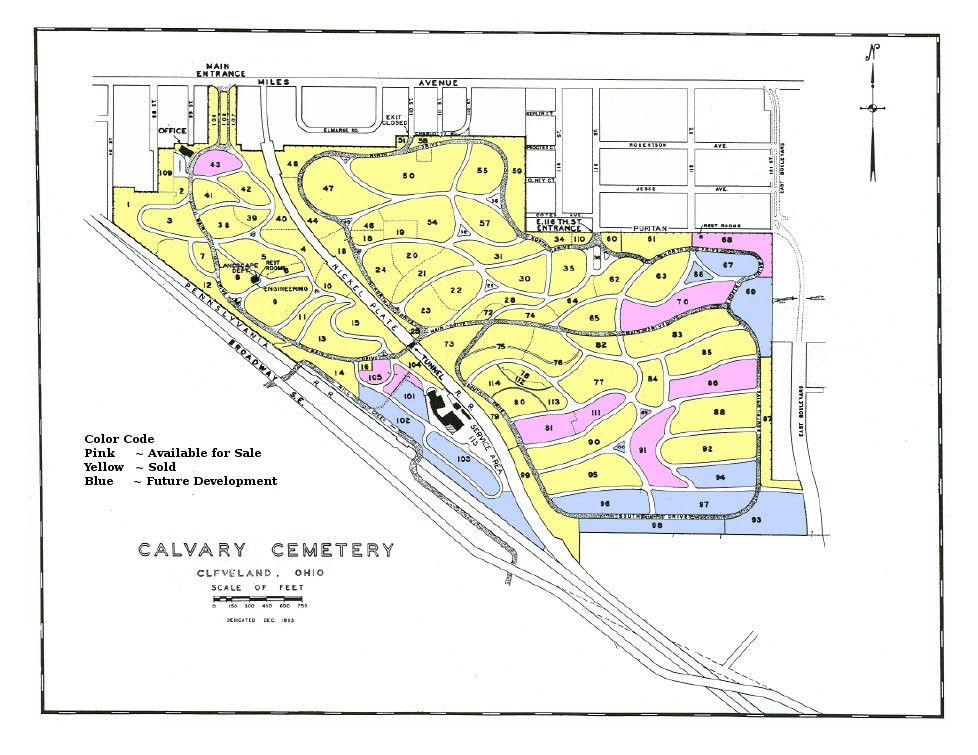
Map of Calvary Cemetery in Cleveland, Ohio

Grave Location:

Section 10, Lot 135B, Grave 7

Grave Location Description

As you enter the cemetery find the intersection of Sections 9, 10 and 11. Ed Delahanty can be found 3 rows from the road at the intersection.

Grave Location GPS

41.44020093701166, -81.611364716451

Photos:

[+]
[+]
[+]
[+]
[+]
[+]
[+]
[+]
[+]
[+]
[+]
[+]
[+]
[+]
[+]
[+]

FAQ's

Ed Delahanty was born on October 30, 1867.

Ed Delahanty was born in Cleveland, Ohio.

Ed Delahanty died on July 2, 1903.

Ed Delahanty died in Niagara Falls, Ontario, Canada.

Ed Delahanty was 35.

The cause of death was Swept over Niagara Falls.

Ed Delahanty's grave is in Calvary Cemetery

Read More About Ed Delahanty:

Videos Featuring Ed Delahanty:

See More:

Catfish Hunter

popular name: Catfish Hunter

date_of_death: September 9, 1999

age: 53

cause_of_death: Amyotrophic lateral sclerosis (ALS or Lou Gehrig's disease)

claim_to_fame: Sports

best_know_for: Jim "Catfish" Hunter, whose pitching prowess earned him five World Series rings, 224 victories, a spot in the Baseball Hall of Fame and made him the game's first big-money free agent. Recruited right out of high school at age 18, Hunter won his first major-league game, and a year after that, at 20, he made the American League All-Star team in a season in which he finished 9-11. He reached 20 wins for the first time in 1971 with a 21-11 record and won at least 20 games the next four seasons. In 1974, he was 25-12 and won the Cy Young Award. In 1968, he pitched a perfect game against the Minnesota Twins, the seventh perfect game in modern baseball history at the time. And the Athletics, by then in Oakland, dominated baseball in the early '70s with the likes of Hunter, Reggie Jackson, Sal Bando, Gene Tenace, Rollie Fingers and a group that played hard, on and off the field. "We were the long-haired, mustached gang from Oakland," Hunter said. "We were lucky just to be there, was what they said." After the Oakland A's, Hunter signed with the New York Yankees not because they offered the most money, but rather it was close to his home in North Carolina. Hunter's first season with the Yankees was his last of five consecutive 20-win years. He was 23-14 for the 1975 Yankees and pitched for them until 1979, when he retired at 33, with a 224-166 record and a 3.26 ERA. He was on World Series-winning teams with Oakland in 1972-74 and New York in 1977-78. At age 52 he was diagnosed with ALS (Lou Gehrig's Disease) and passed away the following year.

Beals Wright

popular name: Beals Wright

date_of_death: August 23, 1961

age: 81

cause_of_death: Natural causes

claim_to_fame: Sports

best_know_for: A graduate of Harvard University, Beals Wright was an accomplished tennis player, winning gold medals in men’s singles and doubles at the 1904 St. Louis Olympic Games, U.S. championships in men’s doubles in 1904, 1905, and 1906, and the men’s singles in 1905. Beals was a member of the Davis Cup team for five years between 1905 and 1912, and was ranked in the top ten U.S. tennis players for ten years. After his playing days ended, he continued in the sport as a referee and as a promoter of tennis tournaments. Beals Wright was inducted into the International Tennis Hall of Fame (then called the Lawn Tennis Hall of Fame) in 1956.

Randy Smith

popular name: Randy Smith

date_of_death: June 4, 2009

age: 60

cause_of_death: Heart attack

claim_to_fame: Sports

best_know_for: Randy Smith was an American professional basketball player who set the NBA record for consecutive games played. From 1972 to 1982, Smith played in every regular season game, en route to a then-record of 906 straight games (since broken by A.C. Green). After college graduation, Smith was chosen by the nearby Buffalo Braves with the 104th pick in the 1971 NBA Draft (in the seventh round). Playing for the Buffalo Braves / San Diego Clippers (1971–1979) Smith surprised everyone in training camp, and he made the final roster cuts. Despite standing only 6-foot-3, he was assigned to play forward. He averaged 13.4 points per game in his rookie season. Smith continued to improve beyond expectation, drawing on his tremendous speed, quickness and leaping ability. His style of play, along with contemporaries like Julius Erving, marked by fast breaks and "above the rim" ball movements influenced the offensive style of the NBA in the late 1970s and early 1980s. Playing alongside league scoring champion Bob McAdoo, Smith averaged 21.8 points per game in the 1975–76 season, and was named to the All-NBA Second Team. Smith continued his successful career with the Cleveland Cavaliers, the New York Knicks, then a return to the San Diego Clippers before retiring after 15 games with the Atlanta Hawks. After retiring as a player, Smith was an NBA league executive whose duties included assisting former players in need, and he was a coach in the Continental Basketball Association before working at Mohegan Sun in Uncasville, where he worked in marketing. Upon his death, he was interred at Forest Lawn East Cemetery in North Carolina.

Back to Top