WARNING: EXPLICIT MATERIAL

Violette Nozière

Birth Name:
Violette Germaine Nozière
Birth Date:
January 11, 1915
Birth Place:
Neuvy-sur-Loire, France
Death Date:
November 26, 1966
Place of Death:
Le Petit-Quevilly, France
Age:
51
Cause of Death:
Unknown
Cemetery Name:
Neuvy-sur-Loire communal cemetery
Claim to Fame:
Crime and their Victims
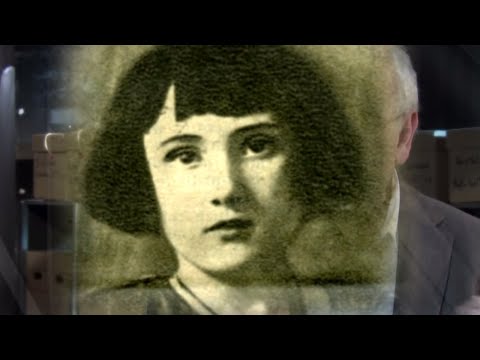
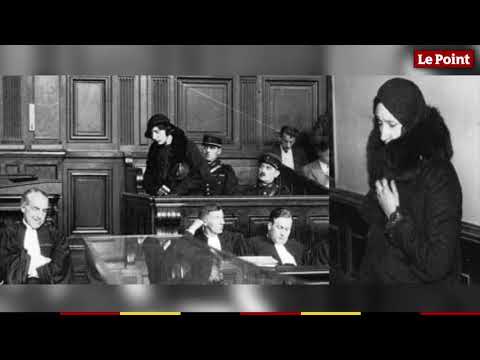
Violette Nozière was a French woman who was convicted of murdering her father. Known as "L'Affaire" the trial had everything to captivate all of France in the 1930s - parracide, incest, prostitution, syphilis. Given all the lies and stories Violette stated during the trial and her complete silence after her release from prison we will never truly know what happened in the small apartment on the 3rd floor of 9 Rue de Madagascar one steamy, hot August night.

On a hot, humid August evening in 1933, in a working-class neighborhood in Paris, eighteen-year-old Violette Nozière gave her mother and father glasses of barbiturate-laced “medication,” which she told them had been prescribed by the family doctor; her father died while the mother barely survived. Almost immediately Violette’s act of “double parricide” became the most sensational private crime of the French interwar era—discussed and debated so passionately that it was compared to the Dreyfus Affair. Why would the beloved only child of respectable parents do such a thing?

In the end she was found guilty, sentenced to death. Then the sentenced was commuted to life at hard labor … then down to 12 years … then finally released from prison in 1945.

Cemetery Information:

Final Resting Place:

Neuvy-sur-Loire communal cemetery

intersection of Rue du Coudray and Chemin du Colombier

Neuvy-sur-Loire, , 58450

France

Europe

Grave Location Description

Violette Nozière can be found resting at the communal cemetery of Neuvy-sur-Loire in the Bourgogne region in France. From the entry gates walk towards the center of the small cemetery. Now continue to walk to the back wall and her family grave can be found approximately 8 spaces from the back of the cemetery.

Grave Location GPS

47.525275, 2.890656

Visiting The Grave:

Photos:

[+]
[+]
[+]
[+]
[+]
[+]
[+]
[+]
[+]
[+]
[+]
[+]
[+]
[+]
[+]
[+]
[+]
[+]
[+]
[+]

FAQ's

Violette Nozière was born on January 11, 1915.

Violette Nozière was born in Neuvy-sur-Loire, France.

Violette Nozière died on November 26, 1966.

Violette Nozière died in Le Petit-Quevilly, France.

Violette Nozière was 51.

The cause of death was Unknown.

Violette Nozière's grave is in Neuvy-sur-Loire communal cemetery

Read More About Violette Nozière:

Videos Featuring Violette Nozière:

See More:

Thomas Putnam

popular name: Thomas Putnam

date_of_death: June 3, 1699

age: 47

cause_of_death: Unknown infectious disease

claim_to_fame: Crime and their Victims

best_know_for: Thomas Putnam was the father of afflicted girl Ann Putnam, Jr, and many historians consider him to be a major influence in the Salem Witch Trials. Putnam himself accused and testified against 43 people while his daughter testified against 62 people.

H. H. Holmes

popular name: H. H. Holmes

date_of_death: May 7, 1896

age: 34

cause_of_death: Execution by hanging

claim_to_fame: Crime and their Victims

best_know_for: The country’s first serial killer was a smooth-talking doctor who ran a murder hotel in Chicago. The tale of H. H. Holmes and his Murder Castle is perhaps one of the most fascinating cases in American criminal history. Born Herman Webster Mudgett, he was a bright young doctor who had graduated from high school at sixteen and always had a penchant for anything to do with death. While enrolled in the University of Michigan’s Department of Medicine and Surgery, he worked under Professor William James Herdman in the university’s anatomy lab. The pair were said to have aided body snatching to supply bodies as medical cadavers, which Mudgett then burned or disfigured with acid, then planted to it look as if they had been killed in an accident. Mudgett began taking out insurance policies on these people—before he stole, disfigured, and planted them—and would later collect the insurance money once the bodies were discovered. After graduation, Mudgett started a new job working at a Philadelphia drugstore. When a child died after taking medicine purchased from the drugstore Mudgett was employed at, the young doctor denied any involvement and immediately left the city. Before he moved to Chicago, he changed his name to avoid any connection to his previous scams. Herman Webster Mudgett, M.D., donned the name Henry Howard Holmes. In 1893, the bustling city of Chicago won the honor of hosting the World’s Columbian Exposition. While the World’s Fair brought millions of visitors from all over the world, nearby, a clever killer hid in plain sight, capitalizing off of the slaughter of naive tourists. For the next two years Holmes either killed or is suspected of killing around two dozen people using his murder mansion residences to facility cruel and diabolical murder of men, women, and even children. He was finally caught and convicted of murder in 1894 and executed in 1985. Until the moment of his death, Holmes remained calm and amiable, showing very few signs of fear, anxiety, or depression. Despite this, he asked for his coffin to be contained in concrete and buried ten feet deep, because he was concerned grave robbers would steal his body and use it for dissection. Despite popular belief, Holmes's neck did not break; he instead strangled to death slowly, twitching for over fifteen minutes before being pronounced dead. He was buried in Holy Cross Cemetery in Yeadon, Pennsylvania.

Charles Lawson

popular name: Charles Lawson

date_of_death: December 25, 1929

age: 43

cause_of_death: Suicide by Gun

claim_to_fame: Crime and their Victims

best_know_for: Charles Lawson was a North Carolina tobacco farmer born on May 10, 1886, who became infamously known for the tragic and shocking murders of his own family on Christmas Day in 1929 in Germanton, North Carolina. Lawson, reportedly a hardworking man, had recently moved his wife, Fannie, and their seven children into a new home and was thought to be relatively prosperous. Just days before the killings, he took his family to town to buy new clothes and have a formal family portrait taken—an unusual gesture that later seemed eerily significant. On December 25, 1929, Lawson brutally murdered his wife and six of their children before turning the shotgun on himself. Only his eldest son, Arthur, survived, as he had been sent into town on an errand. The motive behind the murders has remained a subject of speculation for decades, with theories ranging from financial stress and mental illness to dark rumors of incest. The case has since become a haunting part of North Carolina folklore, inspiring books, songs, and documentaries. Charles Lawson and his entire family were all laid to rest is one large grave at the Browder Family Cemetery in Germantown, North Carolina.

Back to Top