Gene Tunney

AKA:
The Fighting Marine
Birth Name:
James Joseph Tunney
Birth Date:
May 25, 1897
Birth Place:
New York City, New York
Death Date:
November 7, 1978
Place of Death:
Greenwich Hospital, Greenwich, Connecticut
Age:
81
Cause of Death:
Circulation Ailment
Cemetery Name:
Long Ridge Union Cemetery
Claim to Fame:
Sports
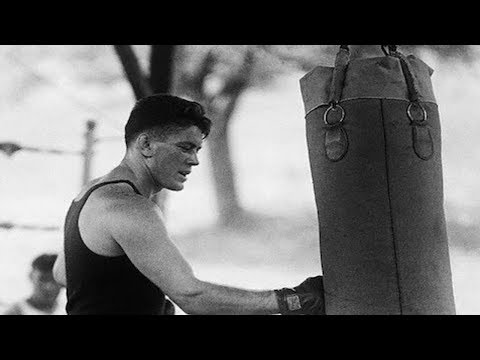
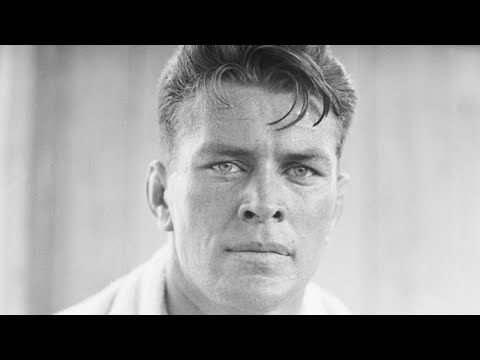
Gene Tunney, born James Joseph Tunney on May 25, 1897, in New York City, was an American professional boxer and world heavyweight champion from 1926 to 1928. Raised in a working-class Irish-American family, Tunney developed a passion for boxing at a young age and turned professional in 1915. Known for his intelligence, disciplined training, and tactical style, he earned the nickname “The Fighting Marine” after serving in the U.S. Marine Corps during World War I. Tunney rose to prominence in the light heavyweight division before moving up to heavyweight, where he achieved his greatest fame by defeating Jack Dempsey in 1926 to win the world title. Their rematch in 1927, known for the controversial "Long Count" when Dempsey failed to immediately go to a neutral corner, remains one of boxing’s most storied bouts. Tunney retired undefeated as heavyweight champion in 1928, having lost only once in his entire career. After boxing, he led a successful business life and maintained a private family life with his wife, socialite Polly Lauder. Tunney died on November 7, 1978 and was buried at Long Ridge Union Cemetery in Stamford, Connecticut.

Fun Facts

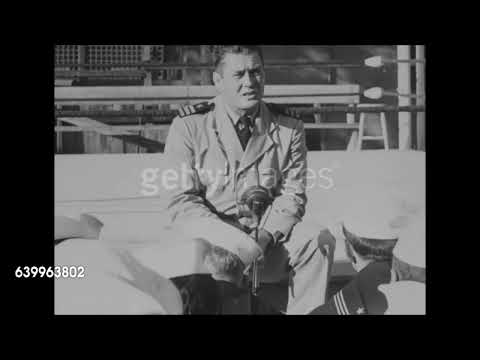
Gene Tunney was a highly educated, “scientific” boxer who twice defeated Jack Dempsey for the heavyweight title, had a career-defining moment in the “long count” rematch, and retired undefeated as champion. He served in the Marines during WWI, where he won a championship, and later became a successful businessman and WWII veteran who directed the U.S. Navy’s physical fitness program. He was also a lifelong intellectual who lectured on Shakespeare at Yale University and was friends with authors like George Bernard Shaw.

After retiring from boxing, Tunney had a successful career in business and the arts. He was the author of two books: A Man Must Fight (1932) and Arms for Living (1942). Tunney also had a brief acting career, starring in the 1926 movie The Fighting Marine. Unfortunately, no prints of the film are known to exist today.


Cemetery Information:

Final Resting Place:

Long Ridge Union Cemetery

154 Erskine Road

Stamford, Connecticut, 06903

USA

North America

Grave Location:

Section G, Tunney Family Plot

Grave Location Description

As you are driving down Erskine Road with the cemetery on your left, drive past Lake Windermere Road on your right (their is a cemetery entrance on your left but keep driving) and take the next entrance to the cemetery on your left. Drive straight ahead to the end of the road and the final resting place of boxing legend Gene Tunney and family is on your right.

Grave Location GPS

41.148247096102835, -73.59700535535603

Visiting The Grave:

Photos:

[+]
[+]
[+]
[+]
[+]
[+]
[+]
[+]
[+]
[+]
[+]
[+]
[+]
[+]

FAQ's

Gene Tunney was born on May 25, 1897.

Gene Tunney was born in New York City, New York.

Gene Tunney died on November 7, 1978.

Gene Tunney died in Greenwich Hospital, Greenwich, Connecticut.

Gene Tunney was 81.

The cause of death was Circulation Ailment.

Gene Tunney's grave is in Long Ridge Union Cemetery

Read More About Gene Tunney:

Videos Featuring Gene Tunney:

See More:

Rick Tolley

popular name: Rick Tolley

date_of_death: November 14, 1970

age: 30

cause_of_death: Plane crash

claim_to_fame: Sports

best_know_for: Rick Tolley was an American football coach who served as the head football coach at Marshall University during the 1969 and 1970 seasons. He died in the 1970 plane crash that killed all 75 crew and passengers aboard, including most of the Marshall football team and coaching staff and several team boosters. Southern Airways Flight 932 was a chartered Southern Airways Douglas DC-9 domestic United States commercial jet flight from Stallings Field (ISO) in Kinston, North Carolina, to Huntington Tri-State Airport/Milton J. Ferguson Field (HTS) near Kenova, West Virginia. At 7:36 pm on November 14, 1970, the aircraft crashed into a hill just short of the Tri-State Airport, killing all 75 people on board. The accident is the deadliest tragedy to have affected any sports team in U.S. history. Rick was laid to rest at Spring Hill Cemetery in Huntington West Virginia.

Eddie Bennett

popular name: Eddie Bennett

date_of_death: 01/16/1935

age: 31

cause_of_death: Alcoholism

claim_to_fame: Sports

best_know_for: Eddie Bennett was an American batboy and mascot for several teams, most notably the New York Yankees during the 1920s and 1930s. At the time of his death, Bennett was considered to be the "most famous mascot in the world". Bennet had a spinal injury when he was very young which resulted in a hunchback. He was considered to be a "good luck charm" by the members of the club, and became a well-known celebrity in New York. On May 19, 1932, Bennett was hit by a taxi on a New York City street. He suffered a broken leg and other injuries from which he never recovered. To find relief from the pain he suffered from the injuries, Bennett started to abuse alcohol. He was forced to retire as the Yankees mascot in the middle of 1933 season, although Ruppert insisted he remain on the payroll all year. The New York Times reported that the "notoriously superstitious" ballplayers and fans blamed Bennett's absence on the Yankees' failure to win the pennant in 1933 and 1934. In January 1935, Bennett died penniless due to alcoholism.

Ken Dyer

popular name: Ken Dyer

date_of_death: March 7, 2010

age: 63

cause_of_death: Heart failure

claim_to_fame: Sports

best_know_for: Ken Dyer was an American football player who played two seasons with the Cincinnati Bengals of the National Football League. He was drafted by the San Diego Chargers in the fourth round of the 1968 NFL Draft. He played college football at Arizona State University and attended Ann Arbor High School in Ann Arbor, Michigan. Dyer broke his neck while attempting to tackle Green Bay Packers running back John Brockington on October 3, 1971, ending his playing career. With his playing career over, Ken Dyer stayed home in Arizona and went to work as a salesman for some large soap companies. Then he bought his own dry cleaning business before retiring about two years ago before his passing. Dyer didn't keep in much contact with his old teammates and he didn't talk much about the play. His mother said it was pride. He just didn't want people to see him less than 100 percent.

Back to Top