Molière

Birth Name:
Jean-Baptiste Poquelin
Birth Date:
January 15, 1622
Birth Place:
Paris, France
Death Date:
February 17, 1673
Place of Death:
40 rue de Richelieu, Paris, 1st arrondissement, France
Age:
51
Cause of Death:
Pulmonary tuberculosis
Cemetery Name:
Cimetière du Père Lachaise
Claim to Fame:
Writers and Poets
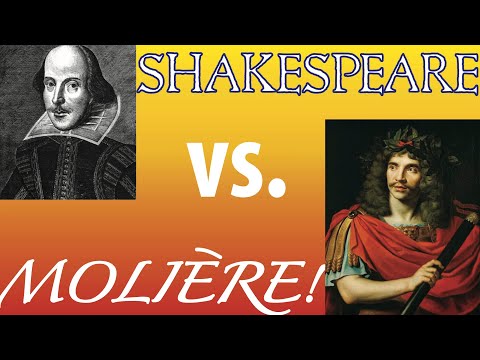
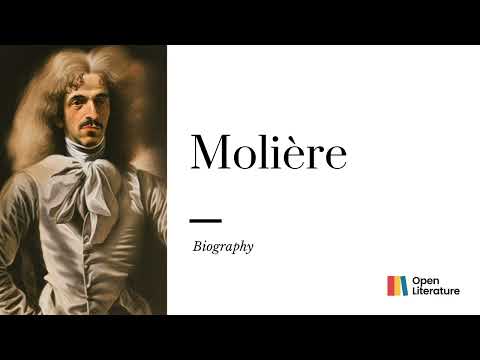
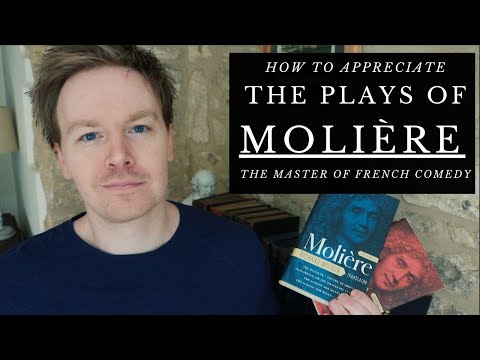
Molière was a French playwright, actor, and poet, widely regarded as one of the great writers in the French language and world literature. His extant works include comedies, farces, tragicomedies, comédie-ballets, and more. His plays have been translated into every major living language and are performed at the Comédie-Française more often than those of any other playwright today. His influence is such that the French language is often referred to as the "language of Molière".

His Final Performance

Molière collapsed on stage in a fit of coughing and haemorrhaging due to pulmonary tuberculosis while performing in the last play he had written, which had lavish ballets performed to the music of Marc-Antoine Charpentier and which ironically was titled Le Malade imaginaire (The Imaginary Invalid). Molière insisted on completing his performance. Afterwards he collapsed again with another, larger haemorrhage before being taken home, where he died a few hours later.

Molière isn’t originally buried at Père Lachaise – he was initially interred in a cemetery for unbaptized infants due to his actor status, but his remains were first moved to the museum of French monuments and then later to Père Lachaise in 1817 as part of a publicity stunt to make the new cemetery popular, alongside those of Jean de La Fontaine, though some debate exists if the bones are truly his.

Cemetery Information:

Final Resting Place:

Cimetière du Père Lachaise

16 Rue du Repos, 6ème division, Chemin Lesseps

Paris, , 75020

France

Europe

Map:
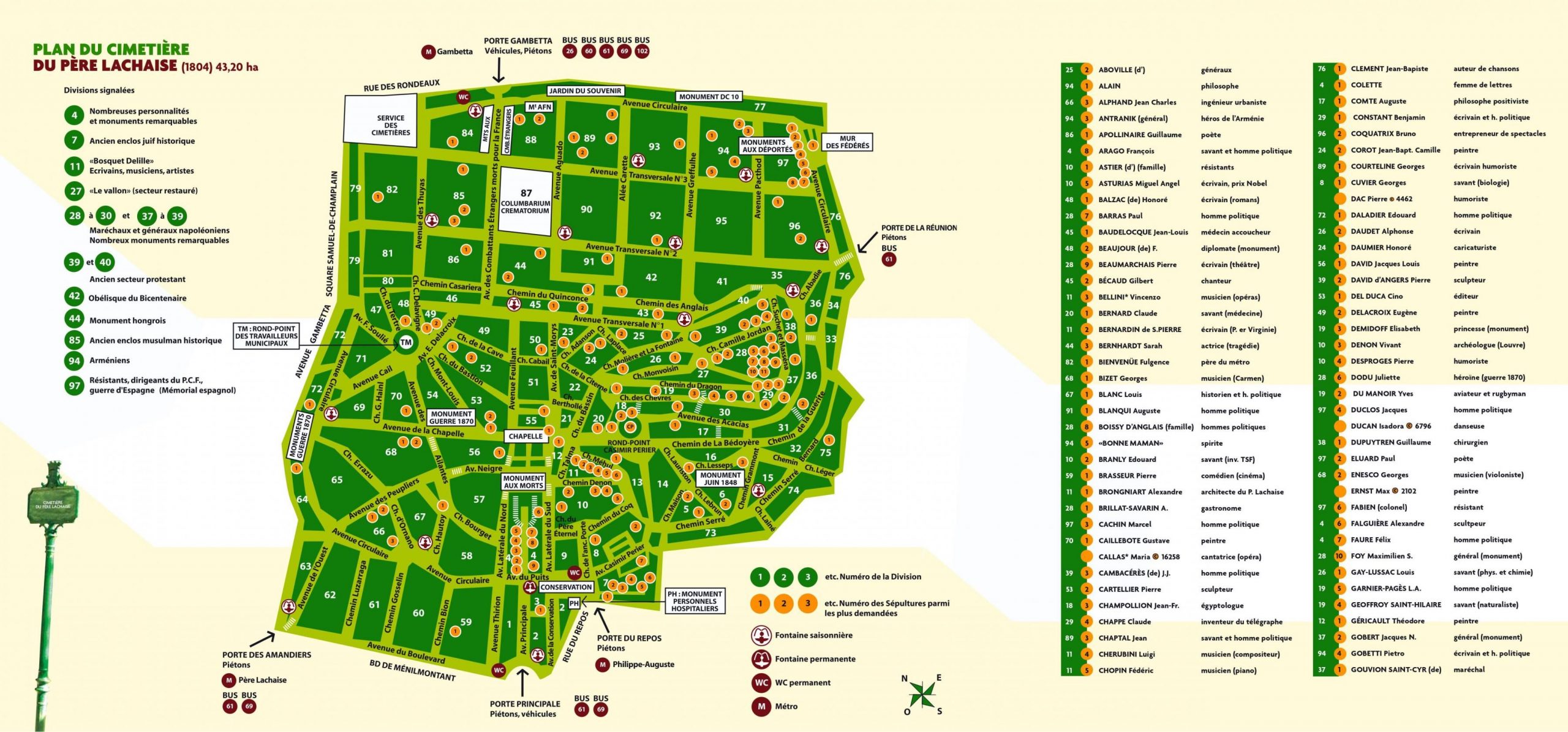
Map of Cimetière du Père-Lachaise in Paris, France
Cimetière du Père-Lachaise in Paris, France

Grave Location:

Division 25, Chemin Molière et la Fontaine

Grave Location Description

Molière’s tomb is a marble and bronze sarcophagus located in Division 25 of the cemetery, marking the final resting place of the playwright Jean-Baptiste Poquelin. The monument sits along the Chemin Molière et la Fontaine pathway in the eastern section.

Grave Location GPS

48.86066788588455, 2.3950846137764934

Photos:

[+]
[+]
[+]
[+]
[+]
[+]
[+]
[+]

FAQ's

Molière was born on January 15, 1622.

Molière was born in Paris, France.

Molière died on February 17, 1673.

Molière died in 40 rue de Richelieu, Paris, 1st arrondissement, France.

Molière was 51.

The cause of death was Pulmonary tuberculosis.

Molière's grave is in Cimetière du Père Lachaise

Read More About Molière:

Videos Featuring Molière:
See More:

Thomas Wolfe

popular name: Thomas Wolfe

date_of_death: September 15, 1938

age: 37

cause_of_death: Miliary tuberculosis

claim_to_fame: Writers and Poets

best_know_for: Thomas Wolfe is considered one of the most autobiographical novelists in American literature and is probably the greatest writer to come out of North Carolina. During his short life he wrote four novels; Look Homeward, Angel, Of Time and the River, The Web and the Rock, and You Can’t Go Home Again, as well as numerous short stories, novellas, and plays. He is known for mixing highly original, poetic, rhapsodic, and impressionistic prose with autobiographical writing. His books, written and published from the 1920s to the 1940s, vividly reflect on American culture and the mores of that period, filtered through Wolfe's sensitive, sophisticated, and hyper-analytical perspective. After Wolfe's death, contemporary author William Faulkner said that Wolfe might have been the greatest talent of their generation for aiming higher than any other writer. Wolfe's influence extends to the writings of Beat Generation writer Jack Kerouac, and of authors Ray Bradbury and Philip Roth, among others. Upon his death, he was laid to rest at Riverside Cemetery in Asheville, NC.

Franz Kafka

popular name: Franz Kafka

date_of_death: June 3, 1924

age: 40

cause_of_death: Laryngeal tuberculosis and starvation

claim_to_fame: Writers and Poets

best_know_for: Franz Kafka was a German-speaking Bohemian writer born on July 3, 1883, in Prague, then part of the Austro-Hungarian Empire (now the Czech Republic). He is widely regarded as one of the most influential literary figures of the 20th century. Kafka was born into a middle-class Jewish family and had a complicated relationship with his domineering father, which deeply influenced his writing. He studied law at the University of Prague and worked for much of his life in insurance, writing in his spare time. Kafka’s works often explore themes of alienation, absurdity, and the oppressive power of bureaucracy, with his most famous stories including The Metamorphosis, The Trial, and The Castle. His distinctive style blends realism with surreal, nightmarish scenarios, reflecting a sense of existential dread. Despite writing prolifically, Kafka published only a few works during his lifetime and instructed his friend Max Brod to destroy his manuscripts after his death. Brod ignored these wishes and instead edited and published much of Kafka’s work, securing his posthumous reputation. Upon his passing, the grave of Franz Kafka can be found at New Jewish Cemetery in Prague, Czechoslovakia.

Jean-Paul Sartre

popular name: Jean-Paul Sartre

date_of_death: April 15, 1980

age: 74

cause_of_death: Pulmonary edema

claim_to_fame: Writers and Poets

best_know_for: Jean-Paul Sartre was a French philosopher, playwright, novelist, screenwriter, political activist, biographer, sexual predator and literary critic, considered a leading figure in 20th-century French philosophy and Marxism. Sartre was one of the key figures in the philosophy of existentialism (and phenomenology). His work has influenced sociology, critical theory, post-colonial theory, and literary studies. He was awarded the 1964 Nobel Prize in Literature despite attempting to refuse it. Major philosophical works include Being and Nothingness (1943) where he explored human consciousness, freedom, and "bad faith" and Existentialism is a Humanism (1946), a public lecture defending existentialism. Sartre's best known literary works include Nausea (1938), a novel expressing existential dread and No Exit (1944), famous for the line "Hell is other people." Upon his passing the grave of Jean-Paul Sartre at Cimetière du Montparnasse is a top tourist attraction. His legacy ... not so much.

Back to Top