Rudyard Kipling

AKA:
Gigger
Birth Name:
Joseph Rudyard Kipling
Birth Date:
December 30, 1865
Birth Place:
Bombay, British India
Death Date:
January 18, 1936
Place of Death:
Middlesex Hospital, London, England
Age:
70
Cause of Death:
Perforated duodenal ulcer
Cemetery Name:
Westminster Abbey
Claim to Fame:
Writers and Poets
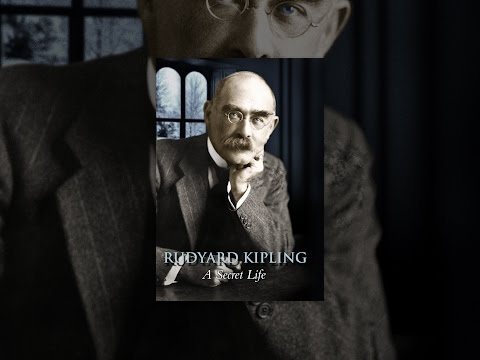
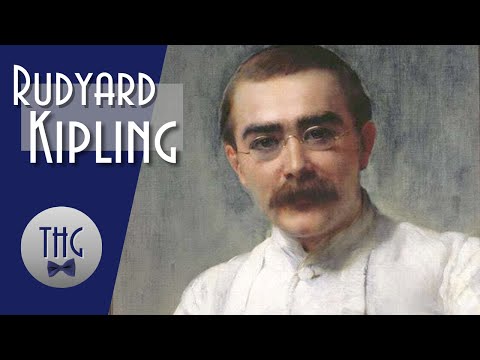
Rudyard Kipling (1865 – 1936) was an Indian English journalist, novelist, poet and short-story writer. He was born in British India, which inspired much of his work. Kipling's works of fiction include the Jungle Book duology (The Jungle Book, 1894; The Second Jungle Book, 1895), Kim (1901), the Just So Stories (1902) and many short stories, including "The Man Who Would Be King" (1888). His poems include "Mandalay" (1890), "Gunga Din" (1890), "The Gods of the Copybook Headings" (1919), "The White Man's Burden" (1899) and "If—" (1910). He is seen as an innovator in the art of the short story and His children's books are classics; one critic noted "a versatile and luminous narrative gift". Following his death in 1936, his ashes were interred at Poets' Corner in Westminster Abbey next to Charles Dickens.

Fun Facts

Kipling in the late 19th and early 20th centuries was among the United Kingdom’s most popular writers. Henry James said “Kipling strikes me personally as the most complete man of genius, as distinct from fine intelligence, that I have ever known.” In 1907 he was awarded the Nobel Prize in Literature, as the first English-language recipient and, at age 41 (its youngest recipient to date). He was also sounded out for the British Poet Laureateship and several times for a knighthood, but declined both.

Cemetery Information:

Final Resting Place:

Westminster Abbey

Deans Yard

London SW1P 3PA, England,

UK

Europe

Map:
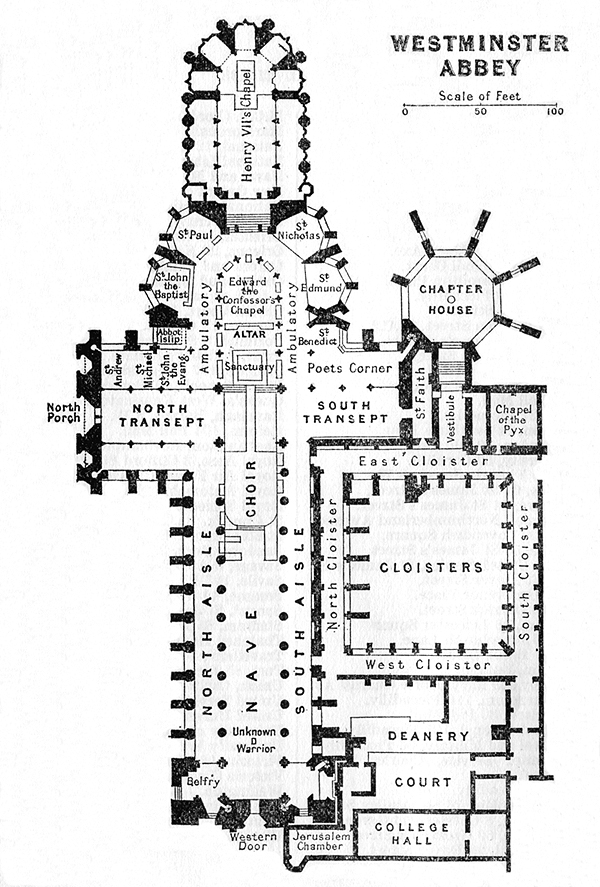
Map of Westminster Abbey in London, England
Westminster Abbey in London, England

Grave Location:

South Transept; Poets' Corner

Grave Location Description

Rudyard Kipling is interred in Poets’ Corner at Westminster Abbey in central London, UK. When visiting the Abbey, head to the south transept. This literary master’s grave is located near the center of the floor, situated directly below the wall monuments of Geoffrey Chaucer and George Frideric Handel. Entry requires a ticket, and visitors typically enter through the North Door.

Grave Location GPS

51.49938893751, -0.12739732062650

Photos:

[+]
[+]
[+]
[+]
[+]
[+]
[+]
[+]

FAQ's

Rudyard Kipling was born on December 30, 1865.

Rudyard Kipling was born in Bombay, British India.

Rudyard Kipling died on January 18, 1936.

Rudyard Kipling died in Middlesex Hospital, London, England.

Rudyard Kipling was 70.

The cause of death was Perforated duodenal ulcer.

Rudyard Kipling's grave is in Westminster Abbey

Read More About Rudyard Kipling:

Videos Featuring Rudyard Kipling:
See More:

J.R.R. Tolkien

popular name: J.R.R. Tolkien

date_of_death: September 2, 1973

age: 81

cause_of_death: Acute bleeding gastric ulcer and chest infection

claim_to_fame: Writers and Poets

best_know_for: J.R.R. Tolkien (1892–1973) was an English writer, scholar, and professor best known for creating The Hobbit and The Lord of the Rings. He is widely regarded as one of the most influential fantasy authors of all time, creating an elaborate fictional world filled with invented languages, ancient histories, mythology, and memorable characters. After the war, Tolkien pursued an academic career, eventually becoming a professor at Oxford University. He was an expert in Old English and medieval literature, especially the epic poem Beowulf. Alongside his academic work, he developed an imaginary world called Middle-earth. He created languages, maps, peoples, legends, and thousands of years of fictional history to give the world a sense of depth and authenticity. In 1937, he published The Hobbit, a children's adventure about a hobbit named Bilbo Baggins who joins a company of dwarves on a quest to reclaim their treasure from the dragon Smaug. The book became successful and established the foundation for his best-known fictional universe.

Dashiell Hammett

popular name: Dashiell Hammett

date_of_death: January 10, 1961

age: 66

cause_of_death: Lung cancer

claim_to_fame: Writers and Poets

best_know_for: The name Dashiell Hammett is synonymous with the "hard-boiled" genre of detective fiction. Born Samuel Dashiell Hammett, he worked as a detective in his early twenties and later wrote numerous popular mystery novels, most famously "The Maltese Falcon" (1930) and "The Thin Man" (1931). Hammett enlisted in the U.S. Army in 1918 and served in the Motor Ambulance Corps, but spent most of World War I hospitalized for influenza and tuberculosis. Hammett enlisted again after Pearl Harbor, at the age of 48, and was stationed at a base in the Aleutian Islands. A vocal supporter of civil liberties and left-leaning causes, Hammett was blacklisted as a suspected communist during the early Cold War, and he served six months in jail for refusing to divulge the names of those who helped fund an activist group that he led.

Émile Zola

popular name: Émile Zola

date_of_death: September 29, 1902

age: 62

cause_of_death: Carbon monoxide poisoning caused by an improperly ventilated chimney, but some speculation of possible homicide

claim_to_fame: Writers and Poets

best_know_for: Émile Zola was a French novelist, journalist, playwright, the best-known practitioner of the literary school of naturalism, and an important contributor to the development of theatrical naturalism. Naturalism contributes something more than realism: the attention brought to bear on the most lush and opulent aspects of people and the natural world. He was a major figure in the political liberalization of France and in the exoneration of the falsely accused and convicted army officer Alfred Dreyfus, which is encapsulated in the renowned newspaper headline J'Accuse…! Zola was nominated for the first and second Nobel Prize in Literature in 1901 and 1902.

Back to Top