Allan Pinkerton

Birth Name:
Allan J. Pinkerton
Birth Date:
August 25, 1819
Birth Place:
Glasgow, Scotland
Death Date:
July 1, 1884
Place of Death:
No. 554 West Monroe Street, Chicago, Illinois
Age:
64
Cause of Death:
Gangrene (disputed)
Cemetery Name:
Graceland Cemetery
Claim to Fame:
Crime and their Victims
Associates:
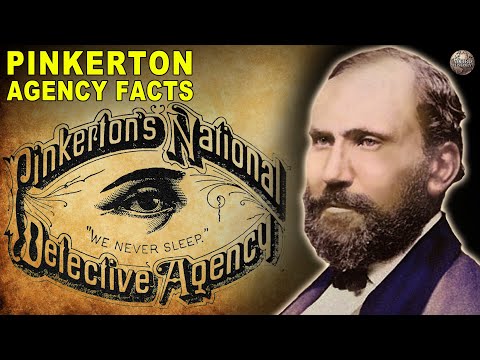
Allan Pinkerton was a Scottish cooper, abolitionist, detective, and spy, best known for creating the Pinkerton National Detective Agency during his time in the United States. When the Civil War began, Pinkerton served as head of the Union Intelligence Service during the first two years, heading off an alleged assassination plot in Baltimore, Maryland while guarding Abraham Lincoln on his way to Washington, D.C. as well as identifying troop numbers in military campaigns. His agents often worked undercover as Confederate soldiers and sympathizers to gather military intelligence. Pinkerton himself served on several undercover missions as a Confederate soldier using the alias Major E.J. Allen. Following Pinkerton's service with the Union Army, he continued his pursuit of train robbers, including the Reno Gang. He was hired by the railroad express companies to track outlaw Jesse James, but after Pinkerton failed to capture him, the railroad withdrew their financial support and Pinkerton continued to track James at his own expense.

Fun Fact:

In 1861, while investigating a railway case, Pinkerton uncovered an assassination plot against Abraham Lincoln. The conspirators intended to kill Lincoln in Baltimore during a stop on his way to his inauguration. Pinkerton warned Lincoln of the threat, and the president-elect’s itinerary was changed so that he passed through the city secretly at night. Lincoln later hired Pinkerton to organize a “secret service” to obtain military information in the Southern states during the Civil War. In Tennessee, Georgia and Mississippi, he performed his own investigative work and traveled under the pseudonym “Major E.J. Allen.”

Cemetery Information:

Final Resting Place:

Graceland Cemetery

4001 N Clark Street

Chicago, Illinois, 60613

USA

North America

Map:
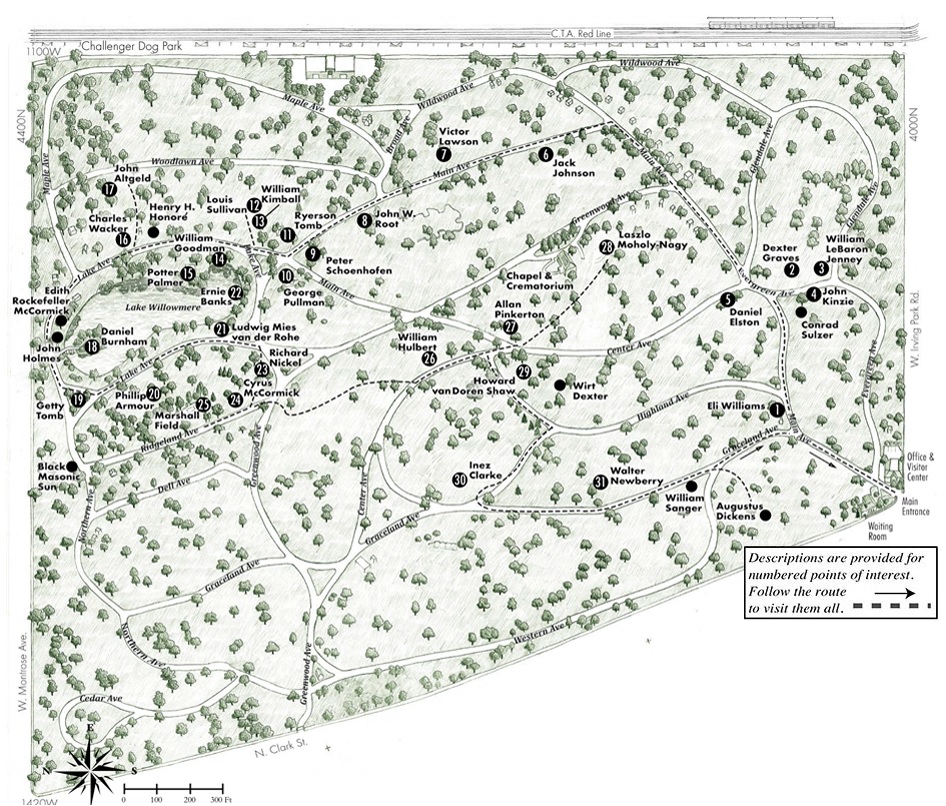
Map of Graceland Cemetery, Chicago, Illinois
Graceland Cemetery in Chicago, Illinois courtesy of Jake Coolidge and Joe Collier

Grave Location:

Section C, Lot 554, Space 25

Grave Location Description

After entering the cemetery, head northeast on Main Avenue for about 750 feet. Then turn left on Center Avenue, and head north for about 720 feet until you reach the intersection. Allan Pinkerton’s grave will be on your right, about 50 feet east from the intersection.

Grave Location GPS

41.95776099206102, -87.66026858708979

Visiting The Grave:

Photos:

[+]
[+]
[+]
[+]
[+]
[+]
[+]
[+]
[+]
[+]
[+]

FAQ's

Allan Pinkerton was born on August 25, 1819.

Allan Pinkerton was born in Glasgow, Scotland.

Allan Pinkerton died on July 1, 1884.

Allan Pinkerton died in No. 554 West Monroe Street, Chicago, Illinois.

Allan Pinkerton was 64.

The cause of death was Gangrene (disputed).

Allan Pinkerton's grave is in Graceland Cemetery

Read More About Allan Pinkerton:

Videos Featuring Allan Pinkerton:

See More:

Stanford White

popular name: Stanford White

date_of_death: June 25, 1906

age: 52

cause_of_death: Gunshot wounds

claim_to_fame: Crime and their Victims

best_know_for: Stanford White was a celebrated American architect and a partner in the architectural firm McKim, Mead & White, one of the most significant Beaux-Arts firms at the turn of the 20th century. White designed many houses for the wealthy, in addition to numerous civic, institutional and religious buildings. When White was 25 years old, he embarked on a year-long tour of Europe, gaining inspiration and honing his techniques. Upon his return to New York in 1879, White entered into an architectural partnership with Charles Follen McKim and William Rutherford Mead to form “McKim, Mead & White.” The firm would go on to produce such iconic structures as the Washington Square Arch (1892), the Brooklyn Museum (1895), the Morgan Library (1903), the Rosecliff Mansion in Newport, Rhode Island and the original Madison Square Garden where he would suddenly and violently lose his life. The grave of Stanford White can be found at St James Episcopal Cemetery in St. James, New York.

H. H. Holmes

popular name: H. H. Holmes

date_of_death: May 7, 1896

age: 34

cause_of_death: Execution by hanging

claim_to_fame: Crime and their Victims

best_know_for: The country’s first serial killer was a smooth-talking doctor who ran a murder hotel in Chicago. The tale of H. H. Holmes and his Murder Castle is perhaps one of the most fascinating cases in American criminal history. Born Herman Webster Mudgett, he was a bright young doctor who had graduated from high school at sixteen and always had a penchant for anything to do with death. While enrolled in the University of Michigan’s Department of Medicine and Surgery, he worked under Professor William James Herdman in the university’s anatomy lab. The pair were said to have aided body snatching to supply bodies as medical cadavers, which Mudgett then burned or disfigured with acid, then planted to it look as if they had been killed in an accident. Mudgett began taking out insurance policies on these people—before he stole, disfigured, and planted them—and would later collect the insurance money once the bodies were discovered. After graduation, Mudgett started a new job working at a Philadelphia drugstore. When a child died after taking medicine purchased from the drugstore Mudgett was employed at, the young doctor denied any involvement and immediately left the city. Before he moved to Chicago, he changed his name to avoid any connection to his previous scams. Herman Webster Mudgett, M.D., donned the name Henry Howard Holmes. In 1893, the bustling city of Chicago won the honor of hosting the World’s Columbian Exposition. While the World’s Fair brought millions of visitors from all over the world, nearby, a clever killer hid in plain sight, capitalizing off of the slaughter of naive tourists. For the next two years Holmes either killed or is suspected of killing around two dozen people using his murder mansion residences to facility cruel and diabolical murder of men, women, and even children. He was finally caught and convicted of murder in 1894 and executed in 1985. Until the moment of his death, Holmes remained calm and amiable, showing very few signs of fear, anxiety, or depression. Despite this, he asked for his coffin to be contained in concrete and buried ten feet deep, because he was concerned grave robbers would steal his body and use it for dissection. Despite popular belief, Holmes's neck did not break; he instead strangled to death slowly, twitching for over fifteen minutes before being pronounced dead. He was buried in Holy Cross Cemetery in Yeadon, Pennsylvania.

Al Brady

popular name: Al Brady

date_of_death: October 12, 1937

age: 26

cause_of_death: Gunshot wounds

claim_to_fame: Crime and their Victims

best_know_for: Al Brady was an American gangster and leader of the notorious Brady Gang during the 1930s, a period marked by widespread criminal activity amidst the Great Depression. Born in 1910 in Indiana, Brady became involved in crime at a young age, initially engaging in petty theft before escalating to armed robbery and murder. Along with his associates, the Brady Gang committed a series of violent crimes, including bank robberies and killings across the Midwest and Northeast. Their crime spree eventually brought them to Maine, where they hoped to stock up on weapons undetected. However, their presence attracted the attention of the FBI, leading to a fatal confrontation. On October 12, 1937, in Bangor, Maine, Brady and two of his gang members were ambushed by federal agents during an attempted gun purchase. In a dramatic shootout witnessed by dozens of onlookers, Brady was shot and killed. Al Brady was originally buried in an unmarked grave at Mount Hope Cemetery in Bangor, Maine. The grave was marked 70 years after is untimely death.

Back to Top