Auguste Rodin

AKA:
The Founder of Modern Sculpture
Birth Name:
François Auguste René Rodin
Birth Date:
November 12, 1840
Birth Place:
17 rue de l'Arbalète, Paris, France
Death Date:
November 17, 1917
Place of Death:
La Villa des Brillants, Meudon, France
Age:
77
Cause of Death:
Pulmonary edema
Cemetery Name:
La Villa des Brillants
Claim to Fame:
Artists
Associates:
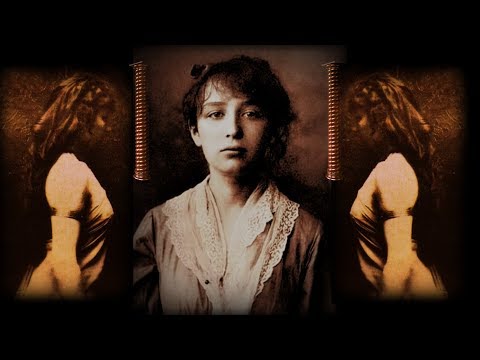
Auguste Rodin, a French sculptor generally considered the founder of modern sculpture, lived a life marked by perseverance, innovation, and profound artistic evolution. Born into a modest family in Paris, Rodin struggled academically and faced repeated rejection from the prestigious École des Beaux-Arts. These early setbacks shaped his self-reliant approach, encouraging him to pursue training through practical work rather than formal schooling. He spent many years as a craftsman and ornamental sculptor, quietly honing the technical mastery that would later underpin his revolutionary style. Later in life, his studio became a hub of creative exploration, supported by numerous assistants, collaborators, and pupils. Among them was Camille Claudel, a brilliant sculptor whose artistic and personal relationship with Rodin had a lasting impact on both their careers. He is known for such sculptures as The Thinker, Monument to Balzac, The Kiss, The Burghers of Calais, and The Gates of Hell.

Fun Fact

La Villa des Brillants was Rodin’s home for the last 20 years of his life. Near the villa is a “tactile gallery” where visitors can explore resin reproductions of sculptures by touch. Further down the garden, the plaster gallery offers an immersive experience of Rodin’s art: his sculptures are displayed in their successive states, illustrating the various stages of his creative process. Rodin’s tomb, surmounted by The Thinker, is located in the vast park overlooking the Seine valley.

In 1923, Marcell Tirel, Rodin’s secretary, published a book alleging that Rodin’s death was largely due to cold, and the fact that he had no heat at Meudon. Rodin requested permission to stay in the Hotel Biron, a museum of his works, but the director of the museum refused. On 16 November his physician announced that “congestion of the lungs has caused great weakness. The patient’s condition is grave.” Rodin died the next day, age 77, at his villa in Meudon, Île-de-France, on the outskirts of Paris.

Cemetery Information:

Final Resting Place:

La Villa des Brillants

19 ave Auguste Rodin 92190

Meudon, Département des Hauts-de-Seine,

France

Europe

Grave Location:

Rodin Family Plot

Grave Location Description

As you enter the property, you will pass Rodin’s home on the right, continue on veering towards the right then take a left turn down the main walkway to the end of the property.

Grave Location GPS

48.815070, 2.250934

Visiting The Grave:

Photos:

[+]
[+]
[+]
[+]
[+]
[+]
[+]
[+]
[+]
[+]
[+]
[+]
[+]
[+]
[+]
[+]
[+]

FAQ's

Auguste Rodin was born on November 12, 1840.

Auguste Rodin was born in 17 rue de l'Arbalète, Paris, France.

Auguste Rodin died on November 17, 1917.

Auguste Rodin died in La Villa des Brillants, Meudon, France.

Auguste Rodin was 77.

The cause of death was Pulmonary edema.

Auguste Rodin's grave is in La Villa des Brillants

Read More About Auguste Rodin:

Videos Featuring Auguste Rodin:

See More:

Hugo Pratt

popular name: Hugo Pratt

date_of_death: August 20, 1995

age: 68

cause_of_death: Bowel cancer

claim_to_fame: Artists

best_know_for: Hugo Pratt is considered one of the greatest graphic novelists in the world. His strips, graphic works, and watercolors have been exhibited in major museums such as the Grand Palais and Pinacothèque in Paris, the Vittoriano in Rome, and Ca ‘Pesaro in Venice. Pratt was known for combining strong storytelling with extensive historical research on works such as Corto Maltese. From 1970 to 1984 Pratt lived in France where Corto Maltese was immensely popular where his comic book was published by the local publisher, Pif Gadget, and later translated in fifteen different languages. From 1984 to 1995 Pratt lived in Switzerland where the international success that Corto Maltese continued to grow. In France, most of his pre-Corto Maltese works were published in several album editions by publishers such as Casterman, Dargaud, and Humanoides Associés. Often referred to as "The Picasso of Comics" Pratt was inducted into the Will Eisner Award Hall of Fame in 2005.

Andy Warhol

popular name: Andy Warhol

date_of_death: February 22, 1987

age: 58

cause_of_death: Post-operative cardiac arrhythmia

claim_to_fame: Artists

best_know_for: Andy Warhol was an American artist, film director, and producer who was a leading figure in the visual art movement known as the Pop Art movement. Like his contemporaries Robert Rauschenberg and Roy Lichtenstein, Warhol wryly responded to the mass media of the 1960s. His silkscreen-printed paintings of cultural and consumer icons, featuring Marilyn Monroe and Elizabeth Taylor, as well as Campbell's Soup cans and Brillo boxes, would make him one of the most famous artists of his generation. Before becoming a pop icon, Warhol graduated from the Carnegie Institute of Technology in 1949, moving to New York to pursue a career in commercial illustration. Warhol's illustrations for editorials like Vogue and Glamour during the 1950s led him to financial success. In 1964, Warhol rented a studio loft on East 47th Street in Midtown Manhattan, which was later known as the Factory. Quick to realize the cult of celebrity, the Factory acted as a hub for fashionable movie stars, models, and artists who became fodder for his prints and films, as well as a performance venue for The Velvet Underground. The prolific artist worked across painting, sculpture, and new media throughout the 1960s and 1970s.

Gustave Caillebotte

popular name: Gustave Caillebotte

date_of_death: February 21, 1894

age: 45

cause_of_death: Stroke

claim_to_fame: Artists

best_know_for: Gustave Caillebotte was a French painter who was a member and patron of the Impressionists, although he painted in a more realistic manner than many others in the group. He was noted for his early interest in photography as an art form, and is best known for his paintings of urban Paris, such as The Europe Bridge (Le Pont de l'Europe) (1876), and Paris Street; Rainy Day (Rue de Paris; temps de pluie, also known as La Place de l'Europe, temps de pluie) (1877). Born in Paris in 1848, Caillebotte studied law and engineering before fighting in the Franco–Prussian War from 1870 to 1871. After the war’s end, he studied at the studio of Léon Bonnat and later at the École des Beaux Arts. Upon meeting Edgar Degas, Auguste Renoir and Claude Monet, Caillebotte experimented further with capturing the changing face of everyday Parisian life. Caillebotte made his debut in the second Impressionist exhibition in 1876, showing eight paintings, including Les raboteurs de parquet (The Floor Scrapers) (1875), his earliest masterpiece. Cropping and "zooming-in", techniques that commonly are found in Caillebotte's oeuvre, may also be the result of his interest in photography, but may just as likely be derived from his intense interest in perspective effects. A large number of Caillebotte's works also employ a very high vantage point, including View of Rooftops (Snow) (Vue de toits (Effet de neige)) (1878), Boulevard Seen from Above (Boulevard vu d'en haut) (1880), and A Traffic Island (Un refuge, boulevard Haussmann) (1880).

Back to Top