David Sarnoff

AKA:
The General
Birth Name:
David Swirnofsky Sarnoff
Birth Date:
February 27, 1891
Birth Place:
Uzlyany, Minsk Governorate, Russian Empire
Death Date:
December 12, 1971
Place of Death:
44 East 71st Street, New York, New York
Age:
80
Cause of Death:
Mastoid infection
Cemetery Name:
Kensico Cemetery
Claim to Fame:
Business and Finance
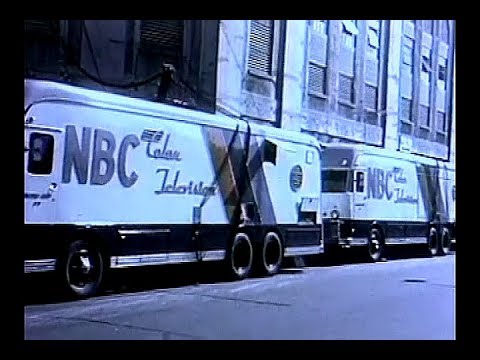
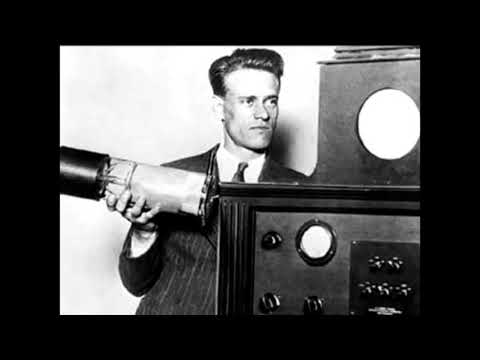
David Sarnoff was an American businessman and pioneer of American radio and television. Throughout most of his career he led the Radio Corporation of America in various capacities from shortly after its founding in 1919 until his retirement in 1970. It all began in 1920 when Sarnoff reiterated his “radio music box” memo and was given a small amount of money to develop a radio prototype. As RCA’s new general manager, he demonstrated radio’s market potential by broadcasting the boxing match between Jack Dempsey and Georges Carpentier (July 2, 1921); the broadcast created a sensation. Within three years RCA sold more than $80 million worth of receiving sets. In 1926 RCA formed the National Broadcasting Company (NBC). As early as 1923, Sarnoff had perceived the potential of television, which the contributions of several inventors were making technically feasible. His meeting in 1929 with Westinghouse engineer Vladimir Zworykin convinced him that home television was possible, and Sarnoff persuaded Westinghouse to back Zworykin’s work. In 1930 Westinghouse’s television research and Zworykin were transferred to RCA. By 1939 Sarnoff was able to give a successful demonstration of the new medium at the New York World’s Fair. And as they say ... the rest is history. Upon his death, he was laid to rest at Kensico Cemetery in Valhalla, New York.

Fun Facts

When his father died, David Sarnoff dropped out of elementary school to support his mother, three brothers and sisters. Entering a downtown office building to ask for a job as a copy boy for the old New York Herald, the young Sarnoff turned through the wrong door and was hired as a $5.50‐aweek office boy by the Commercial Cable Company. The wrong turn changed his life and, because it marked his entry into the world of electronics and the lives of millions of others who were to be affected by products of his vision.

Cemetery Information:

Final Resting Place:

Kensico Cemetery

273 Lakeview Avenue

Valhalla, New York, 10595

USA

North America

Map:

Map of Kensico Cemetery in Vahalla, New York

Grave Location:

Highland Gardens, Section 52

Grave Location Description

The mausoleum is located 100 feet from Powhattan Avenue near the intersection with Highland Road. From the intersection continue on Powhattan Avenue and after 200 feet turn to the left up the only private, paved road that circles around to the David Sarnoff Mausoleum.

Grave Location GPS

41.07701406787711, -73.7832313531613

Photos:

[+]
[+]
[+]
[+]
[+]
[+]
[+]
[+]
[+]
[+]
[+]

FAQ's

David Sarnoff was born on February 27, 1891.

David Sarnoff was born in Uzlyany, Minsk Governorate, Russian Empire.

David Sarnoff died on December 12, 1971.

David Sarnoff died in 44 East 71st Street, New York, New York.

David Sarnoff was 80.

The cause of death was Mastoid infection.

David Sarnoff's grave is in Kensico Cemetery

Read More About David Sarnoff:

Videos Featuring David Sarnoff:
See More:

Hugh Hefner

popular name: Hugh Hefner

date_of_death: September 27, 2017

age: 91

cause_of_death: Sepsis and cardiac arrest caused by an E. coli infection

claim_to_fame: Business and Finance

best_know_for: Hugh Hefner transformed the adult entertainment industry with his groundbreaking publication Playboy. From the first issue featuring Marilyn Monroe in December 1953, Playboy expanded into a multimillion-dollar enterprise mirroring the often controversial, if not outright sleazy, sensibilities of its founder. By the early 1960s, it was a huge success, soon expanding to open its namesake clubs all over the world. It also moved into TV with Playboy After Dark. By the 1970s, Hefner set himself up at the Playboy Mansion West in California, remaining editor-in-chief of the magazine he founded while daughter Christie ran the day to day operations. Once worth in excess of $200 million, upon his death the Playboy empire was worth $55 million while the magazine folded in 2020.

Frank Winfield Woolworth

popular name: Frank Winfield Woolworth

date_of_death: April 8, 1919

age: 66

cause_of_death: Tooth infection

claim_to_fame: Business and Finance

best_know_for: F. W. Woolworth was an American entrepreneur, the founder of F. W. Woolworth Company, and the operator of variety stores known as "Five-and-Dimes" (5- and 10-cent stores or dime stores) which featured a selection of low-priced merchandise. He pioneered the now-common practices of buying merchandise directly from manufacturers and fixing the selling prices on items, rather than haggling. He was also the first to use self-service display cases, so that customers could examine what they wanted to buy without the help of a sales clerk. The final resting place of F.W. Woolworth can be found in the massive family mausoleum at Woodlawn Cemetery in the Bronx, New York.

Gilbert F. Heublein

popular name: Gilbert F. Heublein

date_of_death: March 21, 1937

age: 87

cause_of_death: Arteriosclerosis

claim_to_fame: Business and Finance

best_know_for: German-born Gilbert F. Heublein was a prominent hotelier, restaurateur, food and liquor distributor in Hartford, Connecticut. While most people remember Gilbert for securing the license and distribution rights of A-1 Steak Sauce to the United States, his real claim to fame should be his discovery and marketing of pre-made cocktails. As the legend goes, Gilbert and his brother Louis had prepared a quantity of premixed cocktails for a large annual picnic. It rained and the event was canceled. A few days later a employee of the Heubleins was told to dispose of the unused beverages. Deciding to taste them first, he found that the drinks had suffered no deterioration and announced the discovery to his bosses. The Heubleins took note and began selling the premixed libations in their saloon and restaurant. The cocktails proved very popular with customers and increasingly became the focus of the family’s attention. With Gilbert now running the business, the new firm concentrated on the premixed cocktails such as Martinis and Manhattans, advertising them widely as Club Cocktails. Upon the enactment of Prohibition in 1920, Heublein's "secondary sideline" of A.1. Sauce served as a fortunate savior, when the production, transportation and sale of all other Heublein products became illegal in the US for the next thirteen years. Upon Gilbert’s death, the company was taken over by John G. Martin, the son of Alice Heublein and Percy Martin, Gilbert Heublein’s grandson. Through Martin’s business savvy, G.F. Heublein & Bro. acquired the rights to sell Smirnoff vodka, Don Q rum, and Jose Cuervo tequila. In 1969, Heublein, Inc. began to package pre-mixed cocktails in 8-ounce cans, such as the ‘Brass Monkey’. The company also made acquisitions outside the liquor industry with the purchase of Grey Poupon mustard in 1936 and Kentucky Fried Chicken in 1971. In 1982, Heublein, Inc was sold to R.J. Reynolds Tobacco Company for 1.4 billion dollars.

Back to Top