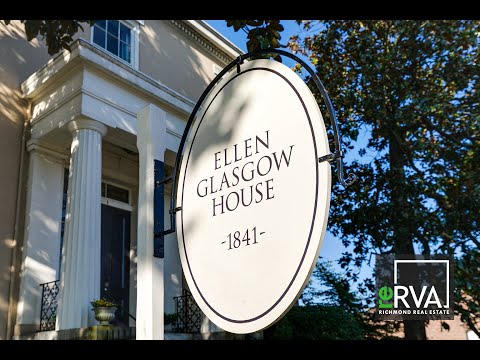
Ellen Glasgow

Birth Name:
Ellen Anderson Gholson Glasgow
Birth Date:
April 22, 1873
Birth Place:
Richmond, Virginia
Death Date:
November 21, 1945
Place of Death:
1 West Main Street, Richmond, Virginia
Age:
72
Cause of Death:
Coronary thrombosis
Cemetery Name:
Hollywood Cemetery
Claim to Fame:
Writers and Poets
Ellen Glasgow was an American novelist whose realistic depictions of life in her native Virginia helped direct Southern literature away from sentimentality and nostalgia. A lifelong Virginian who published 20 books including 7 novels which sold well (five reaching best-seller lists) as well as gained critical acclaim earning a Pulitzer Prize in 1942.

Cemetery Information:

Final Resting Place:

Hollywood Cemetery

412 South Cherry Street

Richmond, Virginia, 23220

United States

North America

Map:
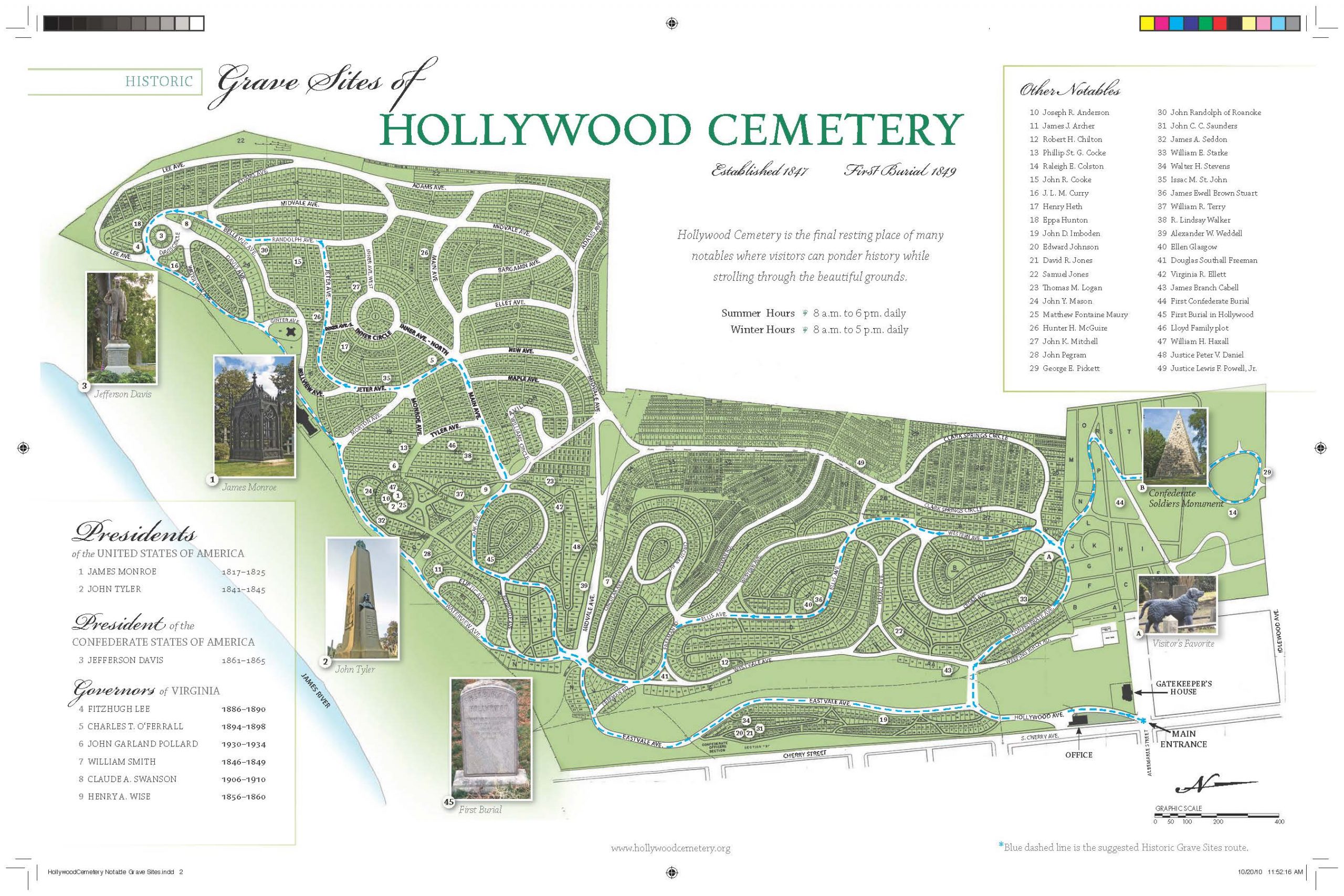
Map of Hollywood Cemetery in Richmond, Virginia
Hollywood Cemetery in Richmond, Virginia

Grave Location:

Section DE, Plot 15

Grave Location Description

As you enter the cemetery, follow the blue line on the road to the right and it will wind up and around to Section DE overlooking the river on Ellis Avenue. The blue line will also take you to Jefferson Davis and Presidents James Monroe and John Tyler.

Grave Location GPS

37.53751131, -77.4547539

Visiting The Grave:

Photos:

[+]
[+]
[+]
[+]
[+]
[+]
[+]
[+]
[+]
[+]
[+]
[+]
[+]

FAQ's

Ellen Glasgow was born on April 22, 1873.

Ellen Glasgow was born in Richmond, Virginia .

Ellen Glasgow died on November 21, 1945.

Ellen Glasgow died in 1 West Main Street, Richmond, Virginia.

Ellen Glasgow was 72.

The cause of death was Coronary thrombosis.

Ellen Glasgow's grave is in Hollywood Cemetery

Read More About Ellen Glasgow:

Videos Featuring Ellen Glasgow:

See More:

Honoré de Balzac

popular name: Honoré de Balzac

date_of_death: August 18, 1850

age: 51

cause_of_death: Gangrene associated with congestive heart failure

claim_to_fame: Writers and Poets

best_know_for: Honoré de Balzac (1799–1850) was one of the most influential writers of 19th-century French literature and a central figure in the development of literary realism. After initially studying law and briefly working in publishing and printing—ventures that left him deeply in debt—Balzac turned seriously to writing in the 1820s. He gained recognition for his ambitious project, La Comédie humaine, a vast collection of interconnected novels and stories that portrayed French society in the decades following the French Revolution and during the Bourbon Restoration. Over his career, Balzac produced more than 90 works, including major novels such as Père Goriot and Eugénie Grandet, which explored themes of ambition, class mobility, wealth, and moral struggle. Known for his intense writing habits—often fueled by large amounts of coffee—Balzac developed richly detailed characters who reappeared across different stories, creating a unified literary universe. Despite constant financial pressures and health problems, he continued writing prolifically until his death in 1850, leaving a body of work that profoundly influenced later novelists and helped shape the modern realist novel.

Jean Giono

popular name: Jean Giono

date_of_death: October 8, 1970

age: 75

cause_of_death: Heart attack

claim_to_fame: Writers and Poets

best_know_for: Jean Giono was a French writer who spent his entire life living and writing in Manosque, France. It was here that the author created his monumental oeuvre, inspired by the sun-drenched footpaths and unbridled natural scenery that was his home. Following in his footsteps visitors will cross the landscapes he described so vividly, from Gréoux-les-Bains to Forcalquier where his work A King Alone was born. Among his novels, the most famous are “Colline” (“The Hill”) of 1929, “Regain” (“Re covety”) of 1930, “Le Chant du Monde” (“Song of the World”) of 1934, “Que Ma Joie De meure” (“Let My Joy Remain”) of 1935, “L'Eau Vive” (“Lively Water”) of 1944, “Les Ames Mortes” (“The Dead Souls”) of 1949, “Le Hussard sur le Toit” (“The Hussard on the Roof”) of 1951 and “Le Moulin de Po logne” (“The Polish Mill”) 1952. Outside France, Giono's best-known work is probably the short story The Man who Planted Trees (and 1987 film version). This optimistic tale of a man who brings a deserted valley back to life by planting trees reflects Giono's long-standing love of the natural world, an attitude that made him a precursor to the modern ecological movement. In his later years, Giono was honoured with the Prince Rainier of Monaco literary prize in 1953, awarded for his lifetime achievements, was elected to the Académie Goncourt in 1954, and became a member of the Conseil Littéraire of Monaco in 1963.

Wallace Stevens

popular name: Wallace Stevens

date_of_death: August 2, 1955

age: 75

cause_of_death: Stomach cancer

claim_to_fame: Writers and Poets

best_know_for: Wallace Stevens (October 2, 1879 – August 2, 1955) was an American modernist poet. He was born in Reading, Pennsylvania, educated at Harvard and then New York Law School, and spent most of his life working as an executive for an insurance company in Hartford, Connecticut. He won the Pulitzer Prize for Poetry for his Collected Poems in 1955. Stevens's best-known poems include "The Auroras of Autumn", "Anecdote of the Jar", "Disillusionment of Ten O'Clock", "The Emperor of Ice-Cream", "The Idea of Order at Key West", "Sunday Morning", "The Snow Man", and "Thirteen Ways of Looking at a Blackbird". Though now considered one of the major American poets of the twentieth century, Stevens did not receive widespread recognition until the publication of The Collected Poems of Wallace Stevens (Knopf, 1954), just a year before his death. His other major works include The Necessary Angel (Alfred A. Knopf, 1951), a collection of essays on poetry; Notes Towards a Supreme Fiction (The Cummington Press, 1942); The Man With the Blue Guitar (Alfred A. Knopf, 1937); and Ideas of Order (The Alcestis Press, 1935). His published book The Collected Poems of Wallace Stevens (1954) earned him the Pulitzer Prize for Poetry.

Back to Top