Jean-Auguste-Dominique Ingres

Birth Name:
Jean-Auguste-Dominique Ingres
Birth Date:
August 29, 1780
Birth Place:
Montauban, Languedoc, France
Death Date:
January 14, 1867
Place of Death:
11 Quai Voltaire, 75007 Paris, France
Age:
86
Cause of Death:
Pneumonia
Claim to Fame:
Artists
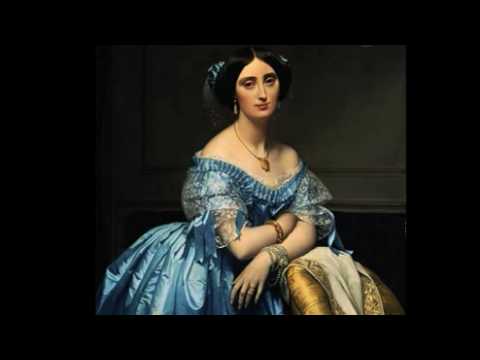
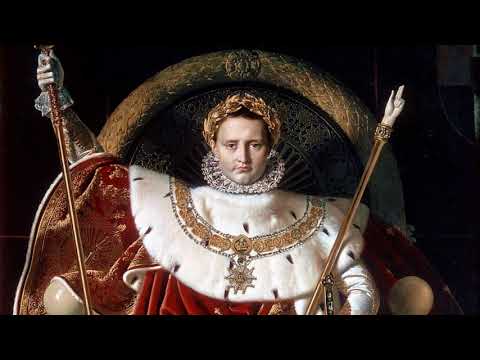
Jean-Auguste-Dominique Ingres (1780–1867) was a French Neoclassical painter, widely regarded for his mastery in portraiture and his precise, smooth technique. Born in Montauban, France, Ingres showed early talent in drawing, leading him to study at the prestigious École des Beaux-Arts in Paris. He was a student of Jacques-Louis David, a leading figure in the Neoclassical movement, which emphasized order, clarity, and idealized forms. Ingres' career spanned several decades, during which he developed a style distinct from the Romantic movement that was emerging in France. Though he was often criticized for being too rigid and traditional, he stuck to his classical ideals, focusing on linear precision, a sense of balance, and attention to detail. His most famous works include portraits like Madame Moitessier, Mademoiselle Caroline Rivière (1806) and historical paintings such as The Apotheosis of Homer. In his lifetime, Ingres achieved considerable recognition, including being appointed the director of the French Academy in Rome, where he spent a significant period of his life. His influence extended beyond his own time, impacting later artists, including the development of academic and modernist art. Upon his death at the age of 82, Ingres was interred in the Père Lachaise Cemetery in Paris with a tomb sculpted by his student Jean-Marie Bonnassieux. The contents of his studio, including a number of major paintings, over 4000 drawings, and his violin, were bequeathed by the artist to the city museum of Montauban, now known as the Musée Ingres. Upon his death, he was interred at Cimetière du Père-Lachaise in Paris, France.

Fun Facts

Near the end of his life, he made one of his best-known masterpieces, The Turkish Bath. It reprised a figure and theme he had been painting since 1828, with his Petite Baigneuse. Originally completed in a square format in 1852 and sold to Prince Napoleon in 1859, it was returned to the artist soon afterward—according to a legend, Princess Clothilde was shocked by the abundant nudity. After reworking the painting as a tondo, Ingres signed and dated it in 1862, although he made additional revisions in 1863. The painting was eventually purchased by a Turkish diplomat, Khalid Bey, who owned a large collection of nudes and erotic art, including several paintings by Courbet. The painting continued to cause a scandal long after Ingres was dead. It was initially offered to the Louvre in 1907, but was rejected, before being given to the Louvre in 1911.

When Ingres became a professor at the Ecole des Beaux-Arts in Paris, he took his students frequently to the Louvre to the see the classical and Renaissance art, instructing them to look straight ahead and to avoid the works of Rubens, which he believed deviated too far from the true values of art.

Cemetery Information:

Final Resting Place:

, ,

Europe

Map:

Map of Cimetière du Père-Lachaise in Paris, France

Grave Location:

Division 23

Grave Location Description

As you enter the main cemetery entrance, walk straight ahead, jogging to the right when you can, and continue up the hill. As you make your way up Avenue de Saint-Morys, turn right at the intersection with Chemin Adanson. Look to the right and you will see the final resting place of the great French painter Jean-Auguste-Dominique Ingres.

Grave Location GPS

48.861313, 2.394064

Photos:

[+]
[+]
[+]
[+]
[+]
[+]
[+]
[+]
[+]
[+]
[+]

FAQ's

Jean-Auguste-Dominique Ingres was born on August 29, 1780.

Jean-Auguste-Dominique Ingres was born in Montauban, Languedoc, France.

Jean-Auguste-Dominique Ingres died on January 14, 1867.

Jean-Auguste-Dominique Ingres died in 11 Quai Voltaire, 75007 Paris, France.

Jean-Auguste-Dominique Ingres was 86.

The cause of death was Pneumonia.

Jean-Auguste-Dominique Ingres's grave is in

Read More About Jean-Auguste-Dominique Ingres:

Videos Featuring Jean-Auguste-Dominique Ingres:

See More:

Georges Seurat

popular name: Georges Seurat

date_of_death: March 29, 1891

age: 31

cause_of_death: Infectious angina, meningitis, pneumonia

claim_to_fame: Artists

best_know_for: Georges Seurat was a French painter and one of the pioneers of the Pointillist movement, a technique where paintings are made up of tiny dots of color. Born on December 2, 1859, in Paris, Seurat studied at the École des Beaux-Arts, where he developed his unique style. His most famous work, A Sunday Afternoon on the Island of La Grande Jatte (1884–1886), exemplifies Pointillism, using meticulous color theory to create vibrant, luminous scenes and is considered one of the icons of late 19th-century painting. Seurat's approach was rooted in scientific studies of color and optics, drawing on the work of theorists like Michel Eugène Chevreul. Although his career was short—he died in 1891 at just 31—his influence on modern art was profound. Seurat also worked with large-scale compositions, focusing on the impact of light and color. His innovative techniques laid the foundation for future movements such as Post-Impressionism and even elements of abstraction. Despite his early death, Seurat's legacy endures, and he remains a significant figure in the evolution of modern art. Upon his untimely death, he was laid to rest at Cimetière du Père-Lachaise in Paris, France.

Camille Pissarro

popular name: Camille Pissarro

date_of_death: November 13, 1903

age: 73

cause_of_death: Sepsis

claim_to_fame: Artists

best_know_for: Camille Pissarro (1830–1903) was a French Danish painter and one of the key figures in the development of Impressionism and Post-Impressionism. Born in the Danish West Indies (now the U.S. Virgin Islands), he moved to France at age 12 to study art. His early work was influenced by the realism of Gustave Courbet, but over time, Pissarro became a central figure in the Impressionist movement. Pissarro's style evolved throughout his career, initially focusing on capturing the effects of light and atmosphere in natural scenes. He was a key contributor to the group's revolutionary approach to painting, using loose brushwork and an emphasis on outdoor scenes. His work often depicted rural landscapes, urban scenes, and daily life. Later, influenced by Georges Seurat's pointillism, Pissarro incorporated this technique into his work during his time in Paris. Pissarro was not only important as an artist but also as a mentor and friend to many other artists, including Paul Cézanne, Paul Gauguin,, Pierre-Auguste Renoir and Georges Seurat. Despite facing financial hardships and occasional criticism of his work, he remained dedicated to his artistic vision despite living in poverty. He continued to paint prolifically until an eye disease rendered him blind and he died shortly after in 1903, leaving behind a legacy that cemented his place as one of the most significant artists in the transition from realism to modern art. Upon his death, Camille was buried at Cimetière du Père-Lachaise in Paris, France.

Charles M. Schulz

popular name: Charles M. Schulz

date_of_death: February 12, 2000

age: 77

cause_of_death: Colon cancer

claim_to_fame: Artists

best_know_for: The most successful comic strip in newspaper history, PEANUTS appears in some 2,600 newspaper in 75 countries and is translated into 21 languages. United Feature Syndicate started the strip in syndication on October 2, 1950. He died on the day before his final comic strip was printed and per his wishes, nobody else is allowed to draw or publish new Peanuts comic strips. The influence of Charles Schulz on several generations of cartoonists cannot be overstated. "With intelligence, honesty, and wonderfully expressive artwork, Charles Schulz gave the comics a unique world of humor, fantasy, warmth and pain that completely reconfigured the comic strip landscape," Bill Watterson, creator of Calvin and Hobbes, wrote in 1989. It was PEANUTS that truly brought the American comic strip into the lives of contemporary readers using innovations such as Lucy's Psychiatric Booth, Linus' Security Blanket(a phrase originally coined by Mr. Schulz), Snoopy's fantasies, and Charlie Brown's baseball team. There will never be another cartoonist quite like Charles M. Schulz.

Back to Top