Seymour H. Knox I

Birth Name:
Seymour Horace Knox
Birth Date:
April 11, 1861
Birth Place:
Russell, New York
Death Date:
May 17, 1915
Place of Death:
1045 Delaware Avenue, Buffalo, New York
Age:
54
Cause of Death:
Uremic coma
Cemetery Name:
Forest Lawn Cemetery
Claim to Fame:
Business and Finance
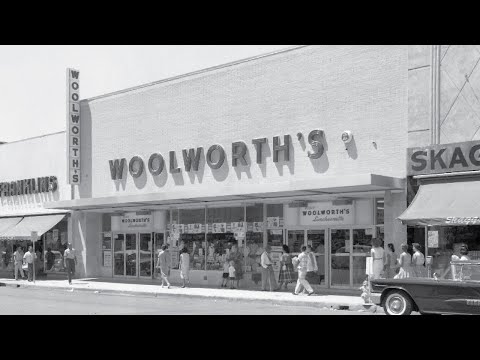
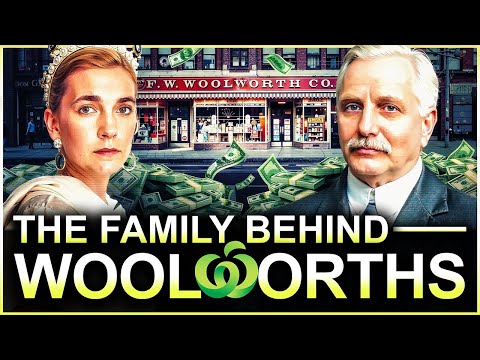
Seymour Knox was a Buffalo, New York businessman who made his fortune in five-and-dime stores. He merged his more than 100 stores with those of his first cousins, Frank Winfield Woolworth and Charles Woolworth, to form the F. W. Woolworth Company. In fact, by the time of the 1911 incorporation of F. W. Woolworth Company, Knox was the second largest of six store operators with 98 U.S. and 13 Canadian locations. In 1912, he received $12 million of the $65 million merger proceeds and was appointed Director and Senior Vice-Principal of the Corporation. Knox is remembered as the pioneering city center store operator. His Detroit, Michigan store was the first outside of the agricultural and small-market towns. Many of the Woolworth friendly rivals emulated his plan. Upon his death, he was laid to rest at Forest Lawn Cemetery in Buffalo, NY.

Fun Facts

After Seymour Knox death, his wife built a new mansion on Delaware Avenue for her and their children, designed by New York City architect C. P. H. Gilbert, known today as the Mrs. Seymour H. Knox House.

Seymour Knox was the father of Seymour H. Knox II and grandfather of Seymour H. Knox III and Northrup Knox, the co-founders of the Buffalo Sabres in the National Hockey League.

Seymour Knox loved a good mansion and lived in 4 during his life time. The addresses of those mansions in the order they lived in Buffalo, New York are 414 Porter Avenue, 467 Linwood, 1049 Delaware Avenue (now 1035) and 806 Delaware Avenue.

Cemetery Information:

Final Resting Place:

Forest Lawn Cemetery

1990 Main Road

Buffalo, New York, 14208

USA

North America

Map:
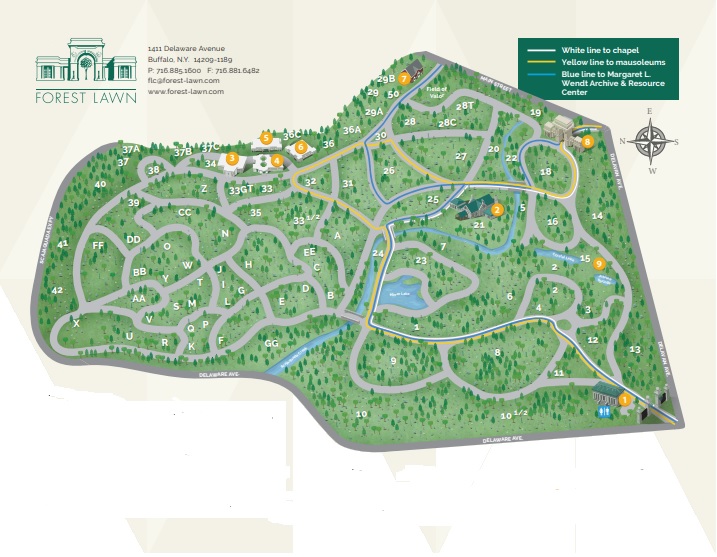
Cemetery Map of Forest Lawn Cemetery in Buffalo, New York
Map of Forest Lawn Cemetery in Buffalo, New York

Grave Location:

Knox Mausoleum, Section 23, Lot 2, Niche 4

Grave Location Description

As you enter the cemetery follow the white line in the road until you get to Mirror Lake which borders Section 23. Drive around Section 23 until you see the 4-pillored Knox mausoleum on Mausoleum Row.

Grave Location GPS

42.9258402, -78.8624366

Photos:

[+]
[+]
[+]
[+]
[+]
[+]
[+]
[+]
[+]
[+]
[+]
[+]
[+]
[+]
[+]
[+]
[+]

FAQ's

Seymour H. Knox I was born on April 11, 1861.

Seymour H. Knox I was born in Russell, New York.

Seymour H. Knox I died on May 17, 1915.

Seymour H. Knox I died in 1045 Delaware Avenue, Buffalo, New York.

Seymour H. Knox I was 54.

The cause of death was Uremic coma.

Seymour H. Knox I's grave is in Forest Lawn Cemetery

Read More About Seymour H. Knox I:

Videos Featuring Seymour H. Knox I:
See More:

Walter Knott

popular name: Walter Knott

date_of_death: December 3, 1981

age: 91

cause_of_death: Parkinson's disease

claim_to_fame: Business and Finance

best_know_for: Walter Knott was an American farmer who created the Knott's Berry Farm amusement park in California. In the 1920s, Walter Knott was a somewhat unsuccessful farmer, whose fortunes changed when he nursed several abandoned berry plants back to health. The hybrid boysenberry, named after its creator, Rudolph Boysen, was a cross between a blackberry, red raspberry and loganberry. The huge berries were a hit, and the Knott family sold berries, preserves and pies from a Buena Park, California roadside stand. In 1934, Knott's wife Cordelia (née Hornaday, January 23, 1890 – April 12, 1974) began serving fried chicken dinners, and within a few years, lines outside the restaurant were often several hours long. To entertain the waiting crowds, Walter built a Ghost Town in 1940, using buildings relocated from Old West towns. Even after Disneyland opened in 1955 a mere 8 miles away, Knott's Berry Farm continued to thrive. Walt Disney and Walter Knott are rumored to have had a cordial relationship; it is known that they each visited the other's park, and they were both members of the original planning council for Children's Hospital of Orange County. Early additions to the farm included a narrow gauge railroad, a San Francisco cable car, a Pan-for-Gold attraction, the Calico Mine Train dark ride and a log flume ride. In 1968, the Knott family fenced the farm, charged admission for the first time, and Knott's Berry Farm officially became an amusement park. Because of his interest in American pioneer history, Knott purchased and restored the real silver mining ghost town of Calico, California in 1951. As a child Walter spent a lot of time in Calico living with his uncle. During World War I he helped to build a silver mill in Calico. This period in his life influenced his decision to buy the town and restore it. In 1966, he deeded Calico to San Bernardino County, California. Walter remained active in the operation of Knott's Berry Farm until the death of Cordelia in 1974, leaving day-to-day park operations to his children.

Caroline Schermerhorn Astor

popular name: Caroline Schermerhorn Astor

date_of_death: October 30, 1908

age: 78

cause_of_death: Heart failure

claim_to_fame: Business and Finance

best_know_for: Caroline Schermerhorn Astor, often called “The Mrs. Astor,” was one of the most influential and wealthy social figures in the United States during the late 19th century's Gilded Age. Married to William Backhouse Astor Jr., she was part of the immensely wealthy Astor family, whose fortune came from real estate investments that made them among the richest families in America. Living in a lavish mansion on New York’s Fifth Avenue, Caroline Astor became the unofficial leader of high society, using her wealth, social connections, and elaborate entertainments to shape the city’s elite social world. She was famous for maintaining an exclusive list of prominent families known as the “Four Hundred,” which represented those considered acceptable in fashionable society. Her luxurious lifestyle included grand balls, elegant dinners, expensive clothing, domestic servants, and extensive travel, all symbols of the immense wealth enjoyed by America’s upper class during the Gilded Age. Caroline’s death marked the end of old-style high society in New York City. She had ruled over the upper crust as an un-crowned American queen, and an invitation to one of Mrs. Astor’s famous balls was the ultimate symbol of one’s social rank.

Isidor Straus

popular name: Isidor Straus

date_of_death: April 15, 1912

age: 67

cause_of_death: Drowning at sea (Titanic)

claim_to_fame: Business and Finance

best_know_for: Isidor Straus (1845–1912) was a German-born American businessman, politician, and philanthropist best known as a co-owner of Macy’s department store and for his tragic death aboard the RMS Titanic. Born in Otterberg, Germany, he immigrated with his family to the United States in 1854, settling in Georgia before moving north after the Civil War. Along with his brother Nathan, Isidor built a successful career in retail, becoming a partner in R.H. Macy & Co. in New York City. Beyond business, he served as a U.S. Congressman for New York’s 15th district from 1894 to 1895 and was widely respected for his integrity and charitable work. Isidor married Ida Blun in 1871, and the two shared a famously devoted relationship. The couple perished together on April 15, 1912, when the Titanic sank—refusing to be separated as the ship went down. Their enduring love story became one of the most poignant and enduring legends of the disaster. While Ida's body was never found, Isidor Straus' remains made their way to New York where he was interred (eventually) at the Straus Family mausoleum at historic Woodlawn Cemetery in the Bronx, New York. Ida is represented by an urn of ocean water recovered at the sight of the sinking of the Titanic.

Back to Top