Antoine-Augustin Parmentier
Birth Name:
Antoine-Augustin Parmentier
Birth Date:
August 12, 1737
Birth Place:
Montdidier, Somme, Kingdom of France
Death Date:
December 13, 1813
Place of Death:
68 Rue du Chemin Vert, Paris, France
Age:
76
Cause of Death:
Tuberculosis
Cemetery Name:
Cimetière du Père Lachaise
Claim to Fame:
Historical Figure
Antoine-Augustin Parmentier (1737–1813) was a French pharmacist, agronomist, and nutrition advocate best known for promoting the potato as a reliable food source in France. After serving as a military pharmacist during the Seven Years’ War, he was captured by Prussians and fed a diet largely consisting of potatoes—an experience that convinced him of their nutritional value at a time when the French public considered them unsafe. Returning to France, Parmentier conducted scientific studies on potato cultivation, organized public demonstrations, and even persuaded influential figures, including King Louis XVI, to support his efforts. Beyond potatoes, he contributed significantly to public health by working on food preservation, public hygiene, smallpox vaccination campaigns, and improved bread production. Parmentier’s work helped transform French agricultural practices and eased food shortages, securing his legacy as a pioneering figure in nutrition and public health.
Now You Know
Starting in the 1870s, many dishes including potatoes were named in honor of Parmentier: potage, velouté, or crème Parmentier (a potato and leek soup), hachis Parmentier (a cottage or shepherd’s pie), brandade de morue parmentier (salt cod mashed with olive oil and potatoes), pommes or garniture Parmentier (cubed potatoes fried in butter), purée Parmentier (mashed potatoes) and salade Parmentier (potato salad).
Cemetery Information:
Final Resting Place:
Cimetière du Père Lachaise
16 Rue du Repos, 6ème division, Chemin Lesseps
Paris, , 75020
France
Europe
Map:
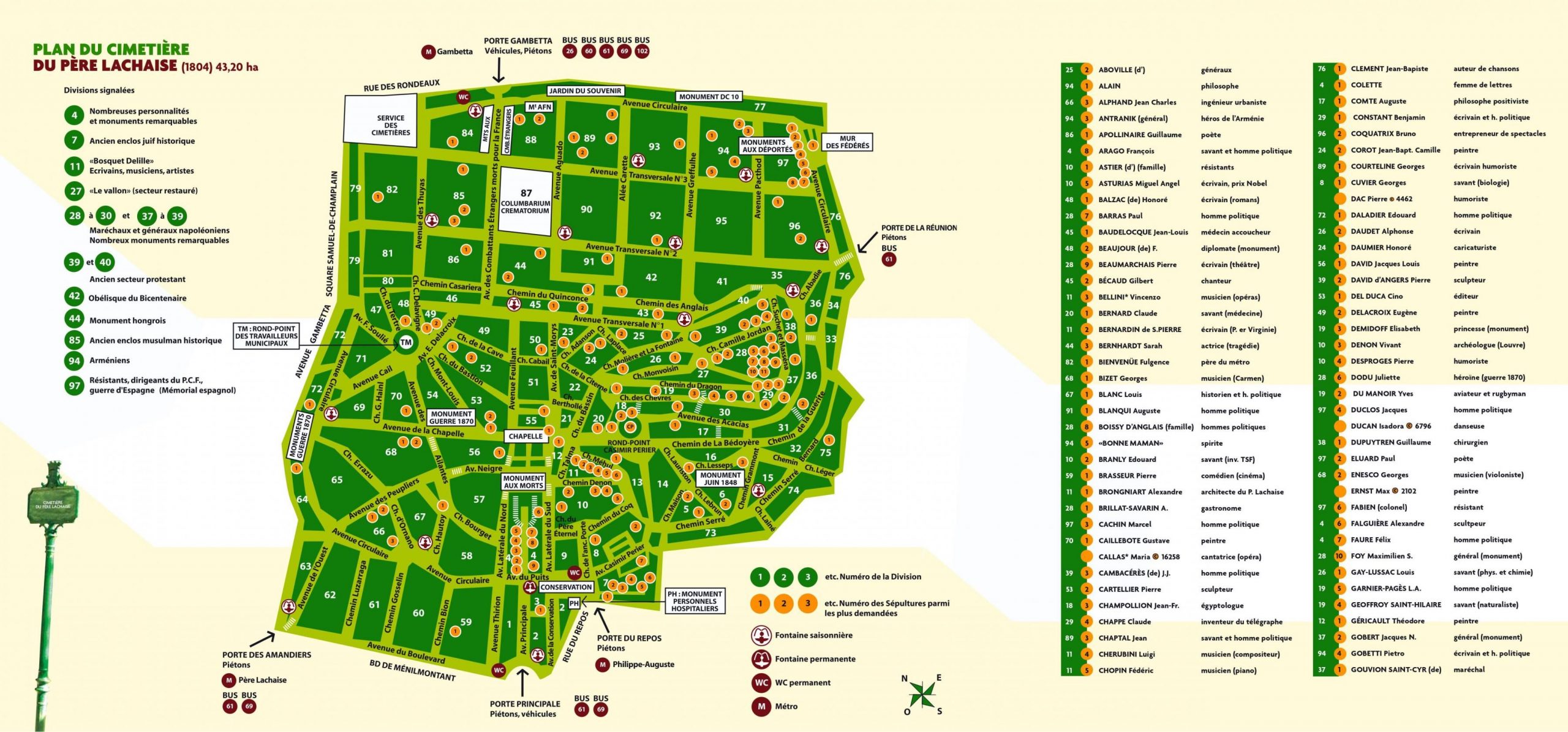
Cimetière du Père-Lachaise in Paris, France
Grave Location:
Division 39, Molière and La Fontaine pathGrave Location Description
The final resting place of Antoine-Augustin Parmentier along with souvenir memorial potatoes can be found in Division 39 at the intersection of Chemin Molière et La Fontaine and Avenue Transversale N-1.
Grave Location GPS
48.86016371375581, 2.395466942524789Photos:
[+]
[+]
[+]
[+]
[+]
FAQ's
Antoine-Augustin Parmentier was born on August 12, 1737.
Antoine-Augustin Parmentier was born in Montdidier, Somme, Kingdom of France.
Antoine-Augustin Parmentier died on December 13, 1813.
Antoine-Augustin Parmentier died in 68 Rue du Chemin Vert, Paris, France.
Antoine-Augustin Parmentier was 76.
The cause of death was Tuberculosis.
Antoine-Augustin Parmentier's grave is in Cimetière du Père Lachaise
Read More About Antoine-Augustin Parmentier:
Videos Featuring Antoine-Augustin Parmentier:

The Great Potato King of France

Antoine-Augustin Parmentier: The Unpeeled Peculiarities of a Potato Propagandist

When Potatoes were Illegal - Tasting History

Parmentier et la pomme de terre

The Man Who Loved Potatoes - Antoine Parmentier - History's Greatest Potato Promoter

How One Man Changed French Cuisine
See More:
Back to Top