Auguste Rodin

AKA:
The Founder of Modern Sculpture
Birth Name:
François Auguste René Rodin
Birth Date:
November 12, 1840
Birth Place:
17 rue de l'Arbalète, Paris, France
Death Date:
November 17, 1917
Place of Death:
La Villa des Brillants, Meudon, France
Age:
77
Cause of Death:
Pulmonary edema
Cemetery Name:
La Villa des Brillants
Claim to Fame:
Artists
Associates:
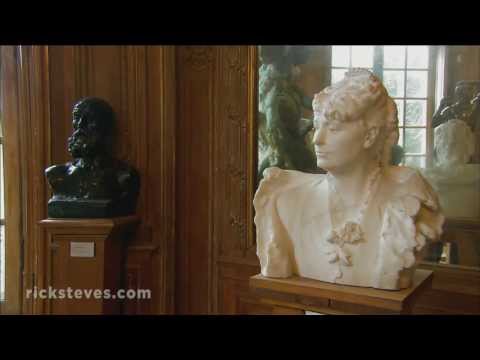
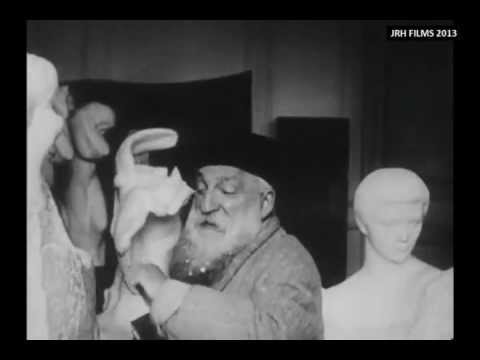
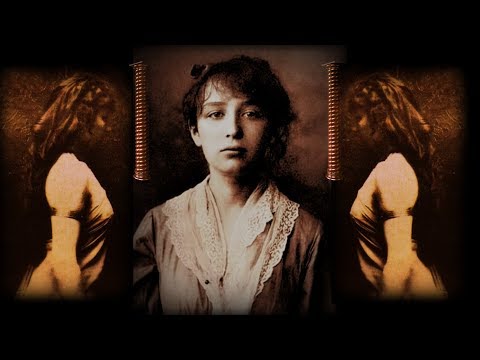
Auguste Rodin, a French sculptor generally considered the founder of modern sculpture, lived a life marked by perseverance, innovation, and profound artistic evolution. Born into a modest family in Paris, Rodin struggled academically and faced repeated rejection from the prestigious École des Beaux-Arts. These early setbacks shaped his self-reliant approach, encouraging him to pursue training through practical work rather than formal schooling. He spent many years as a craftsman and ornamental sculptor, quietly honing the technical mastery that would later underpin his revolutionary style. Later in life, his studio became a hub of creative exploration, supported by numerous assistants, collaborators, and pupils. Among them was Camille Claudel, a brilliant sculptor whose artistic and personal relationship with Rodin had a lasting impact on both their careers. He is known for such sculptures as The Thinker, Monument to Balzac, The Kiss, The Burghers of Calais, and The Gates of Hell.

Fun Fact

La Villa des Brillants was Rodin’s home for the last 20 years of his life. Near the villa is a “tactile gallery” where visitors can explore resin reproductions of sculptures by touch. Further down the garden, the plaster gallery offers an immersive experience of Rodin’s art: his sculptures are displayed in their successive states, illustrating the various stages of his creative process. Rodin’s tomb, surmounted by The Thinker, is located in the vast park overlooking the Seine valley.

In 1923, Marcell Tirel, Rodin’s secretary, published a book alleging that Rodin’s death was largely due to cold, and the fact that he had no heat at Meudon. Rodin requested permission to stay in the Hotel Biron, a museum of his works, but the director of the museum refused. On 16 November his physician announced that “congestion of the lungs has caused great weakness. The patient’s condition is grave.” Rodin died the next day, age 77, at his villa in Meudon, Île-de-France, on the outskirts of Paris.

Cemetery Information:

Final Resting Place:

La Villa des Brillants

19 ave Auguste Rodin 92190

Meudon, Département des Hauts-de-Seine,

France

Europe

Grave Location:

Rodin Family Plot

Grave Location Description

As you enter the property, you will pass Rodin’s home on the right, continue on veering towards the right then take a left turn down the main walkway to the end of the property.

Grave Location GPS

48.815070, 2.250934

Visiting The Grave:

Photos:

[+]
[+]
[+]
[+]
[+]
[+]
[+]
[+]
[+]
[+]
[+]
[+]
[+]
[+]
[+]
[+]
[+]

FAQ's

Auguste Rodin was born on November 12, 1840.

Auguste Rodin was born in 17 rue de l'Arbalète, Paris, France.

Auguste Rodin died on November 17, 1917.

Auguste Rodin died in La Villa des Brillants, Meudon, France.

Auguste Rodin was 77.

The cause of death was Pulmonary edema.

Auguste Rodin's grave is in La Villa des Brillants

Read More About Auguste Rodin:

Videos Featuring Auguste Rodin:

See More:

Camille Corot

popular name: Camille Corot

date_of_death: 22 February 22, 1875

age: 78

cause_of_death: Stomach disease

claim_to_fame: Artists

best_know_for: Camille Corot (1796–1875) was a French artist known for his landscape paintings and his role in the development of the Barbizon School. Born in Paris, he initially studied at the Académie des Beaux-Arts, but he also developed a deep passion for nature, which greatly influenced his work. Corot’s early career involved portrait painting, but he gained fame for his landscapes, especially those inspired by his travels in Italy. Corot became renowned for his poetic approach to nature, with a focus on light and atmosphere. His innovative use of color and brushwork had a significant impact on later artists, particularly the Impressionists. Corot was known for working both outdoors, directly from nature, and in the studio, creating a balance between realism and a more emotional, idealized vision of the landscape. Some of most important works include Ville d'Avray (1865), Venise, La Piazetta and The Bridge at Narni. Throughout his life, Corot received recognition and success, but he remained modest and humble about his work. He exhibited widely, particularly at the Salon, and was highly respected by his contemporaries including Jean-François Millet, Théodore Rousseau, Charles-François Daubigny and Honoré Daumier. His legacy endures as one of the key figures in the transition from classical to modern art, influencing both landscape painting and the evolution of plein-air techniques. Upon his death, he was laid to rest at Cimetière du Père-Lachaise in Paris, France.

Bob Ross

popular name: Bob Ross

date_of_death: July 4, 1995

age: 52

cause_of_death: Complications from lymphoma

claim_to_fame: Artists

best_know_for: Bob Ross, with his distinctive hair style and quiet demeanor, was a popular American painter, art instructor, and television host. The painter who gave us “happy little trees” was the creator and host of The Joy of Painting, an instructional television program that aired from 1983 to 1994 on PBS in the United States, CBC in Canada, and similar channels in Latin America, and Europe. The show consisted of more than 400 episodes, was as meditative as it was instructive. Ross was a force of pure positivity in a world without a lot of it. Never a picture of health, Bob died at the young age of 52 due to complications from lymphoma caused by long-term smoking and the effects of toxic paint fumes and cleaners.

Jean-Auguste-Dominique Ingres

popular name: Jean-Auguste-Dominique Ingres

date_of_death: January 14, 1867

age: 86

cause_of_death: Pneumonia

claim_to_fame: Artists

best_know_for: Jean-Auguste-Dominique Ingres (1780–1867) was a French Neoclassical painter, widely regarded for his mastery in portraiture and his precise, smooth technique. Born in Montauban, France, Ingres showed early talent in drawing, leading him to study at the prestigious École des Beaux-Arts in Paris. He was a student of Jacques-Louis David, a leading figure in the Neoclassical movement, which emphasized order, clarity, and idealized forms. Ingres' career spanned several decades, during which he developed a style distinct from the Romantic movement that was emerging in France. Though he was often criticized for being too rigid and traditional, he stuck to his classical ideals, focusing on linear precision, a sense of balance, and attention to detail. His most famous works include portraits like Madame Moitessier, Mademoiselle Caroline Rivière (1806) and historical paintings such as The Apotheosis of Homer. In his lifetime, Ingres achieved considerable recognition, including being appointed the director of the French Academy in Rome, where he spent a significant period of his life. His influence extended beyond his own time, impacting later artists, including the development of academic and modernist art. Upon his death at the age of 82, Ingres was interred in the Père Lachaise Cemetery in Paris with a tomb sculpted by his student Jean-Marie Bonnassieux. The contents of his studio, including a number of major paintings, over 4000 drawings, and his violin, were bequeathed by the artist to the city museum of Montauban, now known as the Musée Ingres. Upon his death, he was interred at Cimetière du Père-Lachaise in Paris, France.

Back to Top