Charles Blondin

AKA:
The Great Blondin, The Little Wonder
Birth Name:
Jean François Gravelet
Birth Date:
February 28, 1824
Birth Place:
Hesdin, Pas-de-Calais, France
Death Date:
February 22, 1897
Place of Death:
Blondin's "Niagara House", Northfield Avenue, Northfields, London W5 4UG, UK
Age:
72
Cause of Death:
Diabetes
Cemetery Name:
Kensal Green Cemetery
Claim to Fame:
The Odd and the Interesting
Charles Blondin was a French tightrope walker and acrobat. During the winter of 1858, a 34-year-old French acrobat traveled to Niagara Falls hoping to become the first person to cross the “boiling cataract.” Noting the masses of ice and snow on either bank and the violent whirls of wind circling the gorge, Blondin delayed the grand event until he would have better weather. He always worked without a net, believing that preparing for disaster only made one more likely to occur. Known for his numerous crossings of the 1,100 ft (340 m) Niagara Gorge on a tightrope, he added a touch of showmanship - once stopping midway to cook an omelette and once carrying his manager on his back. Believe it or not, he died in bed at the ripe age of 72.

Cemetery Information:

Final Resting Place:

Kensal Green Cemetery

Harrow Rd

North Kensington, London, W10 4RA

United Kingdom

Europe

Map:
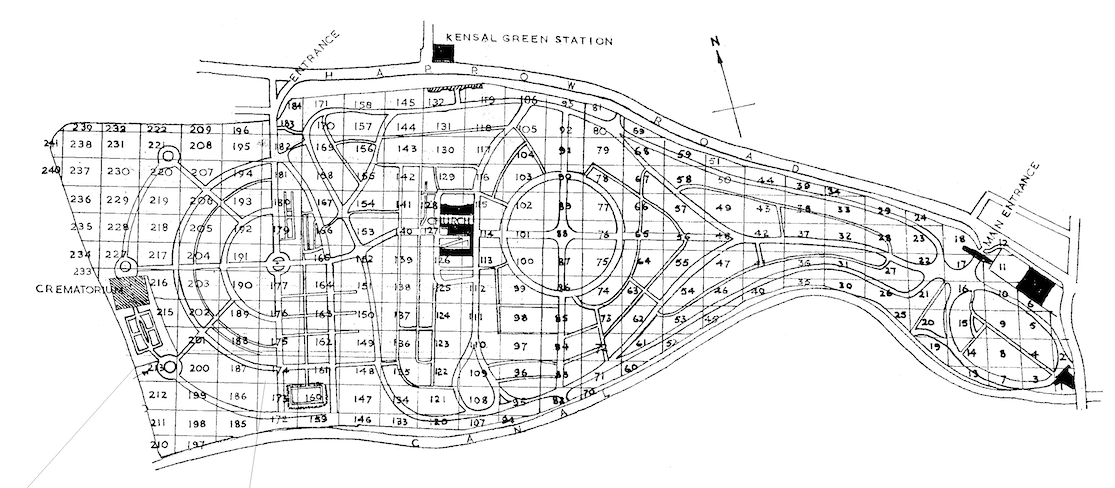
Grave Location:

Grave 13198, Square 140, Row 1

Grave Location Description

After entering through the main entrance, turn right at the first intersection and head west. Continue heading straight along this road for about 1,850 feet until reaching the church. Go around the church. You can either go right to go around or go left, and continue heading west. Charles Blondin’s grave is about 95 feet directly west of the church. After going around the church and heading west, drive about 95 feet and park your car along the road. Blondin’s grave will be on your left and near the road.

Grave Location GPS

51.528554, -0.226546

Photos:

[+]
[+]
[+]
[+]
[+]
[+]
[+]
[+]
[+]
[+]
[+]
[+]

FAQ's

Charles Blondin was born on February 28, 1824.

Charles Blondin was born in Hesdin, Pas-de-Calais, France.

Charles Blondin died on February 22, 1897.

Charles Blondin died in Blondin's "Niagara House", Northfield Avenue, Northfields, London W5 4UG, UK.

Charles Blondin was 72.

The cause of death was Diabetes.

Charles Blondin's grave is in Kensal Green Cemetery

Read More About Charles Blondin:

Videos Featuring Charles Blondin:

See More:

Huguette Clark

popular name: Huguette Clark

date_of_death: May 24, 2011

age: 104

cause_of_death: Natural causes

claim_to_fame: The Odd and the Interesting

best_know_for: Huguette Clark was an American heiress, philanthropist, and recluse, born on June 9, 1906, in Paris, France. She was the daughter of U.S. Senator and copper magnate William A. Clark, one of the wealthiest men of the Gilded Age, and his much younger second wife, Anna La Chapelle. Raised in extraordinary wealth, Huguette inherited a vast fortune and numerous properties, including mansions in New York, California, and Connecticut. Despite her immense wealth, she lived a remarkably private life, withdrawing from public view for decades. In her later years, she chose to live in a hospital room in New York City, despite owning several luxurious homes. Fascination with her reclusive lifestyle grew after her death on May 24, 2011, at the age of 104. Her life story, marked by eccentricity, secrecy, and a bitter legal battle over her estate, captured public interest and was chronicled in the bestselling book Empty Mansions.

Daisy and Violet Hilton

popular name: Daisy and Violet Hilton

date_of_death: January 4, 1969

age: 60

cause_of_death: Hong Kong flu

claim_to_fame: The Odd and the Interesting

best_know_for: Daisy and Violet Hilton, born in the early 1900s in Brighton, England, were conjoined twins joined at the hip and buttocks. Their lives were a blend of exploitation and fame, marked by challenges and achievements. Born to an unmarried barmaid, Kate Skinner, the twins were sold to her employer, Mary Hilton, who saw their potential as a spectacle. Under Mary Hilton's care, they were trained as performers and toured extensively, particularly in the U.S., where they were exhibited as "freaks" in sideshows and carnivals. After Mary's death, the twins became the wards of her daughter and son-in-law, Edith and Meyer Myers, who continued exploiting them financially and refusing to allow them out in public unless they were performing. They later gained legal independence in 1931 after suing the Myers family, receiving $100,000 in restitution (far below what they earned). The Hiltons became vaudeville stars, captivating their audiences with their talents including dancing, singing and playing instruments. Despite their fame, the Hilton sisters faced significant personal challenges. Exploitation in their early years left them unprepared to manage their finances and lives independently. They attempted romantic relationships, but societal prejudice and legal barriers prevented marriage. Their brief appearance in Tod Browning's 1932 cult classic film Freaks and the 1951 biopic Chained for Life showcased their lives but didn't lead to lasting success. As vaudeville declined, the sisters struggled financially. They ended up working in a grocery store in Charlotte, North Carolina. In 1969, they died of the Hong Kong flu, passing within days of each other due to their physical connection. After their passing, they were laid to rest at Forest Lawn West in Charlotte, NC.

Quinta Maggia McDonald

popular name: Quinta Maggia McDonald

date_of_death: December 7, 1929

age: 29

cause_of_death: Radium sarcoma, industrial poisoning

claim_to_fame: The Odd and the Interesting

best_know_for: Quinta Maggia McDonald was the middle child of seven Maggia sisters; listed in order of age: Louise, Clara, Albina, Mollie, Quinta, Irma and Josephine. Children of Italian immigrants, Albina, Mollie, Quinta and Irma all worked in the radium-dial factory. Quinta was recruited to work at the United States Radium Corporation in Orange, New Jersey as a dial-painter. Like her sisters she would end up paying the price. The initial effects of radium seemed harmless, and the substance was popular amongst the younger girls in the factory. They would go home from a day of painting with their clothes glowing from the radium exposure. Some would even paint the buttons on their dresses or their nails, but the joy of the radium glow was short lived. Long-term radiation sickness symptoms soon became present among many of the women who worked with radium paint. Common issues included bone cancer, anemia, lesions, and sores. These problems were exhibited in Amelia Maggia, the first dial painter to die from radiation sickness. After Amelia's death, Quinta initially went to the doctor complaining of dental pain where her teeth began to just drop out of her mouth. Unlike her sister before her, she received a diagnoses of radium poisoning and was told there was no cure. Sometime later she noticed pain in her ankles, legs and hips and was put into plaster casts to keep her immobile in the chance this might bring some relieve. Upon her final hospitalization the doctors noticed a large sarcoma on her leg - the kind of bone tumor that killed a fellow Radium Girl a year before. She eventually lapsed into a coma and died at the age of 29 leaving behind two young children.

Back to Top