Élisabeth de Demidoff

Birth Name:
Baroness Elizaveta Alexandrovna Stroganova
Birth Date:
December 1, 1776
Birth Place:
Saint Petersburg, Russia
Death Date:
March 27, 1818
Place of Death:
Paris, France
Age:
41
Cause of Death:
Unkown
Cemetery Name:
Cimetière du Père Lachaise
Claim to Fame:
The Odd and the Interesting
Baroness Elizaveta Alexandrovna Stroganova was a Russian aristocrat of the Stroganov family. By birth she belonged to the highest nobility of the capital. Elizabeth's father was the owner of the Taman and Kynovsky factories and more than half a million acres of land. Her mother Elizaveta Alexandrovna Zagryazhskaya was a lady in waiting and a famous beauty of Catherine II's court. At age 17 she married Count Nikolai Nikitich Demidov and they had two children - Pavel (Paul) (1798–1840) and Anatoly (Anatole) (1812–1869). They were of completely different characters and often lived apart. She was beautiful, light and witty, and her husband more introspective, and so they soon grew bored with each other and they separated and she returned to live in Paris, where she died in 1818 and was buried in the Père Lachaise where she rests in the cemetery's largest mausoleum.

Fun Fact:

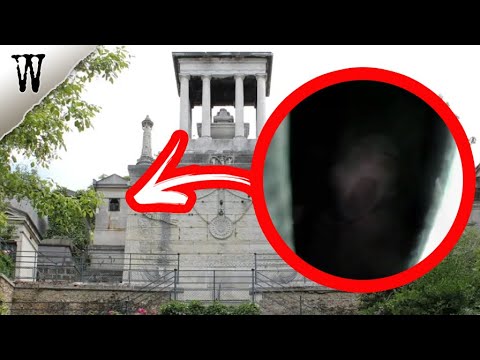
Why is her tomb considered the most haunted of Père Lachaise?
According to legend, the Baroness did not want to be alone in her grave. She would die on April 8th, 1818, leaving a very strange will behind her. Her will allegedly read that, in order to inherit her fortune, a candidate should spend 365 days and 366 nights locked alone in her mausoleum (this is untrue).

Despite the unusual request, the fortune of Princess Demidoff was important enough to give it a try, and soon there were a few requests to attempt the quest! A few candidates agreed to be locked in the mausoleum, where they would be served food and be given a bucket that would be emptied daily for their own waste (this is also not true).

Not many survived the challenge for longer than a week, and they would usually be taken out after spending hours crying for help and knocking the doors, with a terrified look in their faces, often scratched and showing bruises (this is made up).

The witnesses declared that they felt how life abandoned them in the mausoleum. The body of Princess Demidoff had been placed in the centre of the mausoleum in a coffin made of crystal, and the room was said to be covered in mirrors, with intricate symbols surrounding the area. Some suggested that the Princess was a vampire, for her body didn’t show any signs of decomposition. Others that she was feeding on the energy of her visitors for when it was time to come back to life (again, completely false).

Be as it may, the mausoleum of Elisabeth Demidoff was locked by order of the city council after many incidents with those that attempted to inherit the fortune of the Princess, and her wealth remains unclaimed up to this day (a complete fabrication).

Cemetery Information:

Final Resting Place:

Cimetière du Père Lachaise

16 Rue du Repos, 6ème division, Chemin Lesseps

Paris, , 75020

France

Europe

Map:
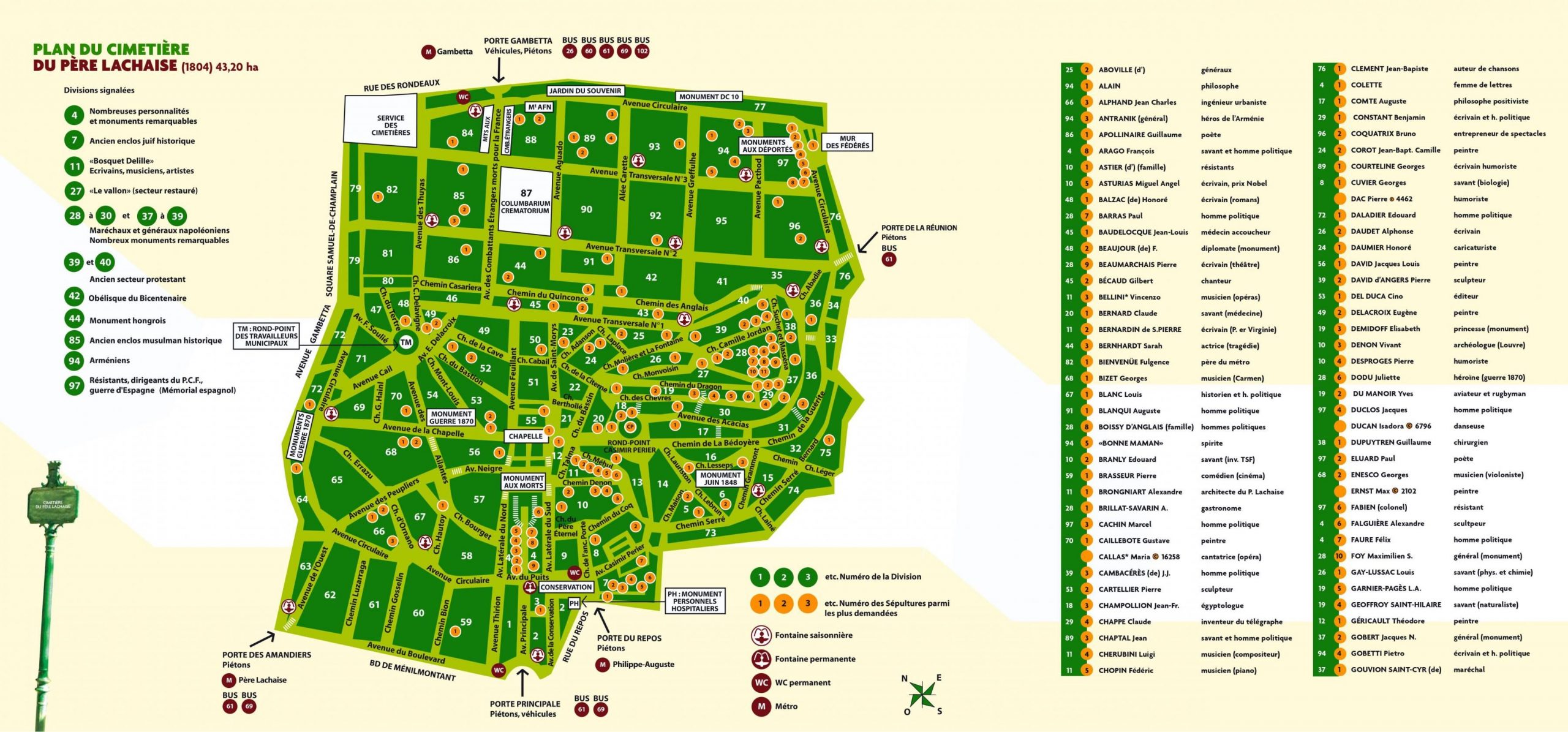
Map of Cimetière du Père-Lachaise in Paris, France
Cimetière du Père-Lachaise in Paris, France

Grave Location:

Division 19

Grave Location Description

The spectacular tomb of Élisabeth Alexandrovna de Demidoff, the largest tomb in all of Cimetière du Père Lachaise, is located in the middle of Division 19 which is bordered by Chemin du Dragon (the top level of her grave) and Chemin des Chevres (the bottom level of her grave).

Grave Location GPS

48.859560, 2.395012

Visiting The Grave:

Photos:

[+]
[+]
[+]
[+]
[+]
[+]
[+]
[+]
[+]
[+]
[+]

FAQ's

Élisabeth de Demidoff was born on December 1, 1776.

Élisabeth de Demidoff was born in Saint Petersburg, Russia.

Élisabeth de Demidoff died on March 27, 1818.

Élisabeth de Demidoff died in Paris, France.

Élisabeth de Demidoff was 41.

The cause of death was Unkown.

Élisabeth de Demidoff's grave is in Cimetière du Père Lachaise

Read More About Élisabeth de Demidoff:

Videos Featuring Élisabeth de Demidoff:
See More:

Hazel Kuser

popular name: Hazel Kuser

date_of_death: December 9, 1924

age: 25

cause_of_death: Radium poisoning

claim_to_fame: The Odd and the Interesting

best_know_for: Hazel May Vincent Kuser was born on August 5, 1899, in Orange, Essex County, New Jersey. At the age of 16, she began working at the U.S. Radium Corporation in Orange, New Jersey, where she painted luminous watch dials using radium-based paint. This hazardous work led to her developing radium poisoning, a condition that caused severe health issues and contributed to her early death. She married Theodore C. Kuser, and they had one child together. Hazel passed away on December 9, 1924, at the age of 25, and was laid to rest at Rosedale Cemetery in Montclair, New Jersey. Her life and tragic death became part of the broader narrative of the Radium Girls, a group of 50+ female factory workers who suffered from radium poisoning due to unsafe working conditions.

Alfred Southwick

popular name: Alfred Southwick

date_of_death: June 11, 1898

age: 72

cause_of_death: Natural causes

claim_to_fame: The Odd and the Interesting

best_know_for: In 1881 Alfred Southwick heard a story about an intoxicated man who touched a live electric generator. Given that the man died so quickly, Southwick concluded that electricity could be used as an alternative to hanging for executions. And while his background included stints as a steam-boat engineer and dentist, Alfred was credited with inventing the electric chair as a method of legal execution. He also served as a professor at the University of Buffalo school of dental medicine, now known as the State University of New York at Buffalo. Upon his death, he was laid to rest at Forest Lawn Cemetery in Buffalo, NY.

Nancy Martin

popular name: Nancy Martin

date_of_death: May 25, 1857

age: 24

cause_of_death: Yellow Fever

claim_to_fame: The Odd and the Interesting

best_know_for: Silas Martin was a successful sea captain and trader. The one thing he hated about his job was missing his family for long stretches of time. So when his son John and daughter Nancy (Nance to her friends) asked to accompany their father on his next voyage he did not hesitate to add them to the crew. When they set sail in early 1857, Nance took ill about three months into the trip. Silas detoured and sailed into Cardenas, Cuba in search of medical care but it was too late - Nancy succumbed shortly upon arrival. Rather than having Nancy buried on foreign soil or buried at sea, Captain Silas was determined to return to Wilmington for a proper burial with her family. The issue was how to keep the body preserved for the voyage home. They decided on a large rum barrel as a makeshift coffin filled with liquor to preserved the body. The thought of her body sloshing around in a cask during rough seas was too much for her father and brother, so it was decided that a chair would be placed in the cask, nailed in place and Nance seated and tied into the chair to keep her secure. Rather than disturbing the remains, upon returning to Wilmington, Silas had Nance buried in the cask in the port city’s Oakdale Cemetery.

Back to Top