Franco Zeffirelli

Birth Name:
Gian Franco Corsi Zeffirelli
Birth Date:
February 12, 1923
Birth Place:
Florence, Italy
Death Date:
June 15, 2019
Place of Death:
Rome, Italy
Age:
96
Cause of Death:
Pnuemonia
Cemetery Name:
Cimitero delle Porte Sante
Claim to Fame:
Show Business
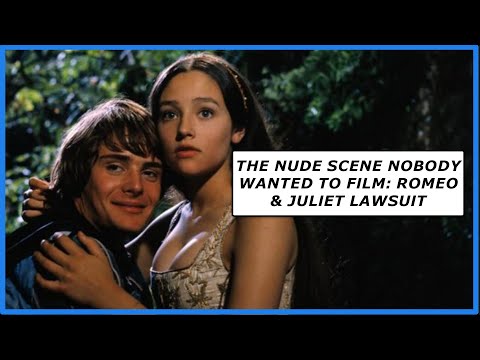
Franco Zeffirelli was not only one of Italy’s most talented directors and designers in the theatrical arts, but was also involved with cinema and television for more than half a century. In any medium, he generally preferred a grand canvas. His work was dominated by adaptations of the classics and lush biographies or histories, told with flamboyance and sentimentality. He had an unerring eye for attractive stars of both sexes such that, whatever their weaknesses, his productions invariably looked good. Born in 1923 in Florence, Franco Zeffirelli rose to success after he was recognized for his amazing work of Romeo and Juliet (1968). This, along with his other acclaimed work, La Traviata (1983), secured him his first two Academy Award nominations. He is also known for The Taming of the Shrew (1967), Jesus of Nazareth (1977), and Tea with Mussolini (1999). Along with being an accomplished film director, he was also known for his opera productions. His production of Tosca (1964), with Maria Callas and Tito Gobbi, and Lucia di Lammermoor (1957) became prominently known around the world.

Cemetery Information:

Final Resting Place:

Cimitero delle Porte Sante

34 Via delle Porte Sante

Florence, , 50125

Italy

Europe

Map:

Map of Cimitero Delle Porte Sante in Florence, Italy.
Cimitero Delle Porte Sante in Florence, Italy

Grave Location:

Piazzale Fontana, Zeffirelli Family Crypt

Grave Location Description

Enter the cemetery at 34 Via delle Porte Sante and take the stairs to the top to the entrance of the church. At the top of the stairs take a left and another left and walk down to the large brick and marble crypts that line the border of the cemetery. The Zeffirelli Family Crypt can be found in the corner of the Piazzale Fontana section.

Grave Location GPS

43.759916, 11.264673

Photos:

[+]
[+]
[+]
[+]
[+]
[+]
[+]
[+]
[+]
[+]
[+]
[+]
[+]

FAQ's

Franco Zeffirelli was born on February 12, 1923.

Franco Zeffirelli was born in Florence, Italy.

Franco Zeffirelli died on June 15, 2019.

Franco Zeffirelli died in Rome, Italy.

Franco Zeffirelli was 96.

The cause of death was Pnuemonia.

Franco Zeffirelli's grave is in Cimitero delle Porte Sante

Read More About Franco Zeffirelli:

Videos Featuring Franco Zeffirelli:

See More:

John Candy

popular name: John Candy

date_of_death: March 4, 1994

age: 43

cause_of_death: Heart attack

claim_to_fame: Show Business

best_know_for: John Candy was one of the most fantastic comedic actors of his generation and perhaps Canada's greatest export to the U.S. His well-known roles as the big-hearted Buck Russell in Uncle Buck and his role as Del Griffith - shower curtain ring salesman in Planes, Trains & Automobiles will live forever as cinematic comic genius long after his passing.

Greta Garbo

popular name: Greta Garbo

date_of_death: April 15, 1990

age: 84

cause_of_death: Pneumonia and kidney failure

claim_to_fame: Show Business

best_know_for: Greta Garbo was a Swedish-American actress, renowned for her iconic roles in the silent film and early sound film eras. Born Greta Lovisa Gustafsson in Stockholm, Sweden, she worked as a shop assistant and appeared in a few Swedish films before being discovered by Hollywood in 1925. She signed with Metro-Goldwyn-Mayer (MGM) in 1927 and soon became one of the most popular stars of the 1920s and 1930s. Garbo's mysterious, often melancholic on-screen presence earned her the nickname "The Divine Garbo." She starred in several classic films such as Flesh and the Devil (1926), Camille (1936), and Grand Hotel (1932), which showcased her range, from passionate lovers to tragic figures. Her roles often reflected themes of love and loss, matching her off-screen enigmatic persona. Garbo made a successful transition to sound films, and in 1939, she received an Academy Award nomination for Ninotchka. Despite her success, Garbo was known for her desire for privacy, and in 1941, she retired from acting at the age of 36 after making only 26 films in 17 years. When Garbo quit Hollywood, she spent the remainder of her life in shuttered and fenced residences in France, Switzerland and Manhattan, where she lived in an East Side high-rise. Known as “the Swedish sphinx” because of her deep fear of reporters and other strangers, she ironically became one of the most publicized women in the world while trying to guard her privacy. Her biographer John Bainbridge wrote in “Garbo,” that except at the start of her career, she “granted no interviews, signed no autographs, attended no premieres, answered no fan mail.” At the time of her death in 1990 she owned 18th-century antiques, fine rugs, damask curtains, real estate and many pieces of art, including a Renoir. She left her entire estate of $32 million (equivalent to $75,000,000 in 2023) to her niece. She was interred Skogskyrkogården cemetery in Stockholm, Sweden.

Audie Murphy

popular name: Audie Murphy

date_of_death: May 28, 1971

age: 45

cause_of_death: Plane crash

claim_to_fame: Show Business

best_know_for: He wanted to join the Marines, but he was too short. The paratroopers wouldn't have him, either. Reluctantly, he settled on the infantry, and ultimately became one of the most decorated heroes of World War II. He was Audie Murphy, the baby-faced Texas farm boy who became an American legend. Dropping out of school in the fifth grade to earn money picking cotton, he was 16 years old when his mother died and watched as his siblings as they were doled out to an orphanage or to relatives. Seeking an escape from this difficult life, Murphy enlisted in the Army in 1942 — falsifying his birth certificate so that he appeared to be 18, one year older than he actually was. By the end of World War II, Murphy had become one of the nation's most-decorated soldiers, earning an unparalleled 28 medals (including three from France and one from Belgium). Murphy had been wounded three times during the war. In May 1945, when victory was declared in Europe, he had still not reached his 21st birthday. In 1949 Audie Murphy published his acclaimed autobiography, To Hell and Bank, then spent the next 21 years in Hollywood, most famously portraying himself in the movie of the same name. Mostly he played Westerns. Despite a steady stream of income, Murphy's horseracing addiction led to financial difficulties, though he refused to appear in commercials for alcohol and cigarettes, thinking it a bad influence on children.

Back to Top