Auguste Rodin

AKA:
The Founder of Modern Sculpture
Birth Name:
François Auguste René Rodin
Birth Date:
November 12, 1840
Birth Place:
17 rue de l'Arbalète, Paris, France
Death Date:
November 17, 1917
Place of Death:
La Villa des Brillants, Meudon, France
Age:
77
Cause of Death:
Pulmonary edema
Cemetery Name:
La Villa des Brillants
Claim to Fame:
Artists
Associates:
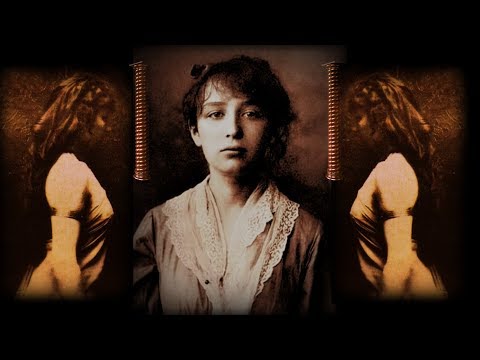
Auguste Rodin, a French sculptor generally considered the founder of modern sculpture, lived a life marked by perseverance, innovation, and profound artistic evolution. Born into a modest family in Paris, Rodin struggled academically and faced repeated rejection from the prestigious École des Beaux-Arts. These early setbacks shaped his self-reliant approach, encouraging him to pursue training through practical work rather than formal schooling. He spent many years as a craftsman and ornamental sculptor, quietly honing the technical mastery that would later underpin his revolutionary style. Later in life, his studio became a hub of creative exploration, supported by numerous assistants, collaborators, and pupils. Among them was Camille Claudel, a brilliant sculptor whose artistic and personal relationship with Rodin had a lasting impact on both their careers. He is known for such sculptures as The Thinker, Monument to Balzac, The Kiss, The Burghers of Calais, and The Gates of Hell.

Fun Fact

La Villa des Brillants was Rodin’s home for the last 20 years of his life. Near the villa is a “tactile gallery” where visitors can explore resin reproductions of sculptures by touch. Further down the garden, the plaster gallery offers an immersive experience of Rodin’s art: his sculptures are displayed in their successive states, illustrating the various stages of his creative process. Rodin’s tomb, surmounted by The Thinker, is located in the vast park overlooking the Seine valley.

In 1923, Marcell Tirel, Rodin’s secretary, published a book alleging that Rodin’s death was largely due to cold, and the fact that he had no heat at Meudon. Rodin requested permission to stay in the Hotel Biron, a museum of his works, but the director of the museum refused. On 16 November his physician announced that “congestion of the lungs has caused great weakness. The patient’s condition is grave.” Rodin died the next day, age 77, at his villa in Meudon, Île-de-France, on the outskirts of Paris.

Cemetery Information:

Final Resting Place:

La Villa des Brillants

19 ave Auguste Rodin 92190

Meudon, Département des Hauts-de-Seine,

France

Europe

Grave Location:

Rodin Family Plot

Grave Location Description

As you enter the property, you will pass Rodin’s home on the right, continue on veering towards the right then take a left turn down the main walkway to the end of the property.

Grave Location GPS

48.815070, 2.250934

Visiting The Grave:

Photos:

[+]
[+]
[+]
[+]
[+]
[+]
[+]
[+]
[+]
[+]
[+]
[+]
[+]
[+]
[+]
[+]
[+]

FAQ's

Auguste Rodin was born on November 12, 1840.

Auguste Rodin was born in 17 rue de l'Arbalète, Paris, France.

Auguste Rodin died on November 17, 1917.

Auguste Rodin died in La Villa des Brillants, Meudon, France.

Auguste Rodin was 77.

The cause of death was Pulmonary edema.

Auguste Rodin's grave is in La Villa des Brillants

Read More About Auguste Rodin:

Videos Featuring Auguste Rodin:

See More:

George Inness Jr.

popular name: George Inness Jr.

date_of_death: July 27, 1926

age:

cause_of_death:

claim_to_fame: Artists

best_know_for: George Inness Jr. was one of America's foremost figure and landscape artists and the son of George Inness, an important American landscape painter. He studied with his father and Léon Bonnat in the 1870s in Europe, where he was made an officer of the Académie des Beaux-Arts. Like his father, he was considered a member of the Barbizon School and resisted impressionism. Later he returned to the United States and became known for his paintings of animals and illustration of hunting scenes. In 1899 he was elected to the National Academy of Design. He lived and worked in Boston, New York City and New Jersey and finally in Tarpon Springs, Florida where he produced most of his life's work. The Unitarian Universalist Church in Tarpon Springs contains a collection of eleven of his works, several of which are murals painted directly to the walls of the church sanctuary.

Siné

popular name: Siné

date_of_death: May 5, 2016

age: 87

cause_of_death: Surgery for lung cancer

claim_to_fame: Artists

best_know_for: Siné was a controversial French cartoonist and caricaturist whose early successes in this arena led him into the fields as a book illustrator and designer of posters, stage decors, animated cartoons and publicity films. Siné began his professional career as a retoucher for pornographic magazines and published his first cartoon in France Dimanche in 1952 which won the Black Humour Award for his cartoon collection 'Complainte sans Paroles' in 1955. Siné became especially famous for his wordplay cartoons about cats. Until 1962, he made political cartoons for L'Express, some of which were refused or caused heavy criticism. He subsequently published his anti-colonial, anti-zionist, anti-capitalist and anti-clerical worldviews in his own publication, Siné Massacre. Siné's anarchistic and anti-colonial cartoons have caused controversy on several occasions during his career, especially during the Algerian war. He was fired from Charlie-Hebdo in 2008, following a antisemitic cartoon on Jessica Sebaoun-Darty, the wife of Jean Sarkozy. In August of 2008 he announced his own satirical weekly, called Siné Hebdo, launched with his wife Catherine Sinet and about 15 contributors. The publication ran until April 2010, but was continued as Siné Mensuel in September 2011. Siné has additionally made many drawings for books about jazz music, as well as CD covers.

Eugène Delacroix

popular name: Eugène Delacroix

date_of_death: August 13, 1863

age: 65

cause_of_death: Throat infection

claim_to_fame: Artists

best_know_for: Eugène Delacroix was a French Romantic artist who was regarded as the leader of the French Romantic school. In contrast to the Neoclassical perfectionism of his chief rival Ingres, Delacroix took for his inspiration the art of Rubens and painters of the Venetian Renaissance, with an attendant emphasis on colour and movement rather than clarity of outline and carefully modelled form. Dramatic and romantic content characterized the central themes of his maturity, and led him not to the classical models of Greek and Roman art, but to travel in North Africa, in search of the exotic. Delacroix was trained at the École des Beaux-Arts in Paris and quickly gained attention for his dramatic, expressive style. His breakthrough came with the painting La Barque de Dante (1822), which was showcased at the Salon and received acclaim for its bold use of color and intense emotion. This set the stage for other iconic works, such as Liberty Leading the People (1830), a powerful allegorical depiction of the July Revolution in France. Delacroix's use of vivid colors, dynamic compositions, and passion in his works became a hallmark of Romanticism. Throughout his career, Delacroix was inspired by literature, history, and contemporary events, drawing from sources like Shakespeare, Byron, and the Bible. His works often depicted intense emotions, dramatic landscapes, and scenes of violence and heroism. He was also influenced by the art of the Dutch Masters and the emerging techniques of the Impressionists, though he remained primarily associated with the Romantic tradition. Delacroix's later years were marked by a move toward lighter, more fluid compositions. Though he never embraced the academic style of the time, he remained a prominent figure in French art circles. His legacy deeply influenced generations of artists, including the Impressionists, particularly in terms of color theory and the expressive use of brushwork. He died at his home in 1863, leaving behind a legacy as one of the great masters of 19th-century art. He was interred at Cimetière du Père-Lachaise in Paris, France.

Back to Top