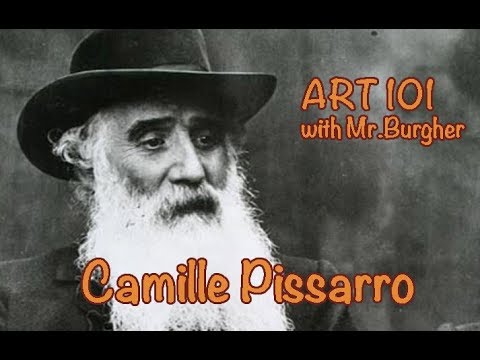
Camille Pissarro

AKA:
Dean of the Impressionist Painters
Birth Name:
Jacob Abraham Camille Pissarro
Birth Date:
July 10, 1830
Birth Place:
Charlotte Amalie, Saint Thomas, Danish West Indies
Death Date:
November 13, 1903
Place of Death:
1 Boulevard Morland, 4th Arrondissement, Paris, France
Age:
73
Cause of Death:
Sepsis
Cemetery Name:
Cimetière du Père Lachaise
Claim to Fame:
Artists
Camille Pissarro (1830–1903) was a French Danish painter and one of the key figures in the development of Impressionism and Post-Impressionism. Born in the Danish West Indies (now the U.S. Virgin Islands), he moved to France at age 12 to study art. His early work was influenced by the realism of Gustave Courbet, but over time, Pissarro became a central figure in the Impressionist movement. Pissarro's style evolved throughout his career, initially focusing on capturing the effects of light and atmosphere in natural scenes. He was a key contributor to the group's revolutionary approach to painting, using loose brushwork and an emphasis on outdoor scenes. His work often depicted rural landscapes, urban scenes, and daily life. Later, influenced by Georges Seurat's pointillism, Pissarro incorporated this technique into his work during his time in Paris. Pissarro was not only important as an artist but also as a mentor and friend to many other artists, including Paul Cézanne, Paul Gauguin,, Pierre-Auguste Renoir and Georges Seurat. Despite facing financial hardships and occasional criticism of his work, he remained dedicated to his artistic vision despite living in poverty. He continued to paint prolifically until an eye disease rendered him blind and he died shortly after in 1903, leaving behind a legacy that cemented his place as one of the most significant artists in the transition from realism to modern art. Upon his death, Camille was buried at Cimetière du Père-Lachaise in Paris, France.

Fun Facts

In 1871 in Croydon, England, he married his mother’s maid, Julie Vellay, a vineyard grower’s daughter, with whom he had seven children, six of whom would become painters. The grandson of Camille Pissarro, Hugues Claude Pissarro (dit Pomié), was born in 1935 and his work has been featured in exhibitions in Europe and the United States, and he was commissioned by the White House in 1959 to paint a portrait of U.S. President Dwight Eisenhower. He now lives and paints in Donegal, Ireland, with his wife Corinne who is also an accomplished artist and their children.

During World War II many original Pissarro paintings were looted from Jewish owners. After the war many of those paintings found their way into the United States illegallydisplayed at such museums as the Jewish Museum in New York and the University of Oklahoma.

The most expensive impressionist painting by Pissarro sold to date is Boulevard Montmartre (Spring Morning) which sold for £19.9 million when auctioned by Sotheby’s in London in February 2014, giving it an adjusted price of $38.3 million.

Cemetery Information:

Final Resting Place:

Cimetière du Père Lachaise

16 Rue du Repos, 6ème division, Chemin Lesseps

Paris, , 75020

France

Europe

Map:
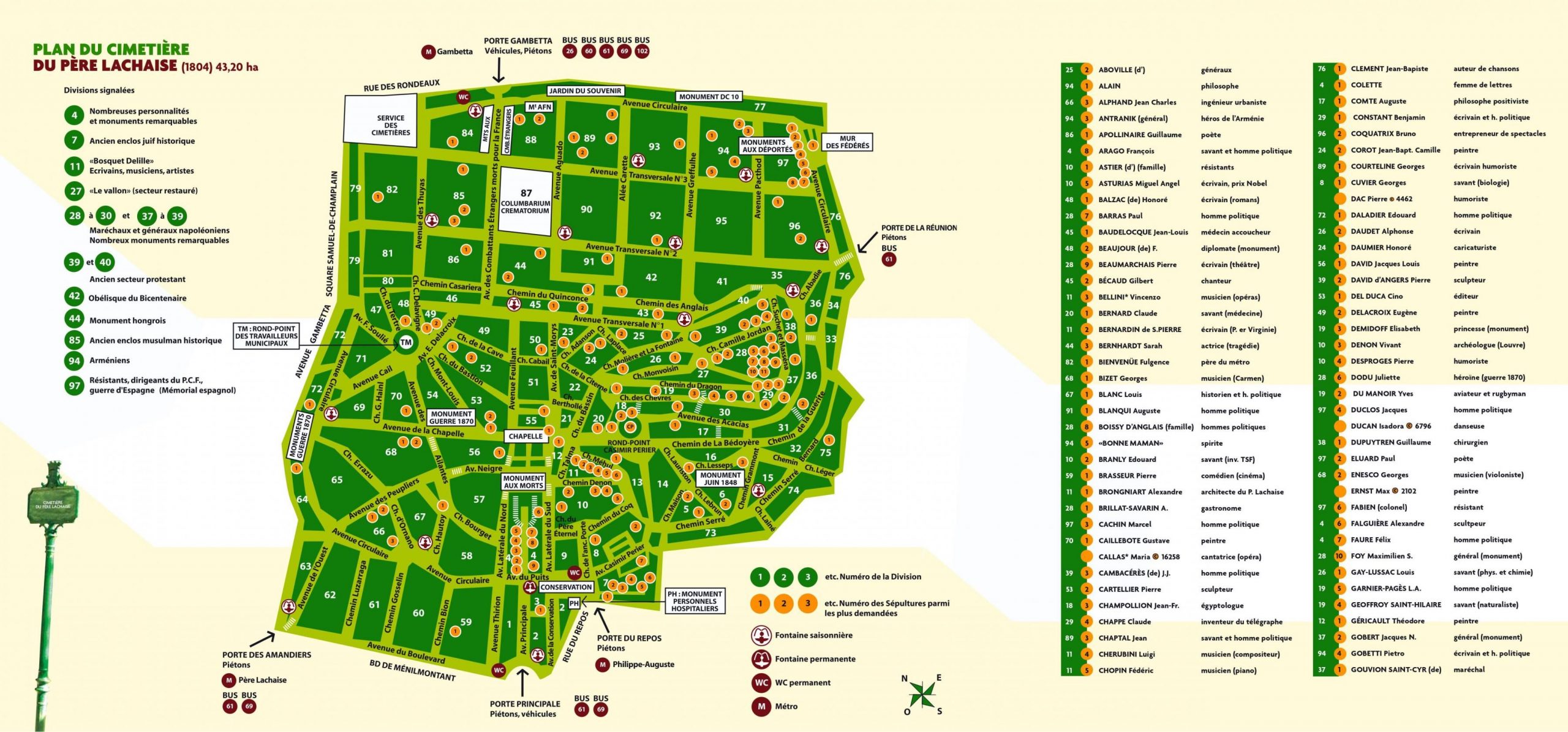
Map of Cimetière du Père-Lachaise in Paris, France

Grave Location:

Division 7, Avenue Rachel, Section 3, Ligne 2, Number 13

Grave Location Description

As you enter the cemetery from the Rue de Repo gate, take an immediate right onto Avenue Rachel and the famed impressionist artist is 47 burial plots from the intersection on the left (or 22 burial plots past the infamous Rothschild banking family) second row in.

Grave Location GPS

48.859197, 2.391686

Photos:

[+]
[+]
[+]
[+]
[+]
[+]
[+]
[+]
[+]
[+]

FAQ's

Camille Pissarro was born on July 10, 1830.

Camille Pissarro was born in Charlotte Amalie, Saint Thomas, Danish West Indies.

Camille Pissarro died on November 13, 1903.

Camille Pissarro died in 1 Boulevard Morland, 4th Arrondissement, Paris, France.

Camille Pissarro was 73.

The cause of death was Sepsis.

Camille Pissarro's grave is in Cimetière du Père Lachaise

Read More About Camille Pissarro:

Videos Featuring Camille Pissarro:

See More:

Charles M. Schulz

popular name: Charles M. Schulz

date_of_death: February 12, 2000

age: 77

cause_of_death: Colon cancer

claim_to_fame: Artists

best_know_for: The most successful comic strip in newspaper history, PEANUTS appears in some 2,600 newspaper in 75 countries and is translated into 21 languages. United Feature Syndicate started the strip in syndication on October 2, 1950. He died on the day before his final comic strip was printed and per his wishes, nobody else is allowed to draw or publish new Peanuts comic strips. The influence of Charles Schulz on several generations of cartoonists cannot be overstated. "With intelligence, honesty, and wonderfully expressive artwork, Charles Schulz gave the comics a unique world of humor, fantasy, warmth and pain that completely reconfigured the comic strip landscape," Bill Watterson, creator of Calvin and Hobbes, wrote in 1989. It was PEANUTS that truly brought the American comic strip into the lives of contemporary readers using innovations such as Lucy's Psychiatric Booth, Linus' Security Blanket(a phrase originally coined by Mr. Schulz), Snoopy's fantasies, and Charlie Brown's baseball team. There will never be another cartoonist quite like Charles M. Schulz.

Albert Frey

popular name: Albert Frey

date_of_death: November 14, 1998

age: 95

cause_of_death: Natural Causes

claim_to_fame: Artists

best_know_for: Albert Frey was a Swiss-born architect who established a style of modernist architecture centered on Palm Springs, California, United States, that came to be known as "desert modernism". Some examples of his work include Raymond Loewy House, Palm Springs Aerial Tramway, Tramway Gas Station, and the Villa Hermosa.

Georges Seurat

popular name: Georges Seurat

date_of_death: March 29, 1891

age: 31

cause_of_death: Infectious angina, meningitis, pneumonia

claim_to_fame: Artists

best_know_for: Georges Seurat was a French painter and one of the pioneers of the Pointillist movement, a technique where paintings are made up of tiny dots of color. Born on December 2, 1859, in Paris, Seurat studied at the École des Beaux-Arts, where he developed his unique style. His most famous work, A Sunday Afternoon on the Island of La Grande Jatte (1884–1886), exemplifies Pointillism, using meticulous color theory to create vibrant, luminous scenes and is considered one of the icons of late 19th-century painting. Seurat's approach was rooted in scientific studies of color and optics, drawing on the work of theorists like Michel Eugène Chevreul. Although his career was short—he died in 1891 at just 31—his influence on modern art was profound. Seurat also worked with large-scale compositions, focusing on the impact of light and color. His innovative techniques laid the foundation for future movements such as Post-Impressionism and even elements of abstraction. Despite his early death, Seurat's legacy endures, and he remains a significant figure in the evolution of modern art. Upon his untimely death, he was laid to rest at Cimetière du Père-Lachaise in Paris, France.

Back to Top