WARNING: EXPLICIT MATERIAL

King Leopold II of Belgium

Birth Name:
Leopold II
Birth Date:
April 9, 1835
Birth Place:
Brussels, Belgium
Death Date:
December 17, 1909
Place of Death:
Palace of Laeken, Avenue du Parc Royal / Koninklijk Parklaan, Laeken, Brussels, Belgium
Age:
74
Cause of Death:
Embolism
Cemetery Name:
Église Notre-Dame de Laeken
Claim to Fame:
World Leaders
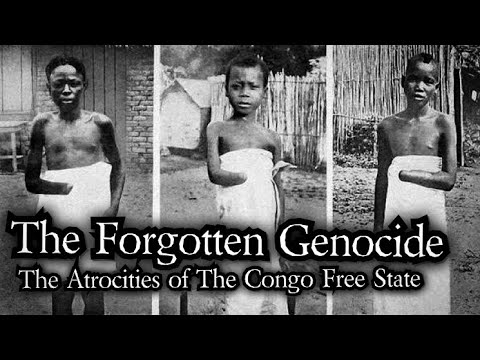
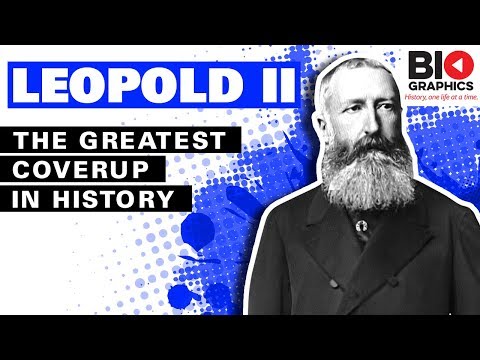
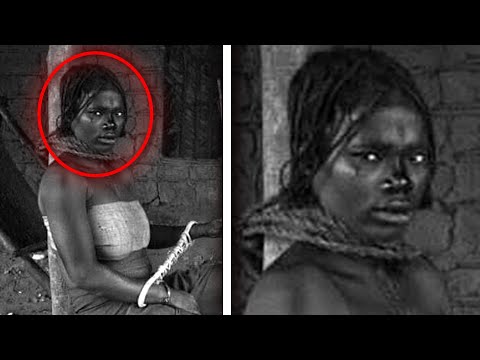
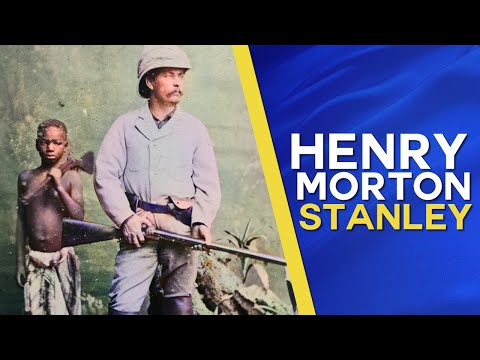
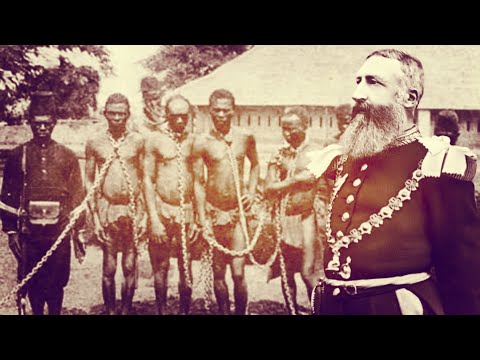
Leopold II was the second King of the Belgians from 1865 to 1909, and the founder and sole owner and beneficiary of the riches extracted from the Congo Free State from 1885 to 1908. The Congo Free State, a private colonial project undertaken on his own behalf as a personal union with Belgium used the famed explorer Henry Morton Stanley to help him lay claim to the Congo, the present-day Democratic Republic of the Congo. At the Berlin Conference of 1884–1885, the colonial nations of Europe authorized his claim and committed the Congo Free State to him. Leopold ran the Congo, which he never personally visited, by using the mercenary Force Publique for his personal gain. He extracted a fortune from the territory, initially by the collection of ivory and, after a rise in the price of rubber in the 1890s, by forced labour from the native population to harvest and process rubber. Leopold's administration was characterized by systematic brutality and atrocities in the Congo Free State, including forced labour, torture, murder, kidnapping, and the amputation of the hands of men, women, and children when the quota of rubber was not met. It is estimated that during his reign of terror in the Congo, 15 million died (out of a total population of 30 million) during the genocide and is considered by historians as the worst of European Colonialism. Upon his death he was buried at Eglise Notre-Dame de Laeken in Brussels Belgium.

The Rest of The Story …

Denial continues to run deep in the Belgium Royal Family of the atrocities carried out by Leopold II. Prince Laurent, brother of King Philippe, told the Sudpresse agency that abuses had occurred in the Congo Free State, Leopold’s personal fiefdom and source of wealth, but that Leopold was not to blame. “He never himself went to Congo,” he said. So I do not see how he could have made people there suffer.” As they say – you are entitled to your own opinion but not your own facts.

On November 15, 1902, Italian anarchist Gennaro Rubino attempted to assassinate Leopold, who was riding in a royal cortege from a ceremony at Church of St. Michael and St. Gudula in memory of his recently deceased wife, Marie Henriette. After Leopold’s carriage passed, Rubino fired three shots at the procession. The shots missed the king but almost killed his grand marshal, Count Charles John d’Oultremont. Rubino was immediately arrested and subsequently sentenced to life imprisonment where he died in prison in 1918.

Cemetery Information:

Final Resting Place:

Église Notre-Dame de Laeken

Parvis Notre-Dame 17, 1020

Laeken, Brussels,

Belgium

Europe

Grave Location:

Royal Vault

Grave Location Description

Over 200 years of Belgium Royalty are buried in the basement of this Catholic Church that was partially built on the blood of the Congolese people who were enslaved, raped, tortured and brutally maimed for nearly 50 years for the benefit and enrichment of King Leopold II of Belgium. But hey – enjoy your visit!

Grave Location GPS

50.87852518733064, 4.355590550048818

Visiting The Grave:

Photos:

[+]
[+]
[+]
[+]
[+]
[+]
[+]
[+]
[+]
[+]
[+]
[+]
[+]
[+]

FAQ's

King Leopold II of Belgium was born on April 9, 1835.

King Leopold II of Belgium was born in Brussels, Belgium.

King Leopold II of Belgium died on December 17, 1909.

King Leopold II of Belgium died in Palace of Laeken, Avenue du Parc Royal / Koninklijk Parklaan, Laeken, Brussels, Belgium.

King Leopold II of Belgium was 74.

The cause of death was Embolism.

King Leopold II of Belgium's grave is in Église Notre-Dame de Laeken

Read More About King Leopold II of Belgium:

Videos Featuring King Leopold II of Belgium:
See More:

Winston Churchill

popular name: Winston Churchill

date_of_death: January 24, 1965

age: 90

cause_of_death: Stroke

claim_to_fame: World Leaders

best_know_for: Winston Churchill was a British statesman, soldier, writer, and orator who played a central role in 20th-century world history. Born in 1874, he began his career as an army officer and war correspondent before entering Parliament in 1900. Over the next decades, he held major government posts including First Lord of the Admiralty during World War I and later Chancellor of the Exchequer. Though politically controversial and out of office during much of the 1930s, he became a leading voice warning against the rise of Nazi Germany. In 1940, as Britain faced the threat of invasion during World War II, Churchill became Prime Minister and rallied the nation with powerful speeches and steadfast leadership, guiding the United Kingdom through its darkest hours and working closely with Allied leaders to secure victory. After losing the 1945 general election, he returned as Prime Minister from 1951 to 1955. In addition to his political career, Churchill was a prolific writer and historian, winning the Nobel Prize in Literature in 1953. He died in 1965, remembered as one of Britain’s most significant and influential leaders.

Lloyd Bentsen

popular name: Lloyd Bentsen

date_of_death: May 23, 2006

age: 85

cause_of_death: Natural Causes

claim_to_fame: World Leaders

best_know_for: Lloyd Bentson was a four-term United States Senator (1971–1993) from Texas, the Democratic Party nominee for vice president in 1988 on the Michael Dukakis ticket and served as the 69th United States Secretary of the Treasury under President Bill Clinton. He is also remember for his famous debate response when Quayle stated that he had as much political experience as John F. Kennedy. Bentsen, at the age of 67, retorted, "Senator, I served with Jack Kennedy. I knew Jack Kennedy. Jack Kennedy was a friend of mine. Senator, you're no Jack Kennedy."

James A. Garfield

popular name: James A. Garfield

date_of_death: September 19, 1881

age: 49

cause_of_death: Heart attack, ruptured splenic artery with massive hemorrhage, septic blood poisoning

claim_to_fame: World Leaders

best_know_for: James A. Garfield was the 20th president of the United States, serving from March to September 1881. Garfield was shot by Charles J. Guiteau (a disappointed and delusional office seeker) at the Baltimore and Potomac Railroad Station in Washington D.C. four months into his presidency. Interesting to note that Garfield did not actually died from the gunshot, but rather from infections introduced by his doctors. He died two months later on September 19, 1881 and Guiteau was executed for Garfield's murder in June 1882.

Back to Top